

 Chandeliers
 Pendant Lights
 Ceiling Lights
 Wall Sconces
 Table Lamps
 Floor Lamps
 Ceramic Lidded Jar
 Decorative Dishes
 Pomegranates
 Qajar Collection
 Decorative Wall Tiles
 Border Tiles
 Hand-Painted Tiles
 Block Tiles
 Wall Clocks
 Side Tables
 Candle Holders
How to Light a Living Room Using Wooden Lighting Fixtures


A beautifully lit living room is the foundation of a warm and welcoming home. Whether you’re styling a compact Dubai apartment, a modern loft, or a spacious villa, living room wooden lighting brings harmony, texture, and natural elegance to the space. Wooden chandeliers, pendants, wall sconces, and floor lamps work together to create a layered lighting design that feels both luxurious and emotionally comforting.
This guide explains how to achieve a perfectly balanced lighting plan using wooden fixtures—covering placement, ambience, design principles, and practical tips used by professional interior designers.
Table of Contents
Toggle1. Begin with a Wooden Centerpiece Fixture
Every living room needs an anchor. In lighting design, the anchor is typically a chandelier or pendant placed at the heart of the space.
When planned correctly, living room wooden lighting can dramatically elevate the atmosphere by combining warmth, texture, and visual balance.
Wooden chandeliers: warm, sculptural impact
A wooden chandelier brings structure and visual weight. Its natural grain softens the geometry of modern interiors, making the space feel grounded and cohesive.
Choose styles based on your décor:
• Modern – curved ribs, open geometric frames
• Rustic – thick wood, rope accents, darker tones
• Contemporary – wood + matte metal combinations
Place it above the main seating zone to center the room visually.
Wooden pendant lights: light and understated
Pendants are ideal for smaller living rooms or open-plan spaces where you want a gentler focal point. Slim, woven, or sculptural wooden pendants add visual character without overwhelming the ceiling.
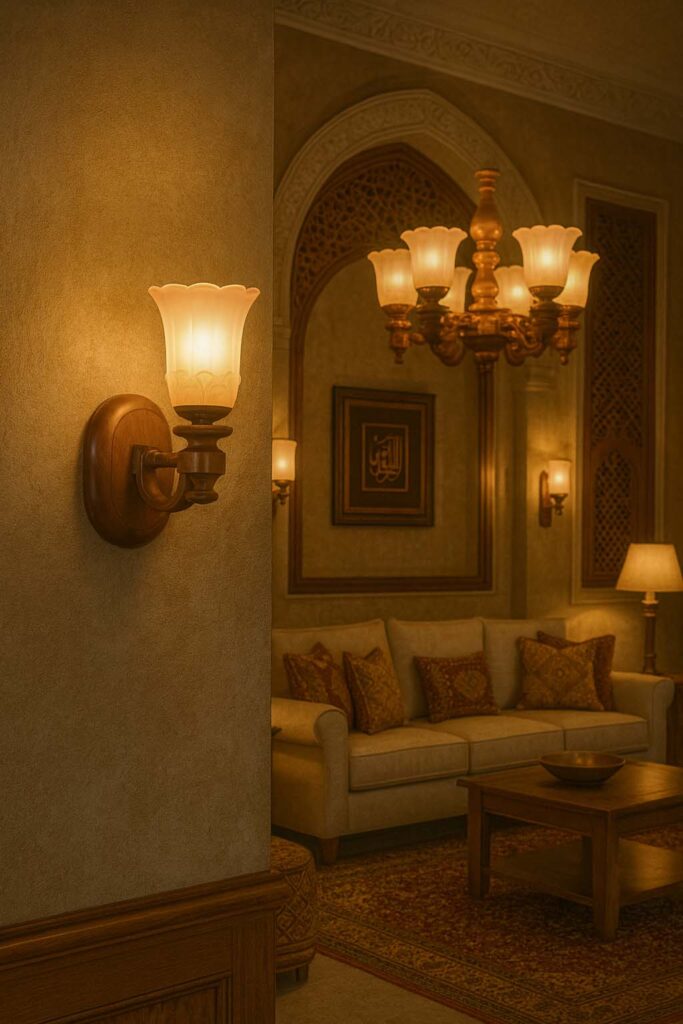
2. Add Wooden Wall Sconces to Create Ambient Side Lighting
Wall sconces are one of the most effective ways to improve atmosphere in a living room.
Why wooden wall sconces work so well
They remove harsh overhead shadows
• Add warm side-glow that makes evenings cozy
• Highlight architectural or decorative walls
• Save floor space and keep the layout clean
Ideal installation height: 150–165 cm, depending on ceiling height.
Wooden pendant lights: light and understated
Pendants are ideal for smaller living rooms or open-plan spaces where you want a gentler focal point. Slim, woven, or sculptural wooden pendants add visual character without overwhelming the ceiling.
3. Use Wooden Floor Lamps to Anchor Corners and Create Balance
Corner lighting dramatically elevates the living room without renovation.
Wooden floor lamps enhance:
• Reading corners
• Media or TV zones
• Empty corners that feel visually “cold”
• Sofa ends needing vertical balance
For small apartments, choose slim silhouettes.
For villas, sculptural wooden floor lamps add grandeur and presence.
4. Layer Your Lighting for a Professional Interior Look
Designers always layer living room lighting to create warmth and depth.
Designers often rely on living room wooden lighting to connect ambient, task, and accent layers into one cohesive lighting plan.
The three essential layers
- Ambient lighting
Chandeliers, pendants, and wooden ceiling fixtures give general illumination. - Task lighting
Wooden floor lamps or table lamps for reading, working, or focused tasks. - Accent lighting
Wall sconces or small pendants used purely for atmosphere and visual interest.
Mastering these layers transforms a flat living room into a luxurious, inviting environment.
Wooden floor lamps enhance:
• Reading corners
• Media or TV zones
• Empty corners that feel visually “cold”
• Sofa ends needing vertical balance
For small apartments, choose slim silhouettes.
For villas, sculptural wooden floor lamps add grandeur and presence.
5. Choose the Right Bulb Temperature for Wooden Fixtures
Wood responds best to warm light. The wrong bulb can ruin the mood.
Best color temperatures for living rooms
- 2700K–3000K (Warm White)
Creates a calming, intimate atmosphere—perfect for evenings. - 3000K–3500K (Soft Warm Neutral)
Ideal for multi-purpose living rooms that need clarity during the day.
Avoid cool white bulbs (4000K+); they clash with the natural warmth of wood.
A dimmer switch is highly recommended to shift between bright daytime light and relaxing evening ambience.

6. Coordinate Wood Tones with Your Interior Palette
Your wooden lighting should complement—not fight—the décor.
Tone-matching guidelines
- Light-toned wood (oak, ash)
Brightens the room and fits Scandinavian, Japandi, and modern interiors. - Medium-toned wood (walnut, teak)
Creates warmth and suits contemporary or transitional living rooms. - Dark-toned wood (espresso, chestnut)
Provides richness for rustic, classic, or vintage-inspired spaces.
Your lighting doesn’t need to match your furniture exactly—only harmonize within the same tone family.
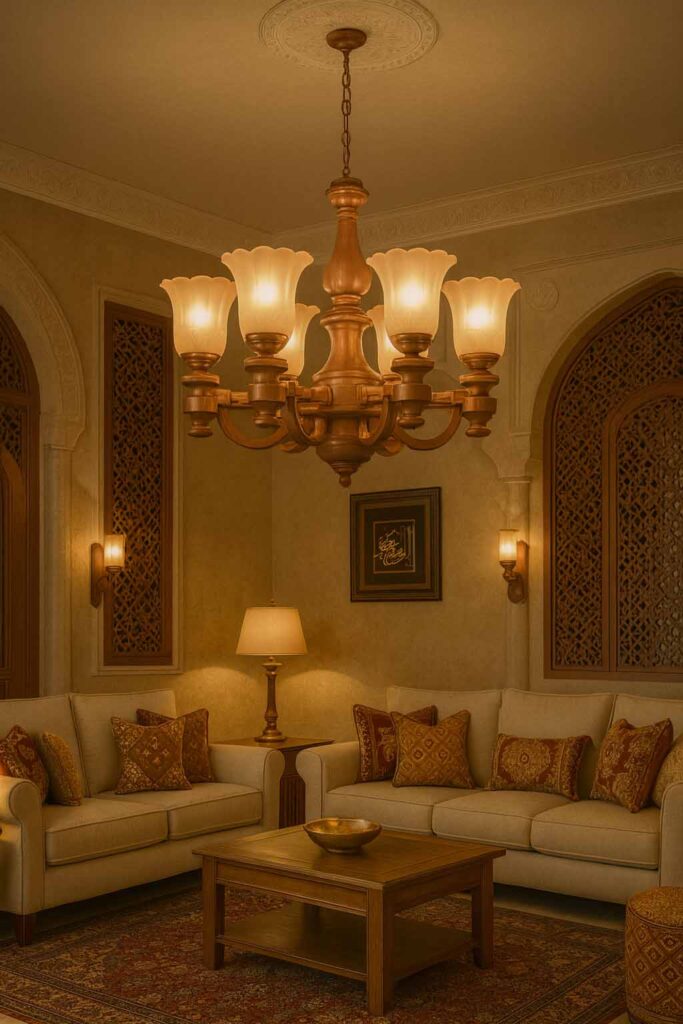
7. Designer-Recommended Living Room Lighting Layout
Whether you live in an apartment or villa, living room wooden lighting helps create a welcoming, comfortable, and aesthetically refined space.
For a balanced, luxurious design, use this layout as your foundation:
Professional guideline
• 1 chandelier/pendant centered over the seating area
• 2 wooden wall sconces on the feature wall or TV wall
• 1 floor lamp beside a sofa or in a reading corner
• 1 optional table lamp on a console for symmetry
This layout ensures the room feels bright, warm, and visually proportional.
Explore Wooden Living Room Lighting
Browse wooden chandeliers, sconces, and floor lamps here.
For high-end design examples and lighting ideas click here
FAQ — Living Room Wooden Lighting
Is wooden lighting suitable for every living room style?
- Yes—wood blends with modern, classic, Scandinavian, rustic, and contemporary interiors.
How many wooden fixtures should a living room have?
- Use 2–4 depending on room size and layout.
Does wooden lighting provide enough brightness?
- Absolutely—use E27 warm LED bulbs for clean, comfortable illumination.
Does wooden lighting require special care?
- No. Dusting with a soft microfiber cloth is usually enough.