
 Chandeliers
 Pendant Lights
 Ceiling Lights
 Wall Sconces
 Table Lamps
 Floor Lamps
 Ceramic Lidded Jar
 Decorative Dishes
 Pomegranates
 Qajar Collection
 Decorative Wall Tiles
 Border Tiles
 Hand-Painted Tiles
 Block Tiles
 Wall Clocks
 Side Tables
 Candle Holders
Patterned Ceramic Decor: 9 Essential Design Rules for Interior Rhythm

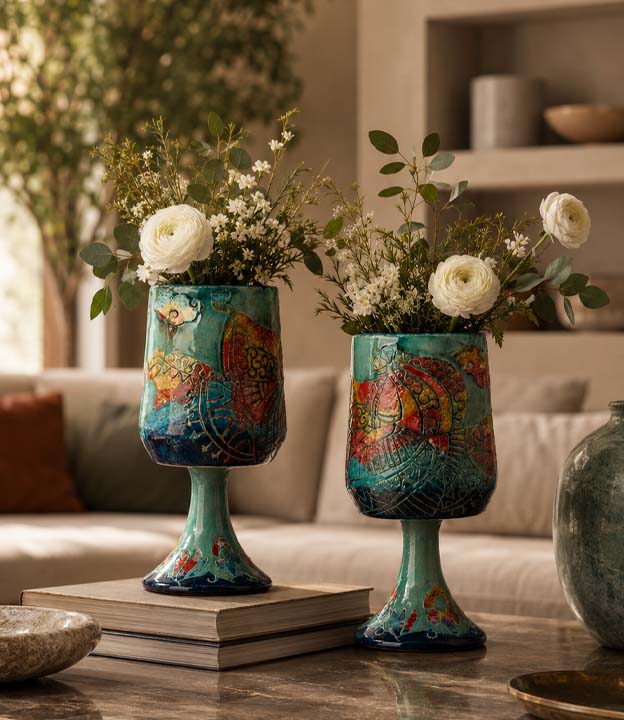
Table of Contents
ToggleIntroduction: Pattern Is Not Only Decoration
Patterned ceramic decor gives an interior rhythm. It moves the eye across a wall, around the rim of a dish, through a tile composition or around the shoulder of a jar.
In refined interiors, pattern should not be treated as decoration added at the end. It is a design tool. Pattern can create order, soften straight architecture, connect colours, introduce cultural memory and make a surface feel crafted rather than flat.
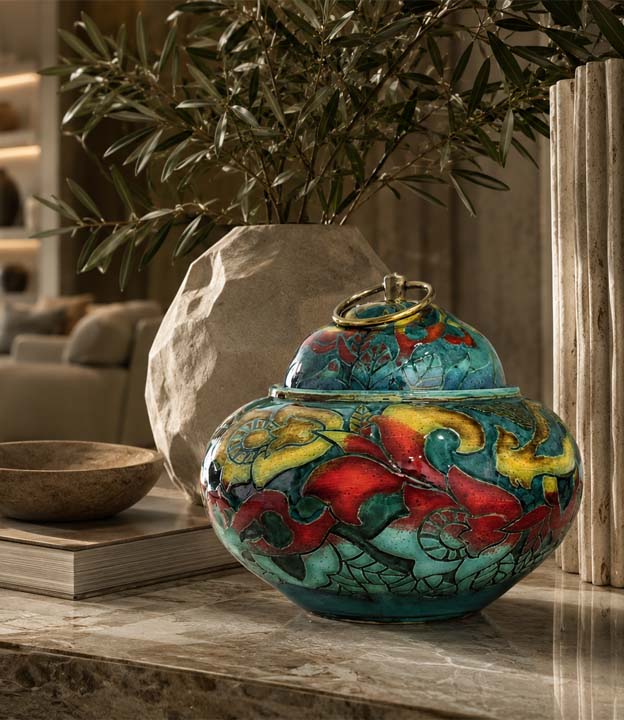
A patterned ceramic dish can become dimensional wall art. A hand-painted tile can turn a niche into an architectural detail. A glazed object can make repeated motifs feel deeper under warm light. A lidded jar with painted borders can bring ceremony to a console table.
The challenge is control. Patterned ceramic decor can make a room warmer, richer and more memorable. Used carelessly, it becomes visual noise. The difference depends on scale, spacing, colour, lighting and the relationship between the ceramic object and the room around it.
1. Start with the Role of the Pattern
Before choosing patterned ceramic decor, decide what the pattern needs to do. It may create a focal point, connect colours, soften architecture, add movement, support a hospitality concept or bring identity to a commercial space.
A pattern used as a focal point should be strong enough to hold attention from a distance. A pattern used as a supporting detail should be quieter and more controlled.
This decision prevents random styling. The pattern should have a job inside the room, not simply exist because the object is attractive.
2. Use Geometry to Create Order
For broader design context, The Metropolitan Museum of Art explains how geometric patterns use repetition, symmetry and order in decorative art.
Geometry gives patterned ceramic decor structure. Lines, circles, grids, stars, borders, arches, diamonds and repeated shapes help the eye understand balance and direction.
Geometric ceramic design works well in entrances, dining rooms, corridors, console-table areas, boutique displays and hospitality interiors because those spaces often need clarity.
However, geometry can feel rigid if repeated too aggressively. Leave space around geometric ceramics so the pattern creates order rather than tension.
3. Choose Motifs with Meaning
A motif is a visual idea. It may come from flowers, leaves, fruit, architecture, stars, borders, symbolic forms or abstract geometry.
Motifs give patterned ceramic decor a second layer of value. A floral motif can soften a room. A pomegranate motif can suggest abundance and welcome. A border can make a dish feel ceremonial. A repeated tile motif can give a wall architectural rhythm.
Motifs should support the mood of the room. They should not feel random, overly themed or disconnected from the interior concept.
4. Control Repetition and Variation
Repetition turns a single mark into rhythm. It can appear in tile grids, dish borders, repeated brushstrokes, recurring colours or a group of related ceramic pieces.
Good repetition gives the eye a path. Too much exact repetition can feel mechanical. Too much variation can feel chaotic.
Handcrafted patterned ceramic decor is valuable because it can sit between these extremes. Repeated motifs may remain organised while still showing small signs of the hand.
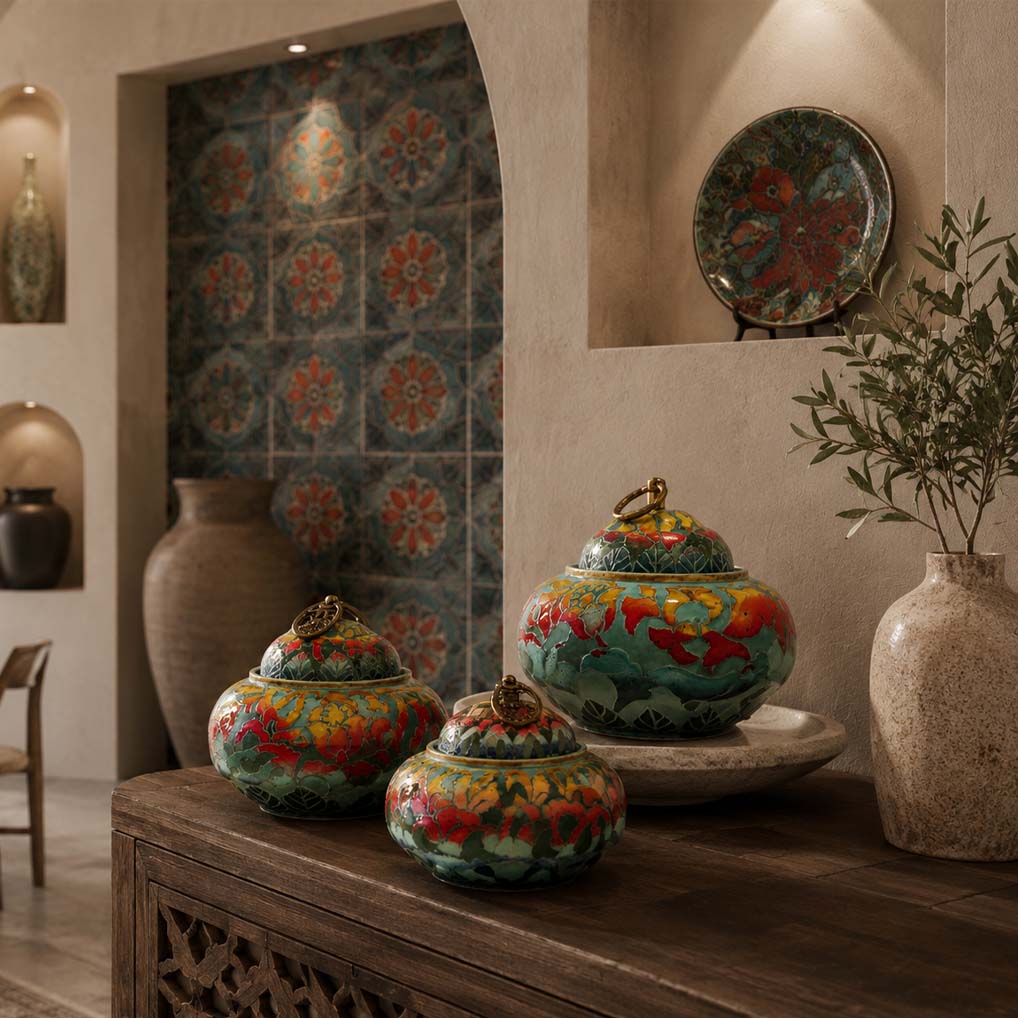
5. Make Brushwork Support the Form
Brushwork is where pattern becomes personal. The pressure of the brush, the direction of the line and the softness of the edge all affect the character of the piece.
In a dish, brushwork should respond to the curve. On a tile, it should work with the wall. On a jar, it should move with the body, shoulder, lid and border.
The strongest patterned ceramic decor feels painted with the object, not merely painted on top of it.
6. Use Glaze and Light Together
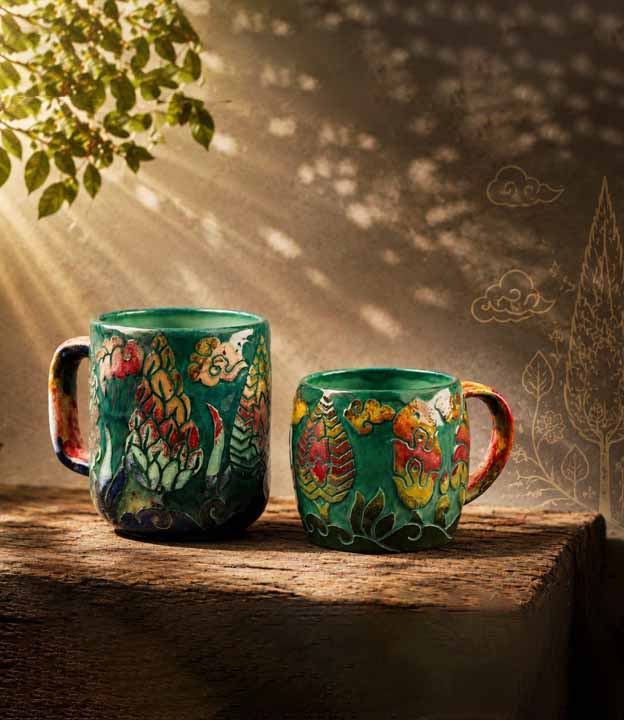
Glaze changes the way pattern behaves. Gloss can make a motif luminous. Matte finishes can make pattern calmer. Transparent glaze can deepen painted detail. Crackle or layered glaze can add age, depth and softness.
Light completes the effect. A patterned dish may look delicate in daylight and richer under warm evening light. A textured motif may cast fine shadows. A glossy surface may reflect a nearby lamp or wooden lighting piece.
Do not hide patterned ceramic decor in poor light. If pattern, glaze and lighting work together, the ceramic becomes atmospheric rather than merely decorative.
7. Match Pattern Scale to the Room
Scale is critical. A tiny pattern may disappear on a large wall. A large motif may overwhelm a narrow shelf or small apartment console.
Large villas, double-height entrances and hospitality interiors may need stronger patterns or grouped tile compositions. Smaller rooms often need one clear patterned piece with enough negative space around it.
Judge the pattern from the normal viewing distance. A piece should be readable from across the room and rewarding up close.
8. Pair Patterned Ceramics with Calmer Materials
Pattern needs a stage, not a battlefield. Wood, stone, brass, glass, linen, books and warm lighting can all support patterned ceramics when used with restraint.
A richly patterned dish may need a calm wooden shelf. A patterned tile wall may need simple lighting. A hand-painted jar may need a plain stone tray. A patterned ceramic object near wooden lighting can feel warm and intimate.
If the ceramic pattern is strong, keep nearby materials quieter. If the pattern is subtle, stronger material contrast can help it stand out.
9. Edit Pattern in the Whole Room
Patterned ceramic decor should be considered alongside rugs, fabrics, wallpaper, artwork, joinery, stone veining and metal details.
If the room already has several strong patterns, choose calmer ceramics or use one patterned object as a controlled accent. If the room feels too plain, a stronger patterned ceramic piece can become the main source of rhythm.
The goal is not to add pattern everywhere. The goal is to place pattern where it improves the room.
Patterned Ceramic Dishes: Circular Rhythm and Surface Beauty
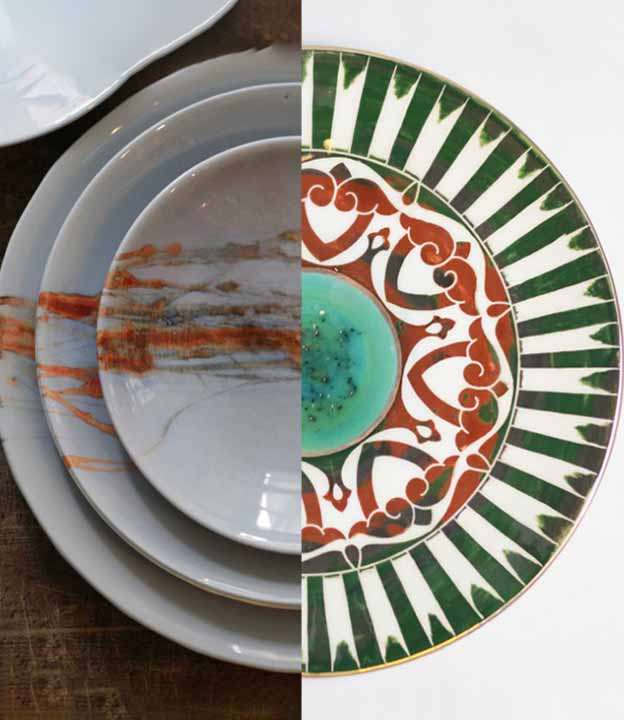
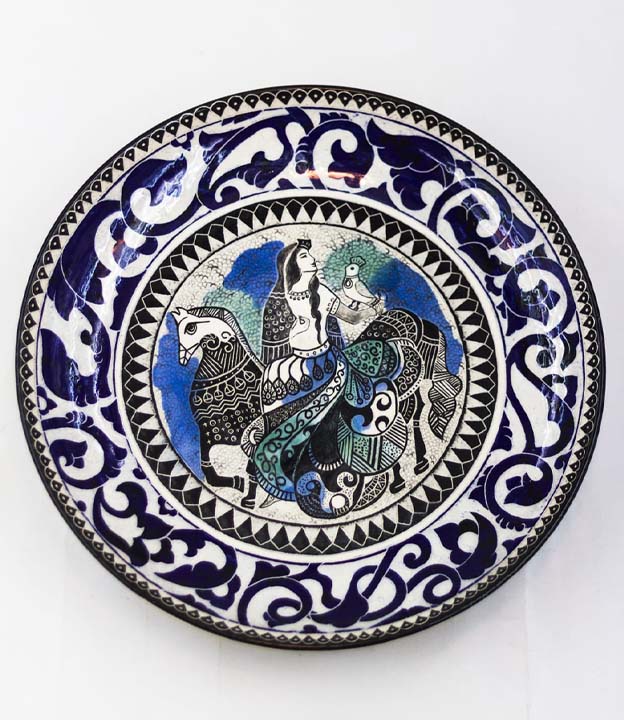
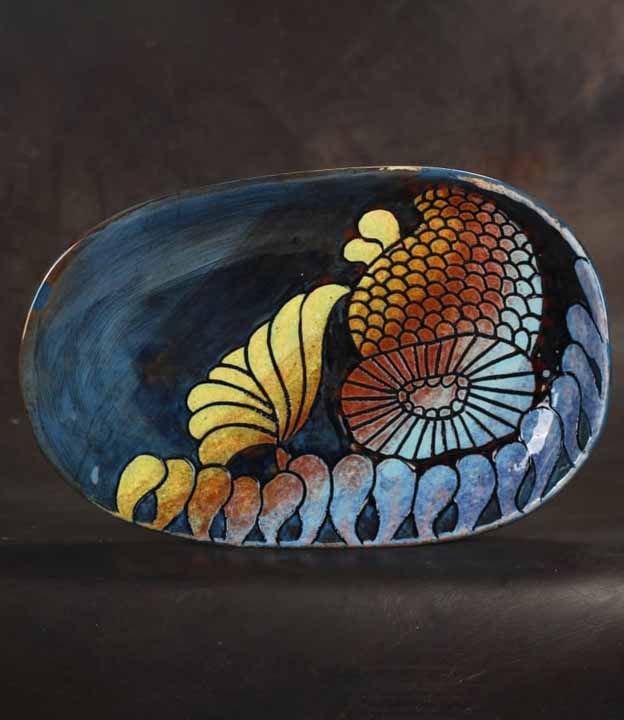
Decorative ceramic dishes are one of the most effective forms of patterned ceramic decor because their open surfaces give pattern space to breathe.
A border can guide the eye around the rim. A central motif can create focus. A repeated design can make the dish feel complete. Displayed upright, a patterned dish can behave like dimensional artwork. Placed flat, it can become a table or console accent.
Do not overfill a patterned ceramic dish with random objects. The surface is part of the art. If the glaze, motif or brushwork is strong, let it remain visible.
Patterned Ceramic Wall Tiles: Pattern Made Architectural
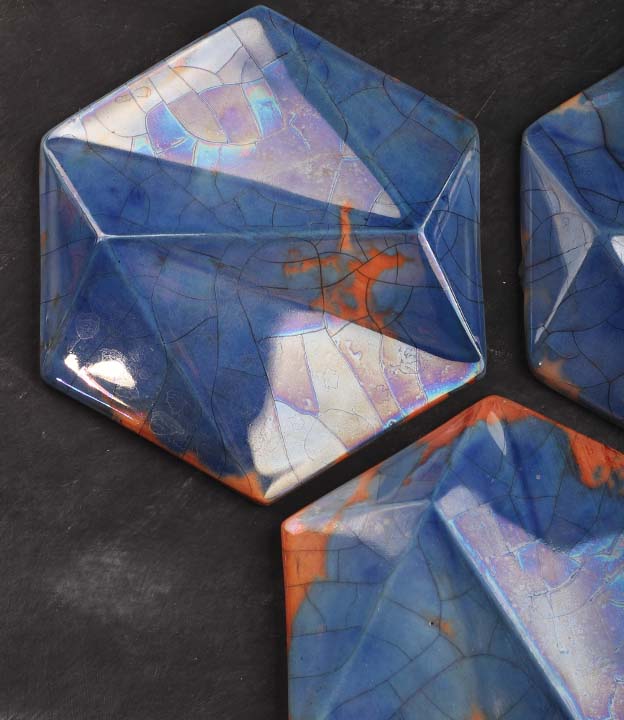
Ceramic wall tiles allow pattern to become part of architecture. A single tile can act as a small artwork, while a group of tiles can create rhythm across a wall, niche, corridor, entrance or dining-room feature.
Patterned ceramic tiles are powerful because they combine repetition with depth. Tile edges catch light, surfaces hold glaze and the pattern changes as the viewer moves.
A successful tile composition should relate to furniture, wall colour, lighting and viewing distance. It should not look randomly attached to the wall.
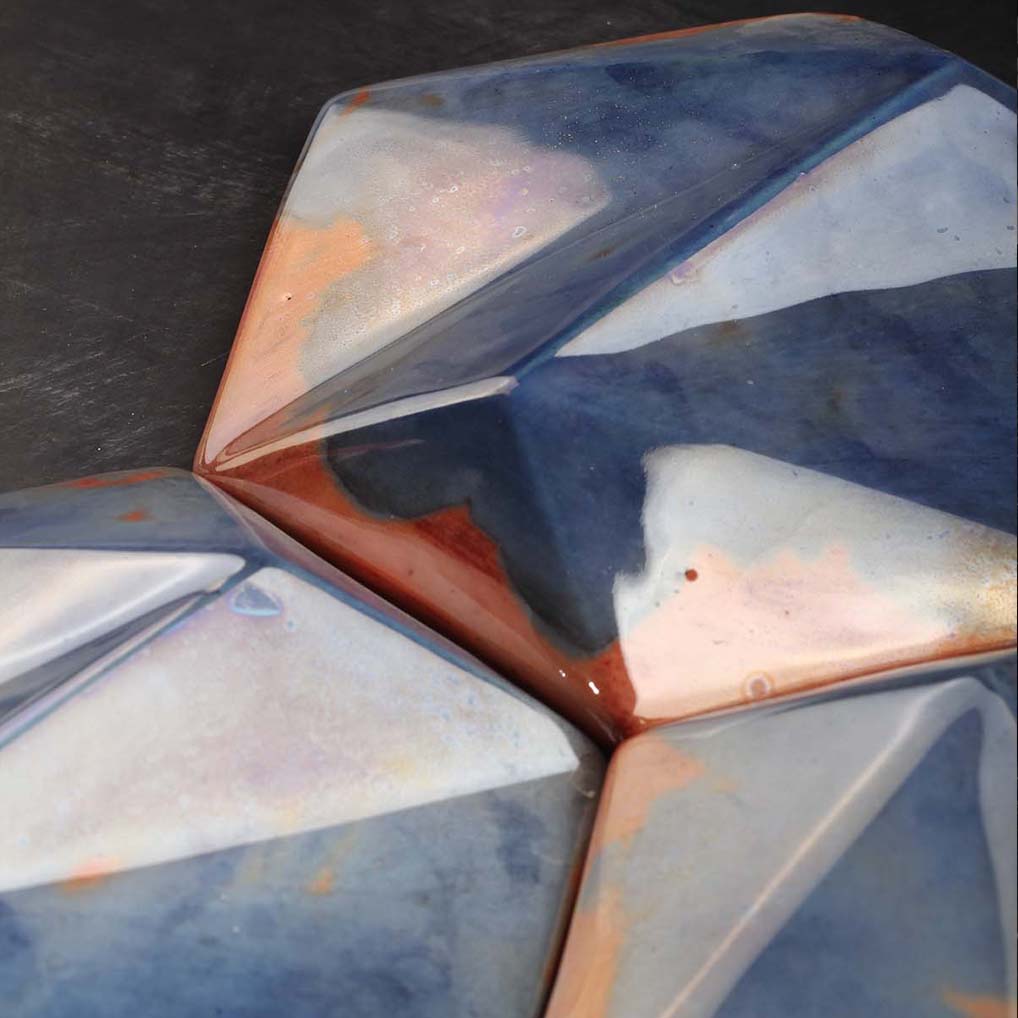
Patterned Ceramic Jars and Sculptural Objects
Pattern on a three-dimensional object is more complex than pattern on a flat surface. The design must respond to volume.
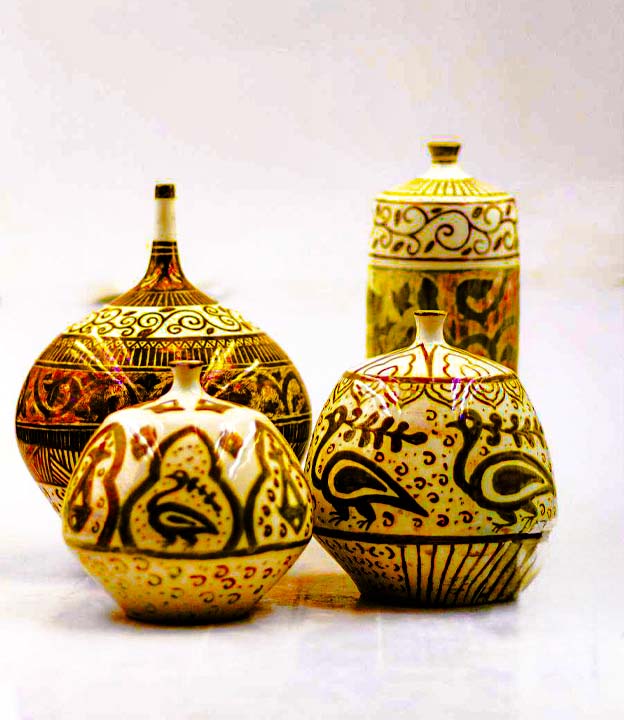
A ceramic lidded jar can carry repeated motifs around the body, shoulder, lid and border. A sculptural object may use pattern to define identity or highlight form.
These pieces work best where their full shape can be seen, such as consoles, shelves, sideboards and display cabinets. Give them enough space for the eye to move around the object.
Patterned Ceramic Decor in Minimal Interiors
Minimal interiors can benefit from patterned ceramic decor, but only with restraint.
A single patterned dish on a plain wall can soften a minimal living room. A tile in a niche can give identity to an entrance. A patterned jar on a console can add detail without clutter.
In minimal design, pattern becomes powerful because the room gives it silence. One strong object is usually enough.
Patterned Ceramic Decor in Warm and Layered Interiors
Layered rooms may already contain rugs, textiles, wood grain, books, artwork and decorative objects. Patterned ceramics can deepen that richness, but they can also create clutter if used without editing.
Choose ceramic patterns that relate to existing colours, motifs or material mood. A dish may echo a rug, a tile may connect with textiles, and a jar may repeat a colour from artwork.
Pattern should organise the richness of the room, not add confusion.
Patterned Ceramic Decor in Commercial Interiors
Commercial interiors need memory. Boutiques, restaurants, hotels, galleries, showrooms and reception areas can use patterned ceramic decor to create distinctive visual moments.
A patterned tile wall can become a restaurant feature. A hand-painted dish display can make a boutique feel curated. A patterned object on a reception console can add warmth and identity.
For commercial projects, control is essential. Use one or two memorable ceramic moments rather than spreading pattern everywhere.
Choosing Patterned Ceramic Decor for a Project
When choosing patterned ceramic decor, assess the room before the object.
Ask whether the pattern matches the mood, whether the scale suits the surface, whether the colour belongs to the palette and whether the design supports the ceramic form.
Also consider lighting, maintenance, mounting, stability and the possibility of variation between handmade pieces. A strong pattern should make the room feel more complete, not more crowded.
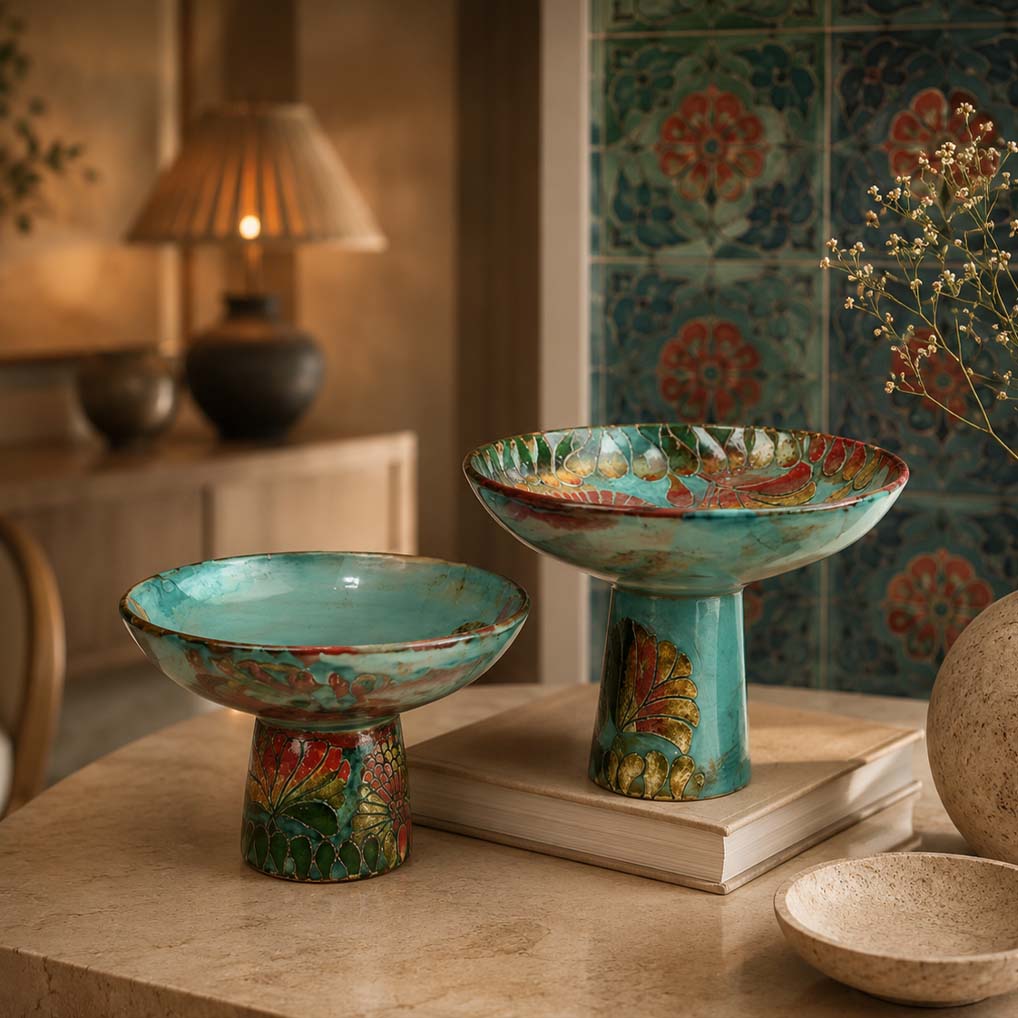
Common Mistakes to Avoid
Using too many patterns together can make a room noisy. Multiple patterns can work only when they share scale, colour, mood or rhythm.
Choosing pattern without considering form weakens the ceramic object. The pattern should support the dish, tile, jar or sculptural piece.
Poor lighting can flatten brushwork and glaze. Overcrowding patterned objects removes their authority. Treating pattern as decoration only ignores its ability to create rhythm, hierarchy and meaning.
A Practical Styling Formula for Patterned Ceramics
Use this formula: one patterned ceramic focal point, one calm material, one lighting relationship and negative space.
On a shelf, that could mean a patterned ceramic dish, books or wood, a warm shelf light and open space around the dish. On a wall, it could mean a tile composition, a plain wall, a sconce and clear space around the feature.
On a console table, it could mean a hand-painted jar, a stone tray, warm lighting and a clean tabletop area. This formula allows patterned ceramic decor to feel refined rather than excessive.
Why Patterned Ceramic Decor Remains Timeless
Patterned ceramic decor remains timeless because it combines rhythm, craft, material and memory.
A pattern can carry order. A motif can carry meaning. A brushstroke can carry the hand. A glaze can carry light. A ceramic surface can carry all of them together.
This is why patterned ceramics can belong to modern spaces, warm homes, dining rooms, corridors, boutique interiors, hospitality settings and curated shelves. Their beauty is not only in ornament. It is in the way they shape atmosphere.
Explore Patterned Ceramic Decor at Checkmark
At Checkmark, our ceramic collection is selected for interiors where craftsmanship, material warmth, pattern and artistic presence matter.
Our handcrafted ceramic pieces include patterned ceramic dishes, ceramic wall tiles, ceramic lidded jars, glazed ceramic objects, hand-painted ceramic decor, ceramic pomegranate decor and ceramic art objects for refined homes, living rooms, dining rooms, entrances, shelves, boutique displays and hospitality interiors.
Whether used as wall art, shelf styling, table decor, a console-table focal point or part of a curated ceramic composition, patterned ceramic decor can bring rhythm, meaning and quiet distinction into interiors.