
 Chandeliers
 Pendant Lights
 Ceiling Lights
 Wall Sconces
 Table Lamps
 Floor Lamps
 Ceramic Lidded Jar
 Decorative Dishes
 Pomegranates
 Qajar Collection
 Decorative Wall Tiles
 Border Tiles
 Hand-Painted Tiles
 Block Tiles
 Wall Clocks
 Side Tables
 Candle Holders
Wooden Pendant Lights: The Complete Guide to Style, Placement & Sizing


Wooden pendant lights are more than functional décor — they are sculptural expressions of atmosphere. They soften modern interiors, add natural warmth to minimal spaces, and create elegant focal points above dining tables, kitchen islands, hallways, and cozy reading corners. In Dubai’s design landscape, where bold architecture meets warm interior styling, wooden pendants have become a beloved choice for designers and homeowners seeking comfort, style, and organic beauty.
If you’ve ever wondered which wooden pendant light style fits your space, how high to hang it, or how large it should be, this complete guide will give you everything you need — beautifully explained.
Table of Contents
Toggle1. Understanding the Style of Wooden Pendant Lights
Wooden pendants come in countless designs — from sculptural curves to modern geometric shapes to rustic cuts that highlight natural grain. Choosing the right one depends on the mood you want to create.
A. Sculptural Minimal Pendants
These lamps feature smooth curves, layered wooden ribs, or precise fine-cut designs inspired by Nordic and Japanese interiors. They work beautifully in neutral spaces, soft seating zones, and modern kitchens or bedrooms where calmness and clean aesthetics matter.
B. Rustic or Farmhouse Wooden Pendants
With raw textures, darker finishes, or distressed walnut tones, these pendants suit warm, earthy interiors. They are ideal for dining rooms, cozy living spaces, and rustic villas that embrace natural materials.
C. Contemporary Wooden Pendants
Blending clean geometry with modern structure, contemporary wooden pendants easily enhance apartments, sleek kitchens, and professional lounge areas with a refined aesthetic.
D. Woven or Mixed-Material Wooden Pendants
These designs combine wood with materials like fabric, metal, or glass, creating a layered visual effect. They complement artistic homes, boho-inspired rooms, and boutique commercial spaces with their textured elegance.
2. Choosing the Right Placement
Placement can elevate your interior or completely throw off the balance of the room. Wooden pendants shine when placed thoughtfully.
A. Over the Dining Table
This is one of the most classic placements. Round dining tables pair well with round or curved pendants, while rectangular tables look best with linear pendants or a series of two or three smaller ones arranged evenly.
B. Kitchen Island Pendants
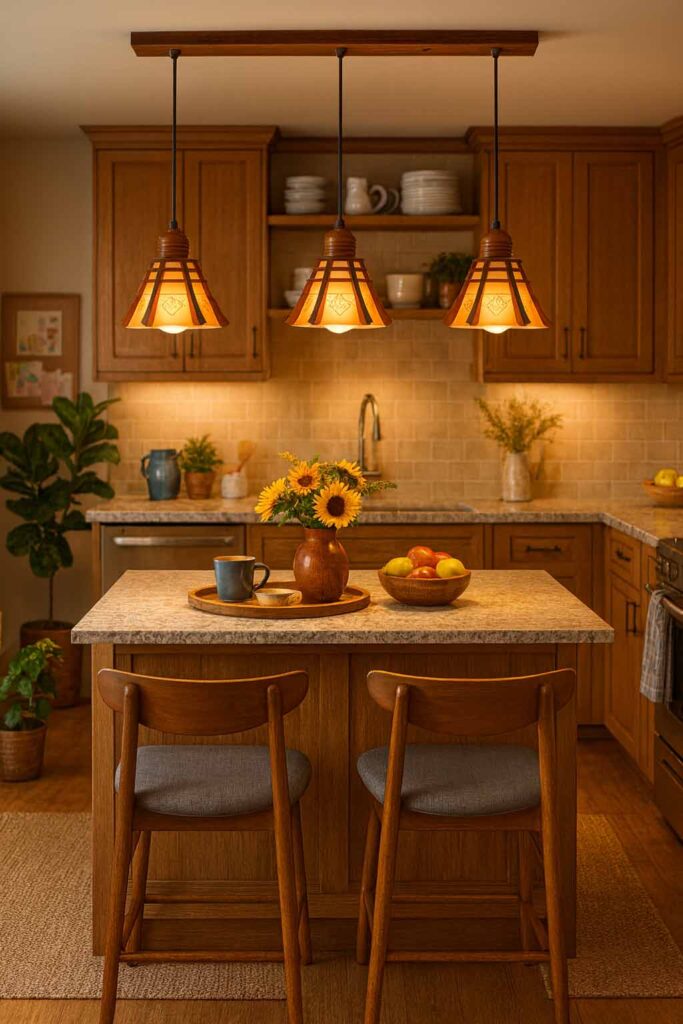
Two or three matching pendants spaced evenly across the island create symmetry and balance. For best results, keep the spacing around 20–25 cm and hang them 75–90 cm above the countertop.
C. Bedroom Lighting
Hanging wooden pendants on each side of the bed creates a modern, hotel-like effect. It frees up space on the nightstand while adding warm, ambient lighting that feels calming and intimate.
D. Hallway and Entrance Areas
Wooden pendants soften narrow hallways and brighten up entrance spaces, reducing echo and adding a welcoming touch.

3. Correct Sizing for Wooden Pendant Lights
Use this simple rule:
Room width (ft) + room length (ft) = pendant diameter (inches)
For example, a 12 × 14 ft room would need a pendant around 26 inches wide.
A. Sizing Formula for Pendant Diameter
This is one of the most classic placements. Round dining tables pair well with round or curved pendants, while rectangular tables look best with linear pendants or a series of two or three smaller ones arranged evenly.
B. Over the Dining Table
Choose a pendant with a width that is roughly half to two-thirds the width of your dining table, and hang it 75–85 cm above the tabletop for ideal illumination.
C. Kitchen Island
A single pendant should be around 30–45 cm wide. If you prefer multiple pendants, choose designs around 20–30 cm each and maintain a 20–25 cm gap between them.
D. Bedroom Side Pendants
Smaller pendants between 15–25 cm work best here. They should hang 30–50 cm above the height of the nightstand.
4. Pair Wooden Pendants with Natural Materials
Wood pairs effortlessly with other organic textures. Designers often combine wooden pendants with linen, stone, rattan, ceramics, woven fabrics, and soft neutral palettes. These combinations create depth, warmth, and emotional balance. Wooden pendants also soften stronger materials like marble, glass, or polished metals, making a space feel more inviting.
5. Layer Light for a Rich Atmosphere
A pendant alone rarely creates the perfect mood. Layering multiple types of lighting builds atmosphere and visual depth. Wooden wall sconces, table lamps, floor lamps, and ceiling lights can work together to create a composition of ambient, task, and accent lighting that makes your home feel complete.
6. Why Wooden Pendants Work Perfectly in UAE Homes
Homes in Dubai and across the UAE often use stone, marble, tiles, or metallic finishes that can feel visually cold. Wooden pendants soften these materials, creating warmth, contrast, and elegance. They complement natural daylight, work beautifully in both villas and apartments, and blend easily with modern, rustic, or transitional styles. Their timeless nature ensures they look relevant year after year.
7. Explore Wooden Pendant Lights at Checkmark
Discover the full collection of wooden pendant lights crafted by DARKAR Lighting and distributed by Checkmark here
Global Design Inspiration
For international lighting trends and creative inspirations, explore the lighting features on ArchDaily
FAQ — Wooden Pendant Lights
How high should I hang a wooden pendant?
- Usually 75–85 cm above tables or countertops, or around 210–230 cm from floor level in open spaces.
Can wooden pendants be used in modern homes?
- Yes, they soften harsh lines, add warmth, and complement modern minimalist interiors.
Do wooden pendants provide enough brightness?
- They do. Pairing them with warm LED bulbs (2700K–3000K) creates comfortable illumination.
How do I clean them?
- Simply dust them using a soft microfiber cloth.