
 Chandeliers
 Pendant Lights
 Ceiling Lights
 Wall Sconces
 Table Lamps
 Floor Lamps
 Ceramic Lidded Jar
 Decorative Dishes
 Pomegranates
 Qajar Collection
 Decorative Wall Tiles
 Border Tiles
 Hand-Painted Tiles
 Block Tiles
 Wall Clocks
 Side Tables
 Candle Holders
Statement Ceramic Decor: 9 Powerful Ways One Piece Transforms a Room


Table of Contents
ToggleIntroduction: When One Object Changes the Room
Statement ceramic decor can transform a room without filling it with accessories. One well-chosen ceramic object can create focus, strengthen proportion, add material depth and give the interior a more personal identity.
The most effective statement piece is not necessarily the largest or most colourful. Its authority may come from a strong silhouette, an expressive glaze, controlled brushwork, symbolic meaning, unusual scale or the way it responds to light.
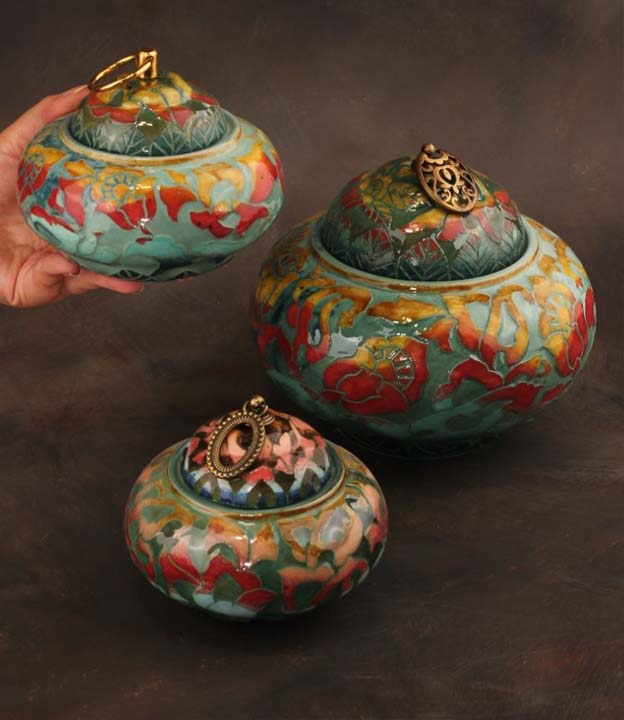
A ceramic lidded jar can anchor an entrance console. A decorative dish can become dimensional wall art. A tile composition can give architecture a crafted surface. A ceramic pomegranate can introduce symbolism. A sculptural object can make a shelf feel curated rather than filled.
The essential principle is editing. A room rarely needs more objects when one stronger object can perform the visual work with greater clarity.
1. Strong Form Creates Immediate Authority
Form is the first quality the eye understands. Before colour, glaze or pattern, the silhouette determines whether a ceramic object has presence.
A tall jar creates vertical dignity. A shallow dish introduces openness and curve. A rounded symbolic form softens straight architecture. A tile or relief object creates order on a wall.
Imagine the piece without its surface decoration. If the shape still feels balanced, memorable and purposeful, the form is strong enough to support a statement role.
2. Scale Must Belong to the Room
Statement ceramic decor succeeds through proportion, not size alone.
A piece that is too small can disappear on a broad wall or large console. An oversized object can overwhelm a narrow shelf, restrict circulation or make the surrounding furniture feel weak.
Judge scale against the surface, wall height, nearby furniture and normal viewing distance. Large villa entrances and double-height rooms often require stronger visual weight, while apartments usually benefit from one carefully scaled object rather than several smaller pieces.
3. Surface Gives the Object Its Atmosphere
Glaze, texture and brushwork determine how the object feels once its form has been understood.
Glossy glaze can deepen colour and reflect light. Matte surfaces create architectural calm. Relief holds shadow. Layered glazes add visual complexity. Hand-painted detail introduces rhythm and authorship.
A statement object does not need every decorative technique. Too many competing effects can weaken the form. The surface should intensify the object’s character rather than distract from it.
4. Light Activates Ceramic
Ceramic changes throughout the day. Natural light reveals colour variation, side light exposes relief and warm evening illumination can make glaze appear deeper and more atmospheric.
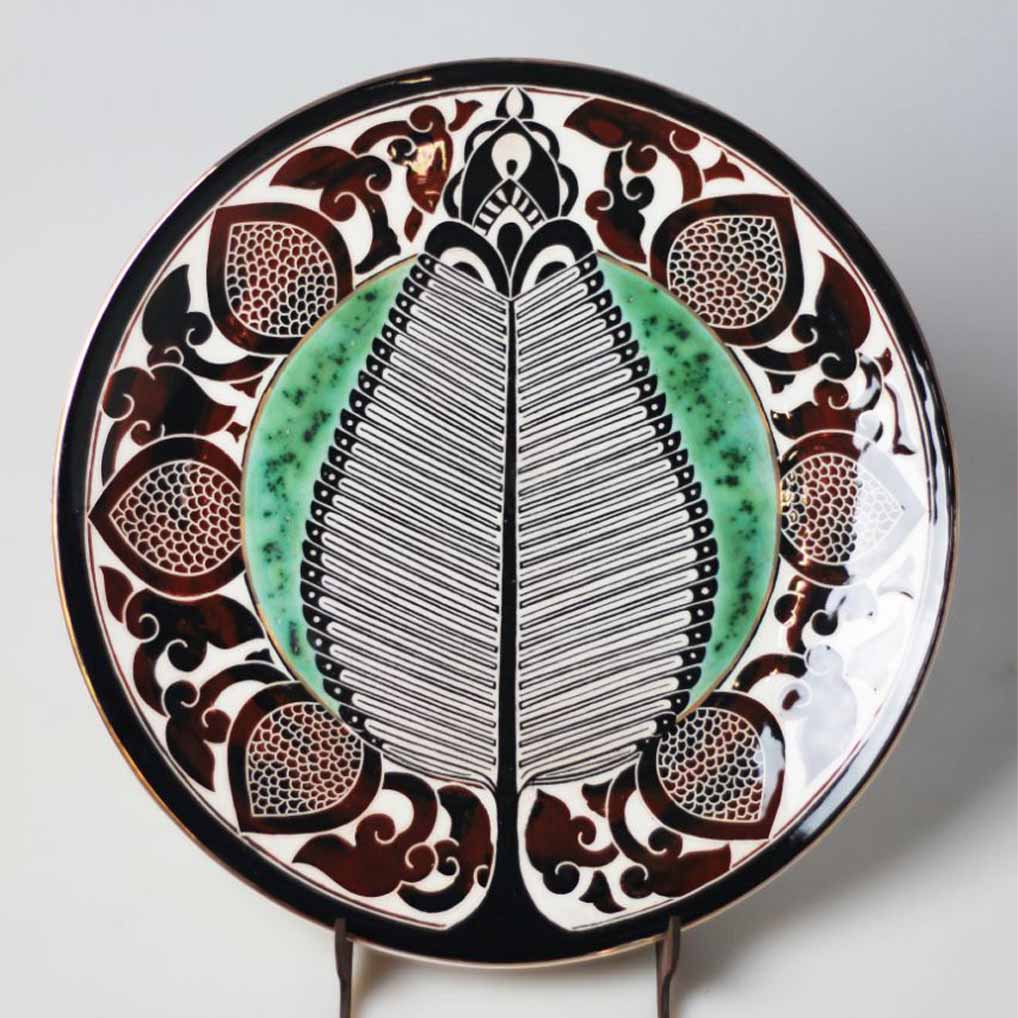
Place the object where light can reach its most important features. A jar benefits from light moving across its shoulder and lid. A wall dish needs enough illumination to reveal the curve. A textured tile becomes stronger when light creates fine edge shadows.
Avoid harsh glare on highly reflective surfaces. The most refined lighting reveals ceramic rather than making it look theatrical.
5. Negative Space Gives the Piece Power
A statement object requires visual breathing room. Without it, even a strong piece becomes another accessory in a crowded arrangement.
Negative space acts as a frame. Leave room around the silhouette, above the object and between it and nearby frames, lamps or books.
This is particularly important on shelves and consoles, where several small items can quickly weaken the main object. One lead piece with one quiet supporting element is usually more effective than a dense collection.
6. Placement Determines the Type of Impact
The same ceramic piece can communicate differently depending on where it is used.
In an entrance, it establishes the first impression. On a living-room console, it can organise the composition. On a coffee table, it creates an intimate focal point. On a dining sideboard, it can reinforce hospitality. On a wall, it becomes part of the architecture.
Choose the location before buying the object. This makes it easier to judge size, viewing angle, lighting, safety and the amount of open space available.
7. Material Pairing Strengthens the Statement
Supporting materials should make the ceramic clearer, not compete with it.
Wood adds warmth. Stone provides grounding. Brass introduces refinement. Glass adds visual lightness. Linen softens the composition. Books create context and height.
If the ceramic is richly patterned, use quieter materials nearby. If the piece is minimal, stronger textures can support it. If the glaze is glossy, balance it with matte or natural surfaces.
One material should lead. Everything else should support.
8. Symbolism Can Add Emotional Depth
Some ceramic pieces become statements because they carry meaning as well as form.
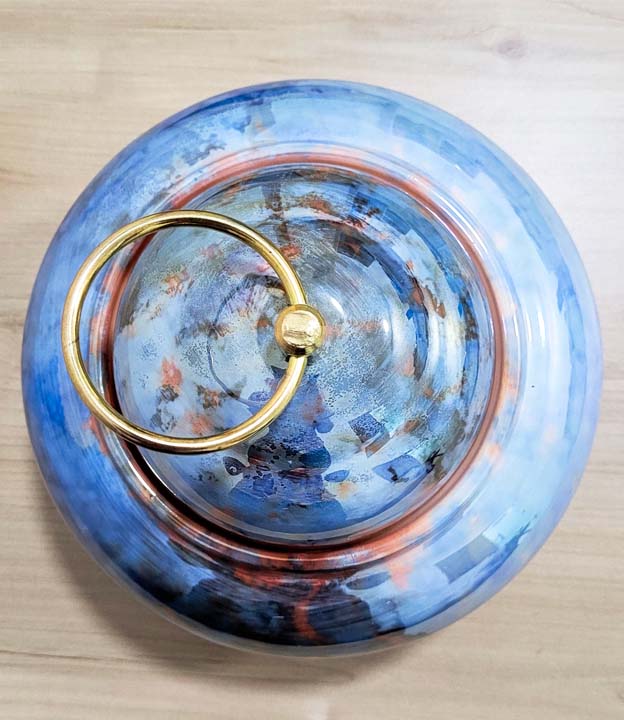
A ceramic pomegranate may suggest abundance, welcome or continuity within particular cultural and personal contexts. A lidded jar can suggest keeping, protection or ritual. A hand-painted motif may connect the object to memory, place or artistic tradition.
Symbolism should remain subtle. The piece should enrich the room without turning the interior into a theme.
9. Craftsmanship Must Support the Visual Impact
Handmade does not automatically mean luxurious. A statement piece still needs technical and artistic discipline.
Inspect the stability of the base, the balance of the form, the quality of edges, the fit of lids, the control of glaze and the consistency of painted detail. View the object from several angles.
Controlled variation can add life. Structural cracks, unstable proportions, careless finishing or weak mounting arrangements should not be accepted as signs of craft.
Statement Ceramic Decor in Entrance Areas
An entrance is one of the strongest locations for a single ceramic focal point because the viewer encounters it before the rest of the interior.
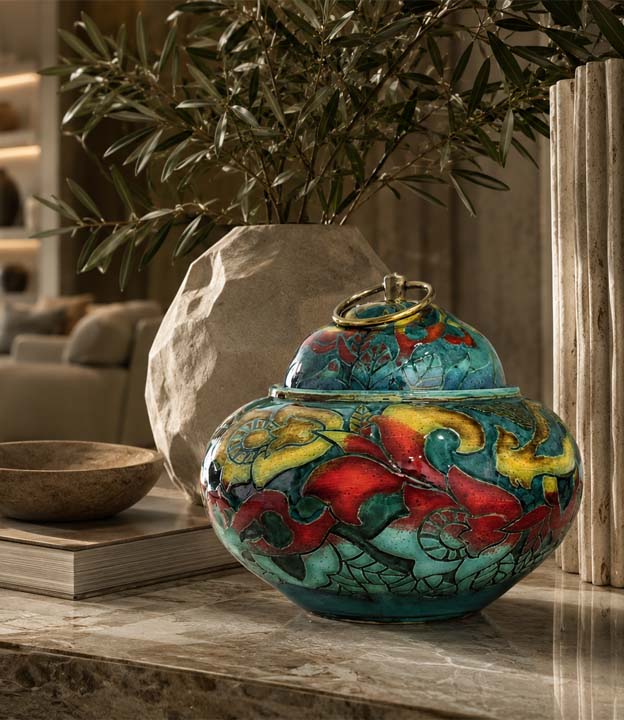
A tall lidded jar on a console can create vertical elegance. A sculptural object in a niche can feel gallery-like. An upright dish can add curve and colour. A symbolic piece can create a warmer welcome.
Keep the surface controlled. One ceramic anchor, one lighting element and sufficient negative space usually create a stronger first impression than several unrelated objects.
Statement Ceramic Decor in Living Rooms
Living rooms need objects that give the space character without making it feel staged.
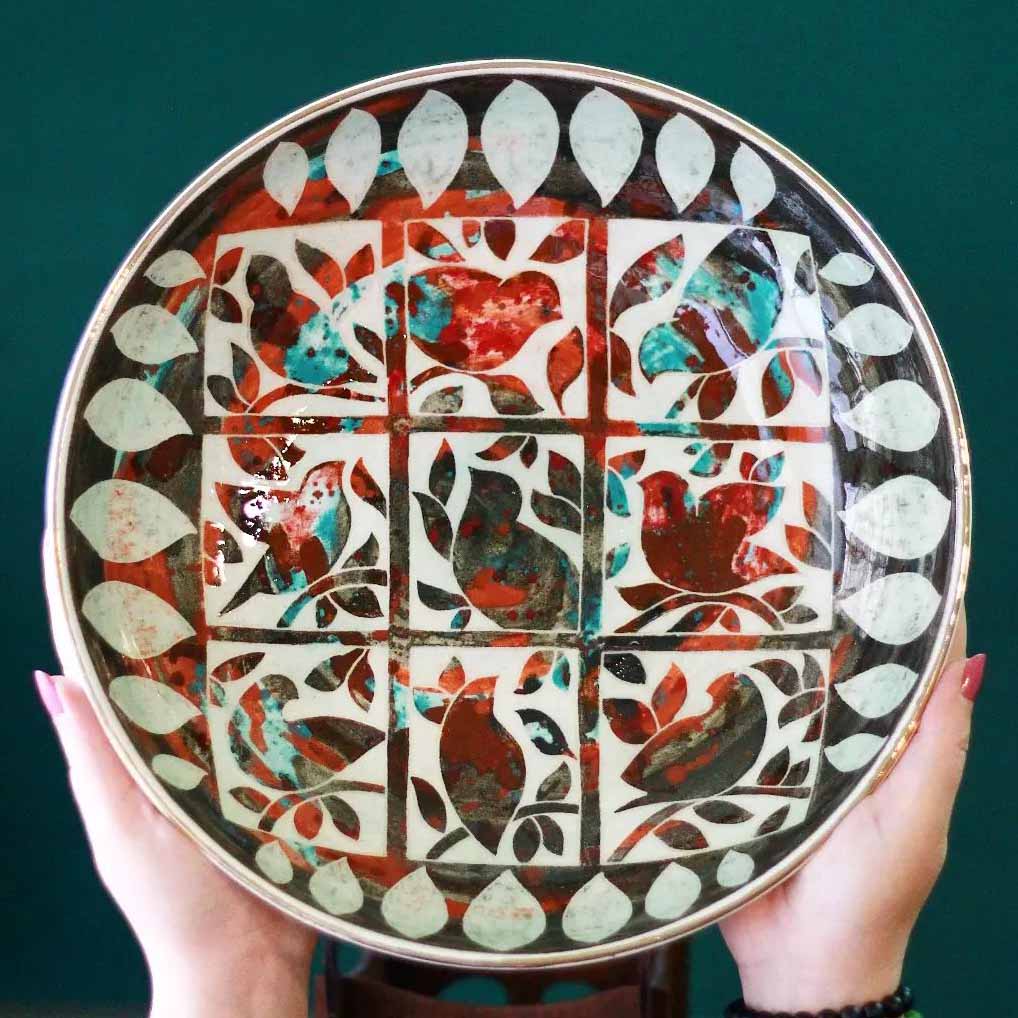
Use a sculptural object to anchor a shelf, a glazed dish to soften a wall, a jar to add height to a sideboard or a symbolic ceramic piece to bring warmth to a console.
The ceramic should relate to the room through material, palette or mood. It should feel integrated with wood, textiles, stone, books and lighting rather than isolated as a decorative afterthought.
Statement Ceramic Decor in Dining Rooms
Dining rooms have a natural relationship with ceramic because the material already belongs to the language of gathering and hospitality.
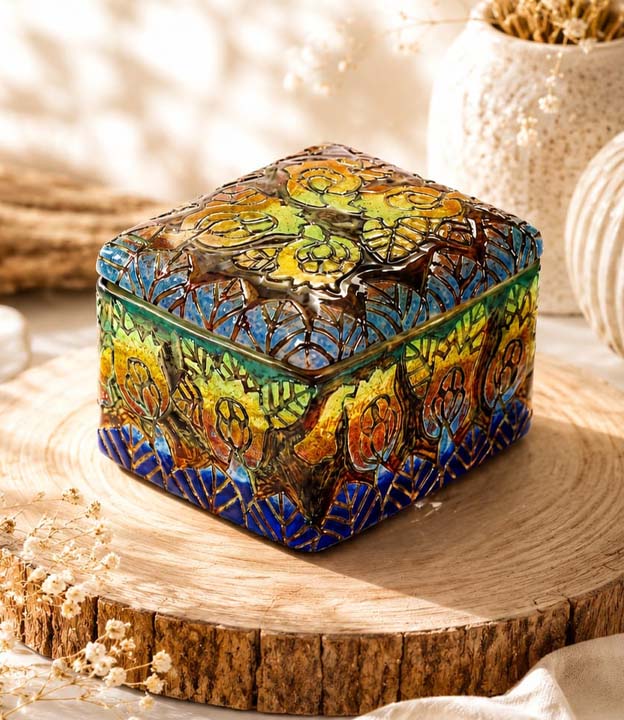
A large decorative dish can become a sideboard focal point. A tile composition can form a crafted backdrop. A lidded jar can introduce ceremony. A symbolic object can add meaning without occupying the dining table.
The arrangement should remain generous and usable. Statement styling should enrich hospitality, not make the room feel untouchable.
Statement Ceramic Decor on Console Tables
Console tables naturally frame objects and are therefore ideal for statement ceramic decor.
A practical composition uses one main ceramic piece, one supporting element, a lighting relationship and open surface around the objects.
Consider the wall behind the table. A large mirror can multiply visual complexity, so fewer pieces are required. Artwork may call for a quieter object. A plain wall can support a stronger silhouette or richer glaze.
Statement Ceramic Decor on Shelves
Shelves can weaken statement pieces when they are overfilled.
Reserve one shelf area for the ceramic object, or place it beside a small group of books with visible open space. An upright dish can act as a backdrop; a jar can stand alone; a sculptural piece can occupy the centre of a wider shelf.
Do not repeat strong ceramic objects at every level. Rhythm is created through pauses as well as objects.
Statement Ceramic Wall Art
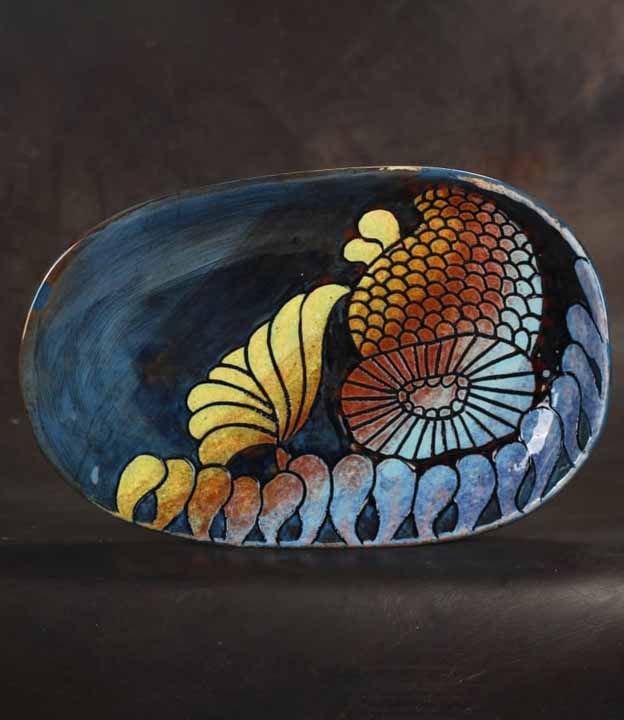
Ceramic wall art brings physical depth that framed prints cannot provide. Dishes, tiles and relief objects project from the wall, catch light and cast shadow.
Scale the wall piece in relation to nearby furniture. Above a console, the composition should relate to the width of the table. In a niche, the object needs space around its edge. In a corridor, it must remain clear of movement and be securely mounted.
Installation quality is part of the design. Poor alignment or unsuitable fixings can undermine even an exceptional piece.
Statement Ceramic Decor for Dubai Homes and Villas
Dubai interiors often combine strong daylight with marble, stone, timber, metal and neutral upholstery. A ceramic statement piece can add warmth and individuality to this polished material palette.
In large villas, use sufficient scale and consider the viewing distance across entrances or double-height living areas. In apartments, choose one clear focal point that does not restrict circulation or overwhelm the furniture.
Test glossy surfaces near windows at different times of day. Keep valuable objects away from unstable edges, busy walkways and areas exposed to frequent handling.
Statement Ceramic Decor in Commercial Interiors
Hotels, boutiques, restaurants, reception areas and showrooms need memorable focal points that support the brand atmosphere.
A tile composition can identify a reception wall. A large jar can give a boutique display greater dignity. A sculptural object can make a showroom feel curated. A symbolic piece can reinforce hospitality.
For professional projects, confirm dimensions, weight, mounting, quantity, lead time, replacement availability and expected variation between pieces.
How to Choose the Right Statement Piece
Begin with the intended location, then assess the object.
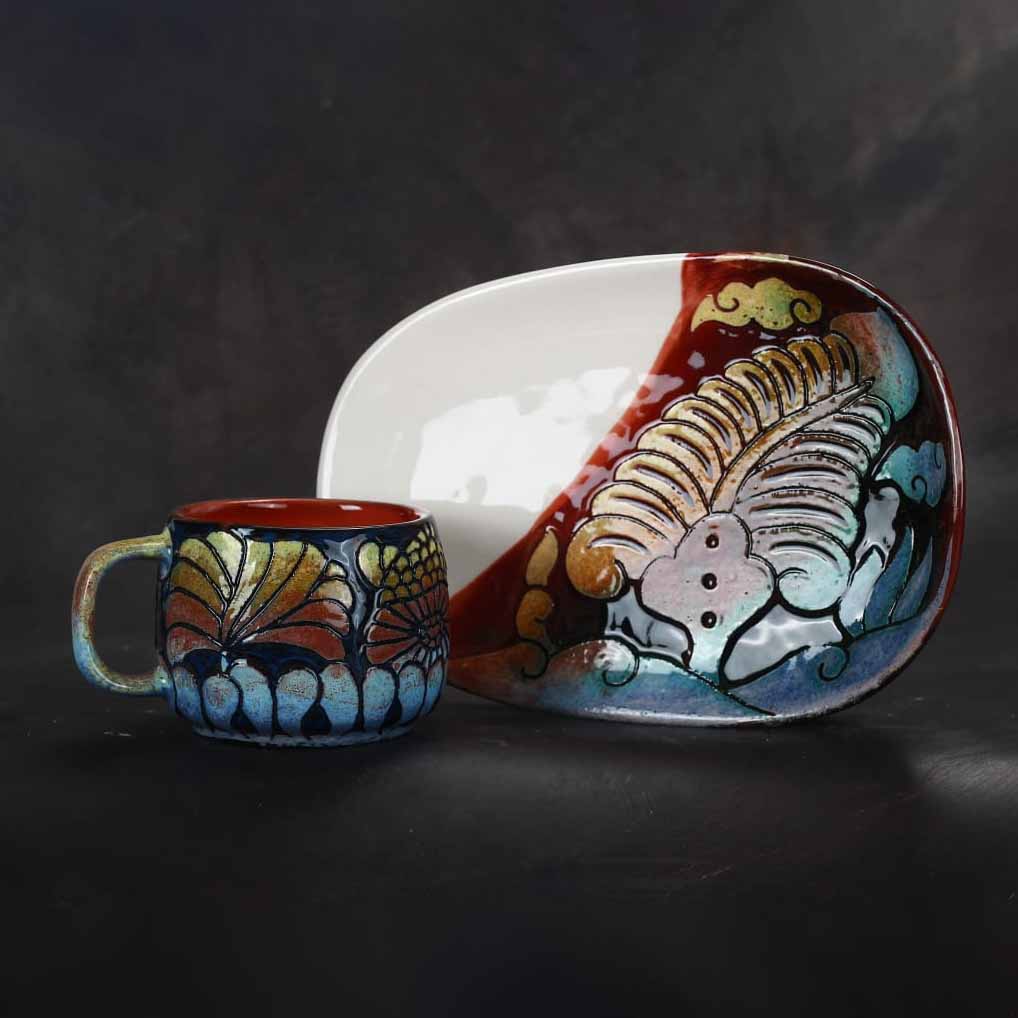
Ask whether the silhouette is strong, the scale suits the room and the surface supports the form. Check how the piece looks from the normal viewing distance and whether light reveals its key qualities.
Consider whether the object adds focus, material contrast, symbolism or emotional value. A true statement piece should improve the room even when no other accessories are added around it.
A Practical Styling Formula
Use this formula: one statement ceramic object, one supporting material, one lighting relationship and negative space.
For an entrance, combine a tall jar with a wooden console and warm light. For a shelf, place one sculptural object beside books and leave open space. For a dining room, use a large decorative dish with linen, wood and soft illumination.
The formula works because it establishes hierarchy. The ceramic leads; the surrounding elements explain and support it.
Common Mistakes to Avoid
Large size without strong form does not create presence.
Several competing statement pieces remove hierarchy. If everything demands attention, nothing becomes memorable.
Poor scale, inadequate lighting, crowded placement and colour chosen without reference to the room can all weaken the result.
Do not confuse visible handmade variation with poor finishing. Craft should still demonstrate control, stability and thoughtful resolution.
Why Statement Ceramic Decor Remains Timeless
For broader context on ceramics as decorative and artistic objects, consult the V&A Ceramics Collection.
Statement ceramic decor combines material, craft, form and presence in one object.
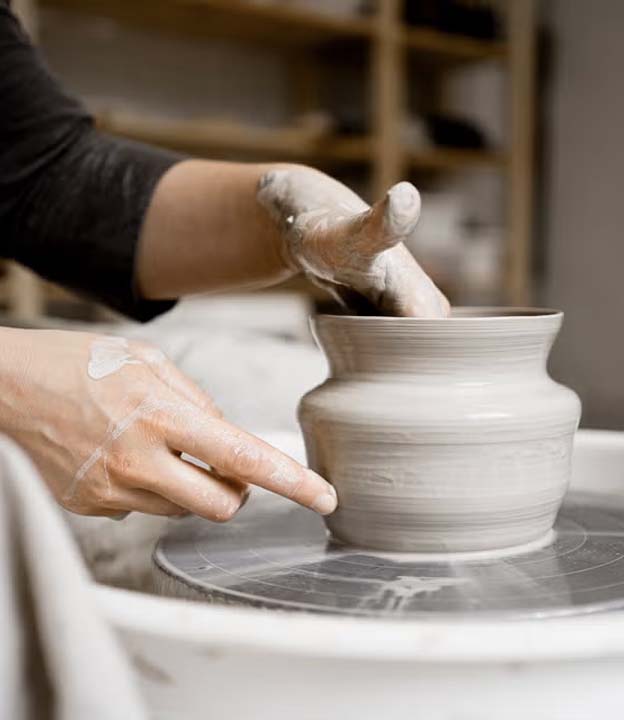
Clay gives the piece physical substance. The maker gives it form. Fire transforms it. Glaze, texture or brushwork adds surface depth. Light completes the object inside the room.
A strong ceramic piece remains relevant because it does not depend only on a passing trend. It gives the eye a place to pause and the room a clearer identity.
Explore Statement Ceramic Decor at Checkmark Trading
At Checkmark, our ceramic collection is selected for interiors where craftsmanship, artistic presence and material warmth matter.
The collection includes ceramic art objects, decorative dishes, ceramic lidded jars, ceramic wall tiles, ceramic pomegranate decor, glazed pieces and hand-painted objects for refined homes, villa interiors, hospitality spaces, entrances, living rooms and dining areas.
Whether selected as a wall feature, console anchor or sculptural focal point, statement ceramic decor can bring focus, depth and quiet distinction into an interior.