
 Chandeliers
 Pendant Lights
 Ceiling Lights
 Wall Sconces
 Table Lamps
 Floor Lamps
 Ceramic Lidded Jar
 Decorative Dishes
 Pomegranates
 Qajar Collection
 Decorative Wall Tiles
 Border Tiles
 Hand-Painted Tiles
 Block Tiles
 Wall Clocks
 Side Tables
 Candle Holders
Decorative Ceramic Plates vs Dishes: 7 Essential Differences

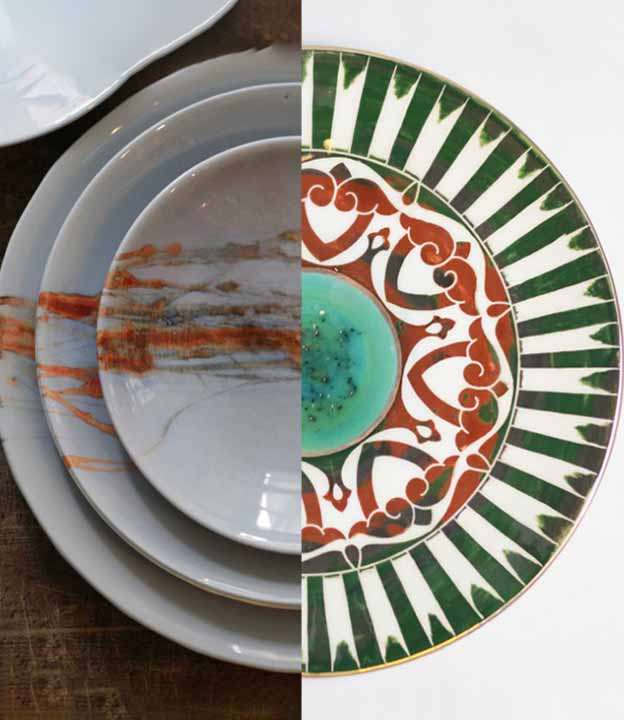
Table of Contents
ToggleIntroduction: Decorative Ceramic Plates vs Dishes
Decorative ceramic plates vs dishes is an important comparison for buyers who want to choose the right object for a wall, table, shelf, console or curated ceramic display.
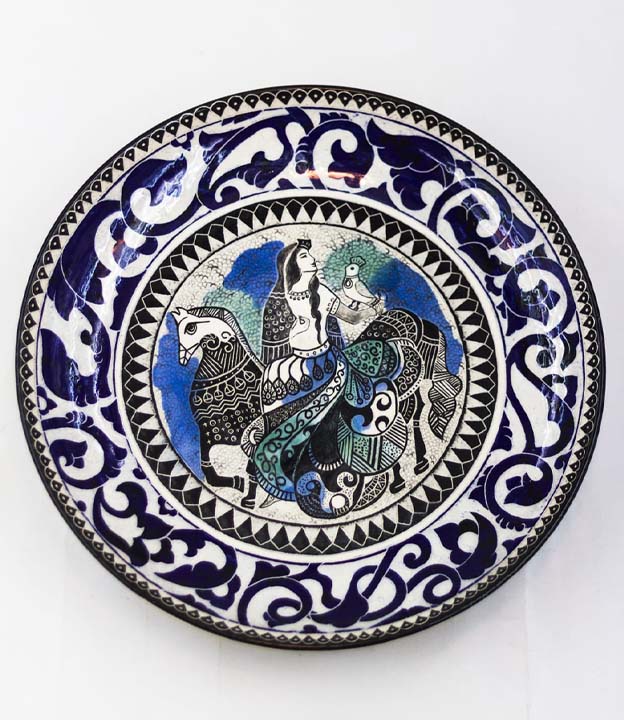
The two terms are often used interchangeably, but they do not always describe the same form or interior role. A decorative plate usually suggests a flatter, recognisable circular object associated with wall display, plate stands and traditional dining-room styling. A decorative dish is a broader term that can include shallow, curved, sculptural, glazed or hand-painted forms used across walls, tables, shelves and consoles.
The distinction is not about declaring one category superior. It is about understanding form, depth, placement, visual authority and customer perception so the object can be described and styled correctly.
For Checkmark, this distinction also supports a clear catalogue structure: familiar plate-related language can capture search interest, while Decorative Dishes remains a broader and more flexible product category for artistic ceramic pieces.
1. Form: Plates Are Usually Flatter
A decorative ceramic plate is generally flatter, with a recognisable centre and rim. Its circular outline is easy to understand from a distance and works naturally in upright display.
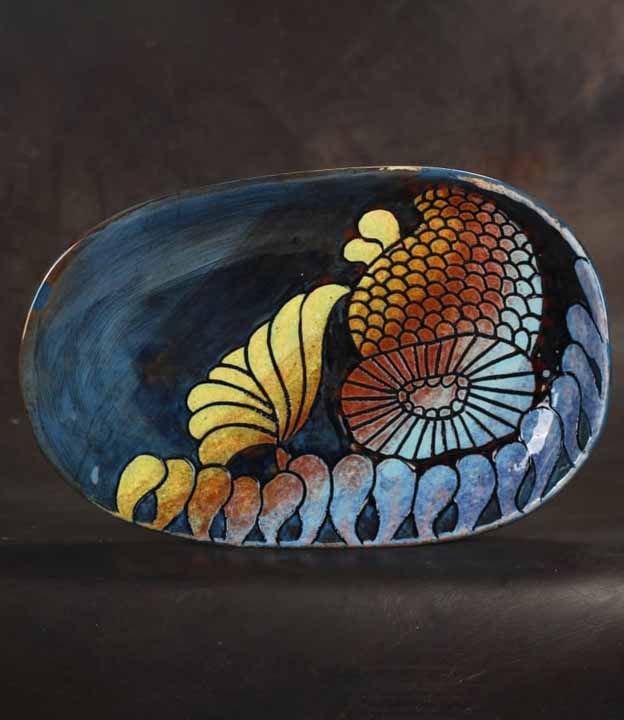
A decorative ceramic dish may be shallow or deeper, round or oval, open or sculptural. It can have more volume, a stronger curve and greater visual depth.
This difference affects how the object behaves in the room. Plates often read as graphic circular elements. Dishes can read as both surface and sculpture.
2. Display: Plates Naturally Suit Walls
Decorative ceramic plates are especially effective on walls because their flatter profile makes them easy to group, align and view frontally.
They work well in formal dining rooms, symmetrical arrangements, traditional plate walls and compact compositions above consoles or sideboards.
Decorative dishes can also become wall art, but their additional depth may produce stronger shadow and a more sculptural effect. Secure mounting is essential for both forms.
3. Styling: Dishes Offer Greater Flexibility
Decorative ceramic dishes usually provide more styling options because they can stand upright, rest flat, sit on a table or become part of a layered shelf composition.
A dish can anchor a coffee table, soften a console, act as a dining-table centrepiece or provide a backdrop for a smaller ceramic object.
Its flexibility makes it particularly useful in modern and curated interiors where one object may move between surfaces over time.
4. Surface: Depth Changes How Glaze and Brushwork Behave
Glaze, brushwork and texture appear differently on flat and curved ceramic surfaces.
On a plate, painted motifs are usually easy to read frontally. The circular boundary behaves almost like a frame. On a dish, glaze can pool in the centre, deepen along curves and change under light, creating more dimensional surface effects.
Neither approach is automatically better. The choice depends on whether the buyer values graphic clarity or sculptural depth.

5. Perception: “Plate” Sounds More Functional
The word plate is familiar and search-friendly, but it can also suggest tableware or everyday dining use.
The word dish is broader. It can describe a decorative, sculptural or collectible object without implying that the item is intended for food service.
This matters in premium catalogues. A handcrafted object may be better positioned as a decorative ceramic dish or ceramic art object when the design, glaze or painting carries artistic value beyond ordinary tableware.
6. Scale: Plates Build Rhythm, Dishes Build Presence
A group of plates can create strong rhythm on a wall because repeated circles are easy to organise visually.
A single dish may create more presence on a table or console because depth, curve and shadow give the object greater volume.
Use plate groupings when repetition and pattern are important. Use a dish when one object needs to hold space more independently.
7. Use: Decorative Does Not Mean Food-Safe
Whether an object is called a plate or dish does not determine whether it is suitable for food, heat, water or dishwashing.
Decorative pieces may use glazes, metallic details, paints or finishes intended only for display. Buyers should confirm functional suitability separately.
This distinction should be stated clearly on product pages so customers do not confuse decorative purpose with tableware certification.
What Is a Decorative Ceramic Plate?
A decorative ceramic plate is a plate-like ceramic object selected primarily for display. It may be hand-painted, glazed, textured, embossed or patterned.
It is most effective when its front-facing surface carries the main artistic value. Wall display, plate stands, dining-room arrangements and formal shelving are natural applications.
A strong decorative plate should feel intentionally displayed rather than like ordinary tableware placed on a wall.
What Is a Decorative Ceramic Dish?
A decorative ceramic dish is a broader form that may be shallow, deep, oval, rounded, sculptural, glazed or hand-painted.
It may be displayed upright, placed flat on a coffee table, used on a console or styled as part of a ceramic collection.
The term is useful for artistic ceramic objects that resemble table forms but are intended primarily for interior display.
Decorative Ceramic Plates vs Dishes for Wall Styling
Choose plates when the design depends on a clear circular outline, frontal pattern and orderly grouping.
Choose dishes when the wall needs stronger depth, edge shadow, glaze variation or sculptural presence.
For large walls, one small plate or dish may disappear. Use a properly scaled piece or a controlled grouping. Relate the composition to the furniture below it and keep sufficient negative space around the ceramic.
Decorative Ceramic Plates vs Dishes for Tables
Dishes are generally more versatile for coffee tables, dining tables and consoles because their depth gives them greater physical presence.
A plate may work as a flatter visual layer or as an upright accent. A dish can remain empty and still feel complete, or support one carefully chosen symbolic object.
Do not use an artistic ceramic dish as a container for keys, coins or random clutter unless that is its intended function.
Decorative Ceramic Plates vs Dishes for Shelves
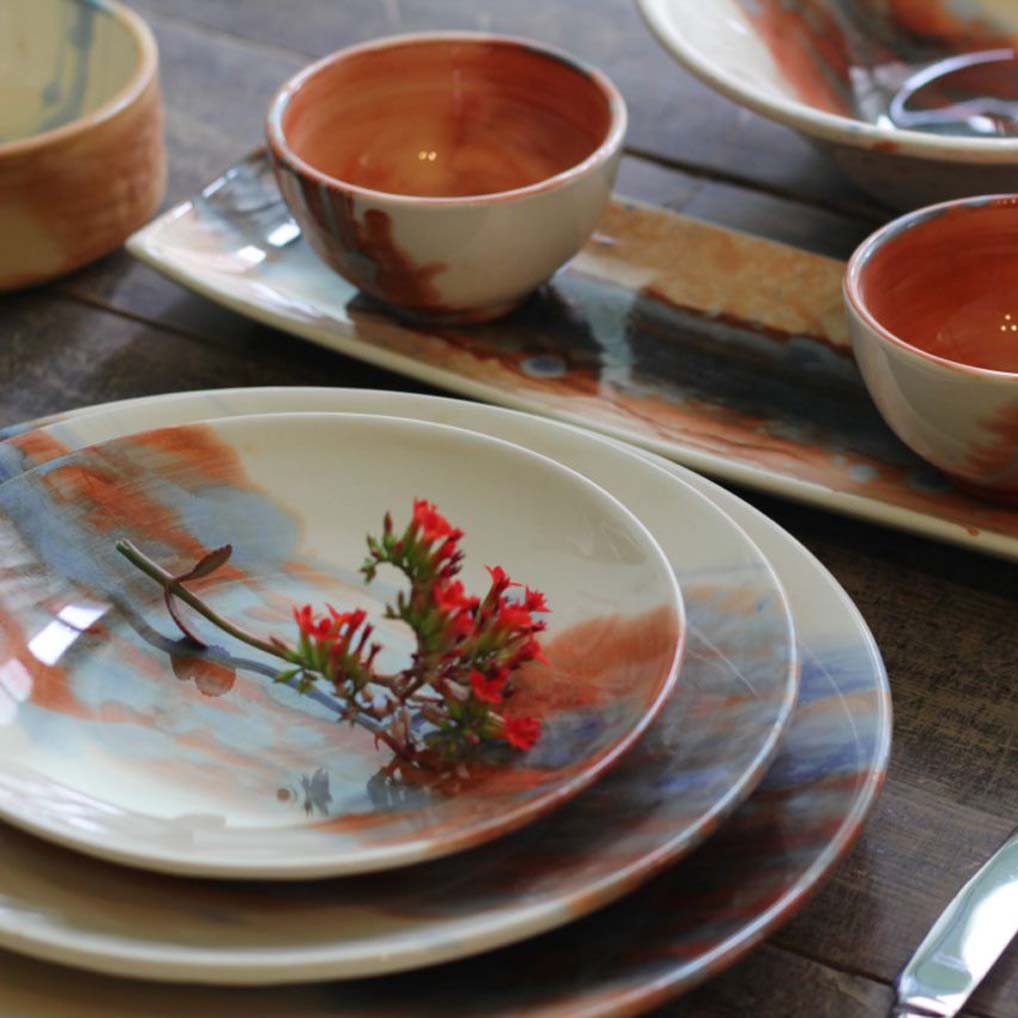
On shelves, both forms help break the repetition of books, frames and rectangular storage boxes.
A plate creates a clean circular backdrop. A dish can be upright, angled or placed flat, making it more adaptable to layered shelf styling.
Give the ceramic enough breathing room. Crowded shelves weaken the form and hide surface detail.
Hand-Painted Plates and Dishes
Hand painting can turn both forms into small works of art.
On plates, brushwork is often read directly, almost like a framed composition. On dishes, painted details interact with curve, depth and changing light.
Quality remains more important than the label. Look for controlled brushwork, coherent pattern, resolved edges and a design that supports the ceramic form.
Glazed Plates and Dishes
Glaze can give either form colour depth, reflection and surface movement.
Plates display glaze clearly when upright. Dishes often reveal more variation because light moves across the curve and colour may deepen in recessed areas.
Place glazed pieces where natural or warm artificial light can reveal their character without creating excessive glare.
Which Option Feels More Premium?
For broader context on ceramics as functional and decorative art, see the V&A Ceramics Collection.
Premium value depends on craftsmanship, design, surface quality, scale and placement rather than the word used in the product name.
However, Decorative Dishes is often the stronger category label for Checkmark because it allows more variation in depth, shape and styling role. Decorative Plates remains useful within article copy, image descriptions and product wording when the piece is clearly plate-like.
Ceramic Art Objects can be used as the broader premium category language when the piece functions primarily as art.
Styling Plates and Dishes with Other Ceramic Objects
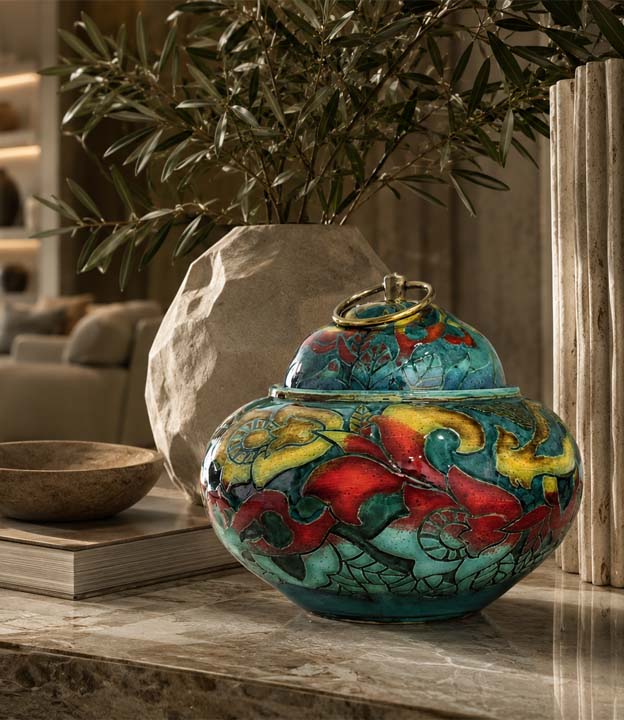
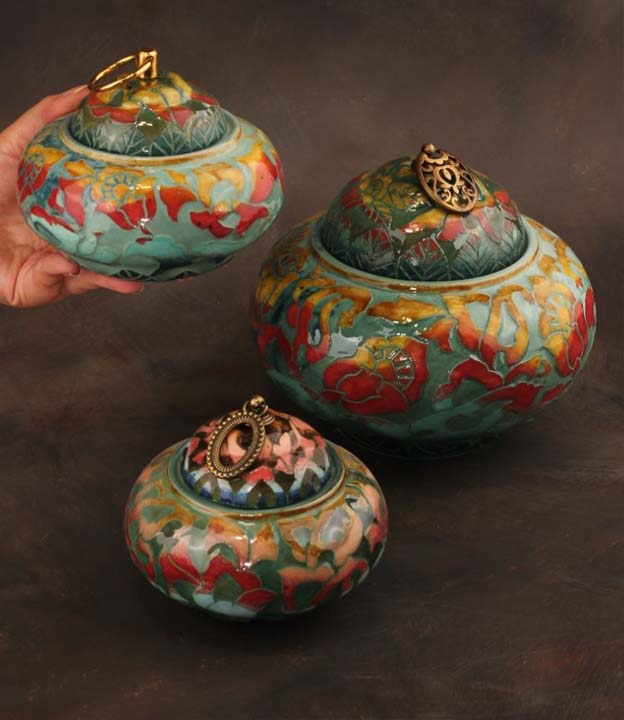
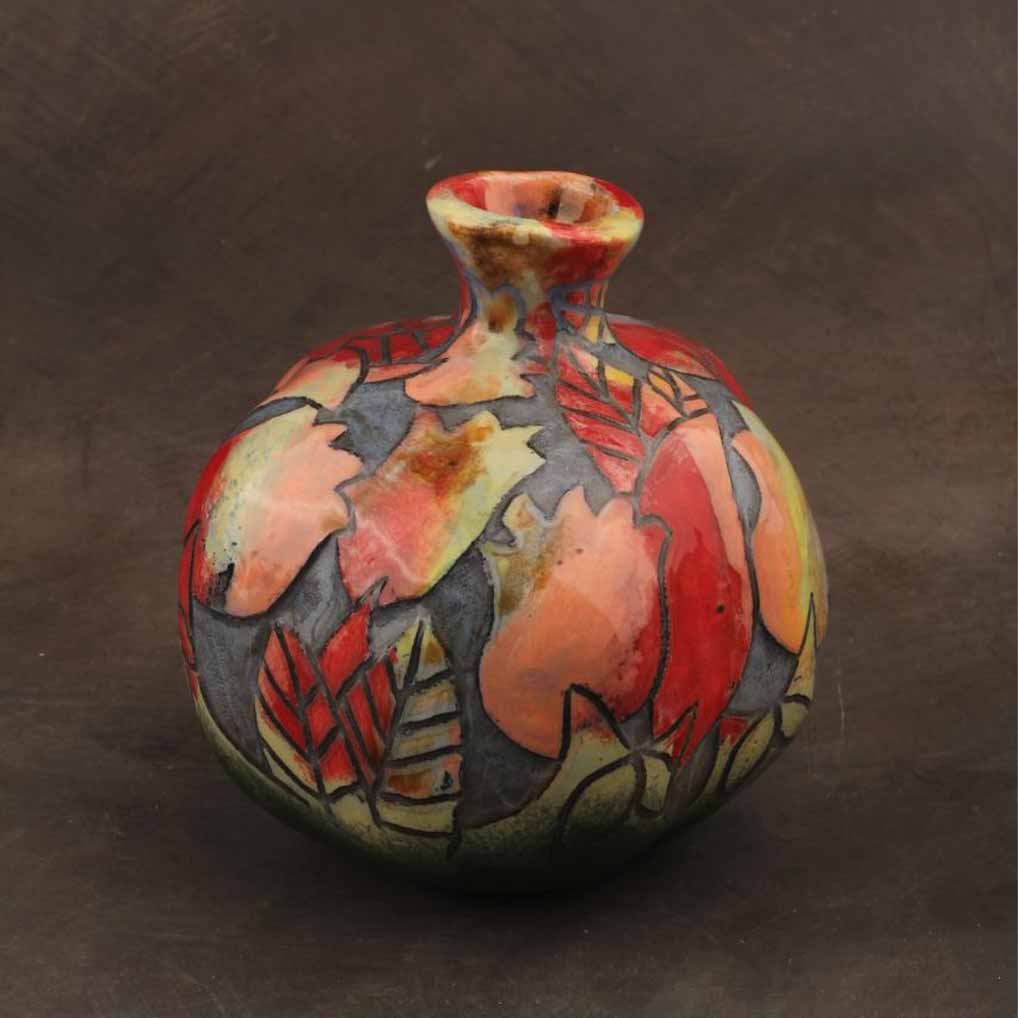
Plates and dishes pair naturally with ceramic lidded jars, wall tiles, pomegranate decor and smaller sculptural pieces.
A dish beside a lidded jar creates contrast between openness and containment. A plate near wall tiles can build a layered wall composition. A dish with a ceramic pomegranate can suggest hospitality and abundance.
Vary height, depth and scale. Too many similar circles at the same size can make the arrangement repetitive.
Styling with Wood, Stone, Glass and Metal
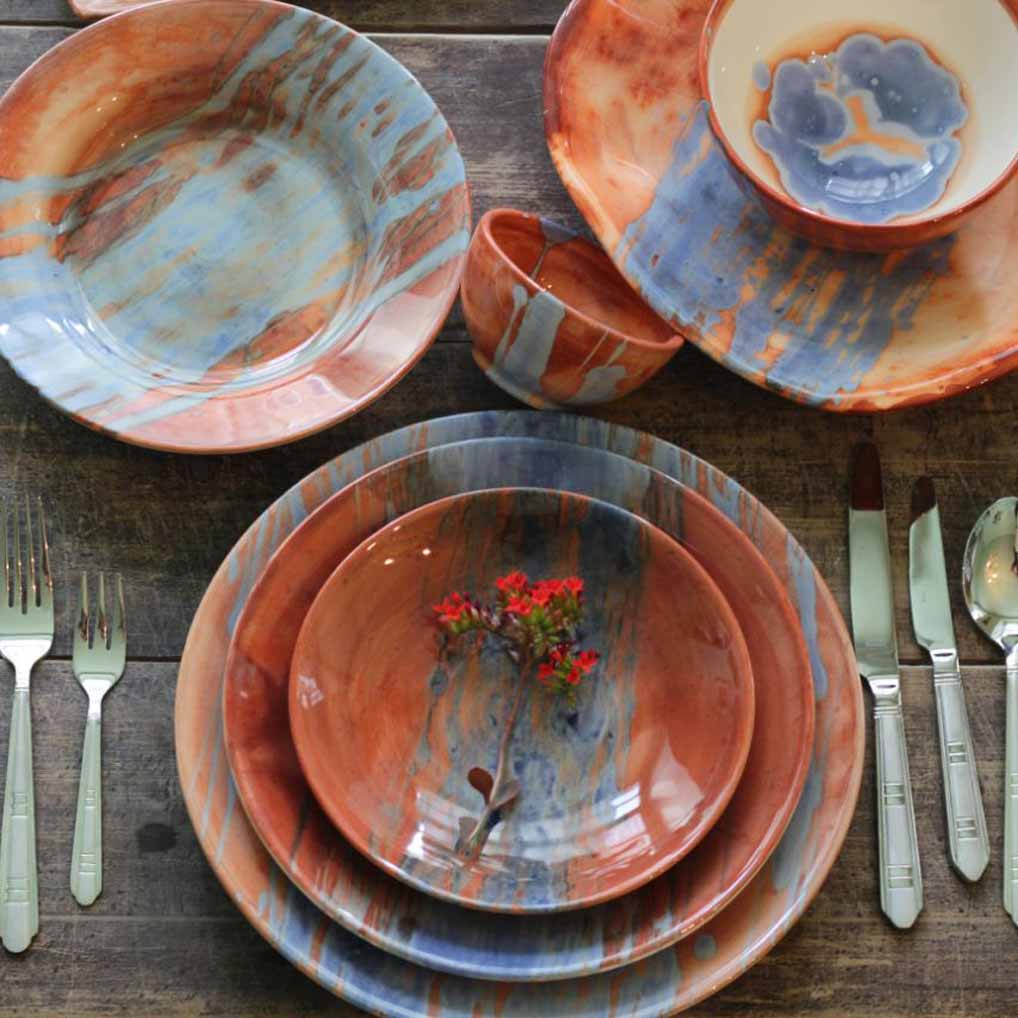
Wood adds warmth, stone provides grounding, glass introduces lightness and metal adds refinement.
A plate on a wooden shelf softens straight geometry. A glazed dish on stone brings curve and colour. A hand-painted piece near brass can feel more formal. A ceramic object inside a glass cabinet can feel protected and gallery-like.
Let the ceramic lead. Supporting materials should clarify the object rather than compete with it.
Decorative Ceramic Plates vs Dishes in Dubai Interiors
Dubai interiors often combine strong daylight with marble, timber, metal and neutral upholstery. Considering decorative ceramic plates vs dishes, they can add colour, craft and softness to this polished material palette.
In large villas, use sufficient scale or a carefully arranged wall group. In apartments, one strong dish or a small plate composition may be more effective than several unrelated accessories.
Test glossy surfaces near windows because direct light can create glare. Secure wall-mounted pieces properly and keep table displays clear of busy circulation paths.
Common Mistakes to Avoid
Do not call every flat ceramic object a plate. Some forms are more accurately described as dishes or ceramic art objects.
Do not choose only by colour. Form, depth, surface, scale and intended placement matter more.
Do not overcrowd shelves or walls. Ceramic needs negative space.
Do not assume decorative pieces are food-safe or dishwasher-safe.
Do not force one keyword into every sentence. Clear taxonomy and natural language are more useful than repetitive wording.
Final Choice: Plate or Dish?
Choose a decorative ceramic plate when the object is flatter, recognizably plate-like and intended mainly for upright display, wall arrangements or formal styling.
Choose a decorative ceramic dish when the object has more depth, broader styling potential or a stronger sculptural role on walls, tables, shelves and consoles.
For Checkmark, Decorative Dishes remains the stronger category name. Decorative ceramic plates should be used as a supporting search term and accurate product description where appropriate.
The most important decision is not the label alone. It is whether the object has the right form, scale, surface and role for the room.
Explore Decorative Ceramic Dishes at Checkmark Trading
At Checkmark, decorative ceramic dishes are selected for interiors where craftsmanship, surface beauty and artistic presence matter.
The wider ceramic collection includes ceramic art objects, lidded jars, wall tiles, pomegranate decor, glazed pieces and hand-painted objects for refined homes, dining rooms, living rooms, entrances, boutique displays and hospitality interiors.
Whether searched as decorative ceramic plates, styled as decorative ceramic dishes or understood as ceramic art objects, the right piece can bring warmth, pattern, texture and quiet distinction into an interior.
Styling Plates and Dishes with Other Ceramic Objects
Plates and dishes pair naturally with ceramic lidded jars, wall tiles, pomegranate decor and smaller sculptural pieces.
A dish beside a lidded jar creates contrast between openness and containment. A plate near wall tiles can build a layered wall composition. A dish with a ceramic pomegranate can suggest hospitality and abundance.
Vary height, depth and scale. Too many similar circles at the same size can make the arrangement repetitive.