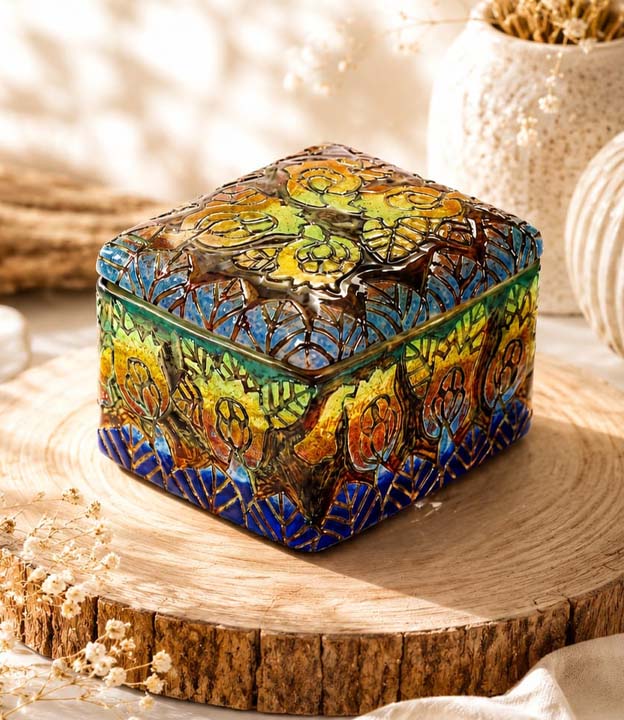

 Chandeliers
 Pendant Lights
 Ceiling Lights
 Wall Sconces
 Table Lamps
 Floor Lamps
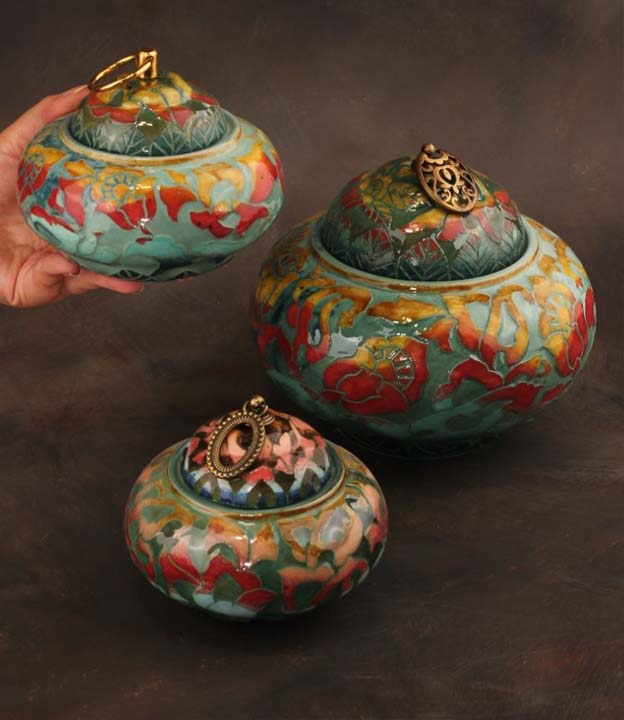
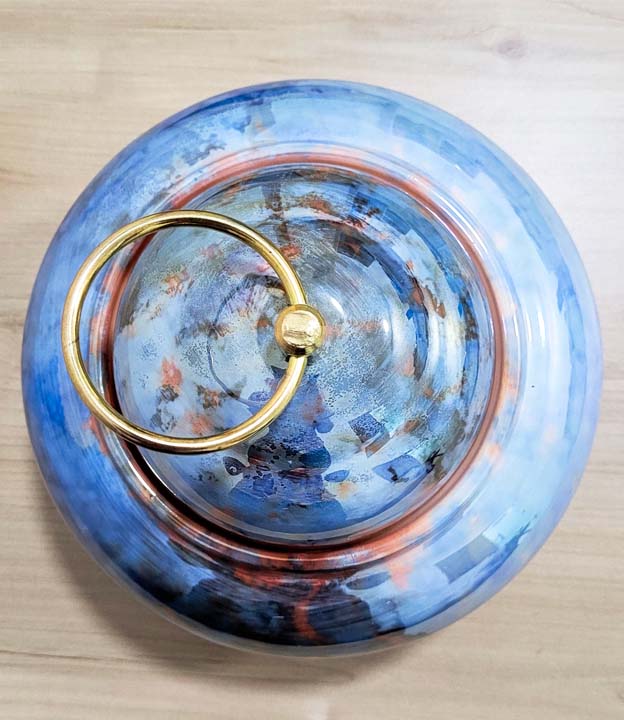
 Ceramic Lidded Jar
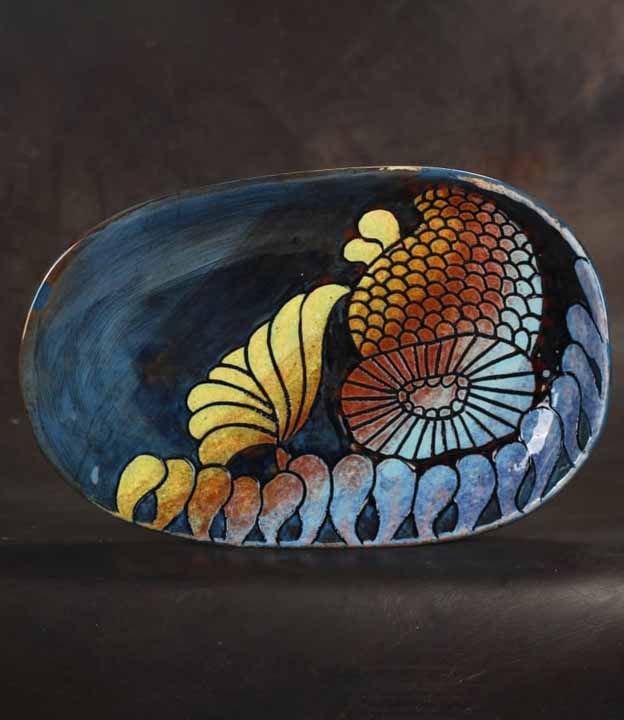
 Decorative Dishes
 Pomegranates
 Qajar Collection
 Decorative Wall Tiles
 Border Tiles
 Hand-Painted Tiles
 Block Tiles
 Wall Clocks
 Side Tables
 Candle Holders
Ceramic Decor for Interior Designers: 11 Essential Specification Strategies

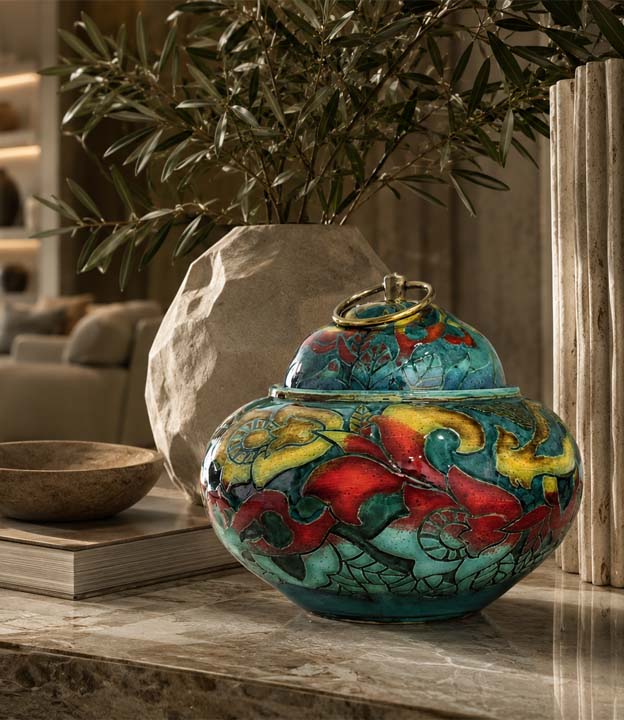
Table of Contents
ToggleIntroduction: Ceramic as a Strategic Design Layer
Ceramic decor for interior designers is not merely a finishing accessory. Used well, it becomes a strategic design layer that adds warmth, scale, texture, visual memory and evidence of craftsmanship to a completed space.
A project may have excellent flooring, joinery, furniture, lighting and fabrics yet still feel impersonal. Ceramic can resolve that gap because it introduces physical form, surface variation and a stronger sense of authorship.
A decorative dish can soften a wall. A lidded jar can give a console vertical structure. A tile composition can turn a niche into a crafted architectural feature. A glazed object can hold light. A symbolic ceramic piece can reinforce hospitality or cultural meaning.
For professional projects, however, visual appeal is only the beginning. Designers also need reliable dimensions, clear use cases, installation information, care guidance, lead times and realistic expectations about variation.
1. Define the Design Role Before Selecting the Object
Every ceramic piece should perform a clear role within the project. It may act as a focal point, introduce height, soften hard materials, add pattern, support a colour story, create symbolism or complete an under-resolved surface.
Beginning with the role prevents decorative overbuying. Instead of asking which object is attractive, ask what the room still needs.
A calm villa entrance may need one tall anchor. A boutique shelf may need one expressive glazed object. A restaurant wall may need a repeated tile composition. A reception console may need a restrained piece with strong form and durability.
2. Match Ceramic Scale to Architecture and Viewing Distance
Scale must be judged against the wall, furniture, ceiling height and normal viewing distance. Small pieces often disappear in double-height villas, hotel lobbies and broad reception areas. Oversized pieces can overwhelm apartments, shallow shelves or narrow corridors.
For professional specification, record the object height, width, depth and weight. Mark the intended placement on drawings or elevations where possible.
A statement piece should be visible from the main approach, while a detailed hand-painted object may be more effective where viewers naturally pause and can see it closely.
3. Use Ceramic to Balance the Material Palette
Ceramic is especially effective when a project contains large areas of marble, glass, metal or polished joinery. Its surface can soften visual hardness and prevent the scheme from feeling sterile.
With wood, ceramic feels warmer. With stone, it becomes grounded. With glass, it gains lightness. With brass or bronze, it becomes more formal. With linen and textured fabrics, it feels more domestic and tactile.
The ceramic should be chosen as part of the material system rather than added after all other finishes have been fixed.
4. Specify Surface Finish According to Light
Glaze, texture and brushwork behave differently under daylight, accent lighting and warm ambient light.
Glossy glazes reflect and deepen colour but may create glare near large windows. Matte finishes feel calmer and more architectural. Textured surfaces need side light to reveal shadow. Hand-painted details require enough illumination to remain legible.
Where possible, review samples in lighting conditions similar to the completed project. Surface selection should support the lighting plan, not work against it.
5. Build a Clear Visual Hierarchy
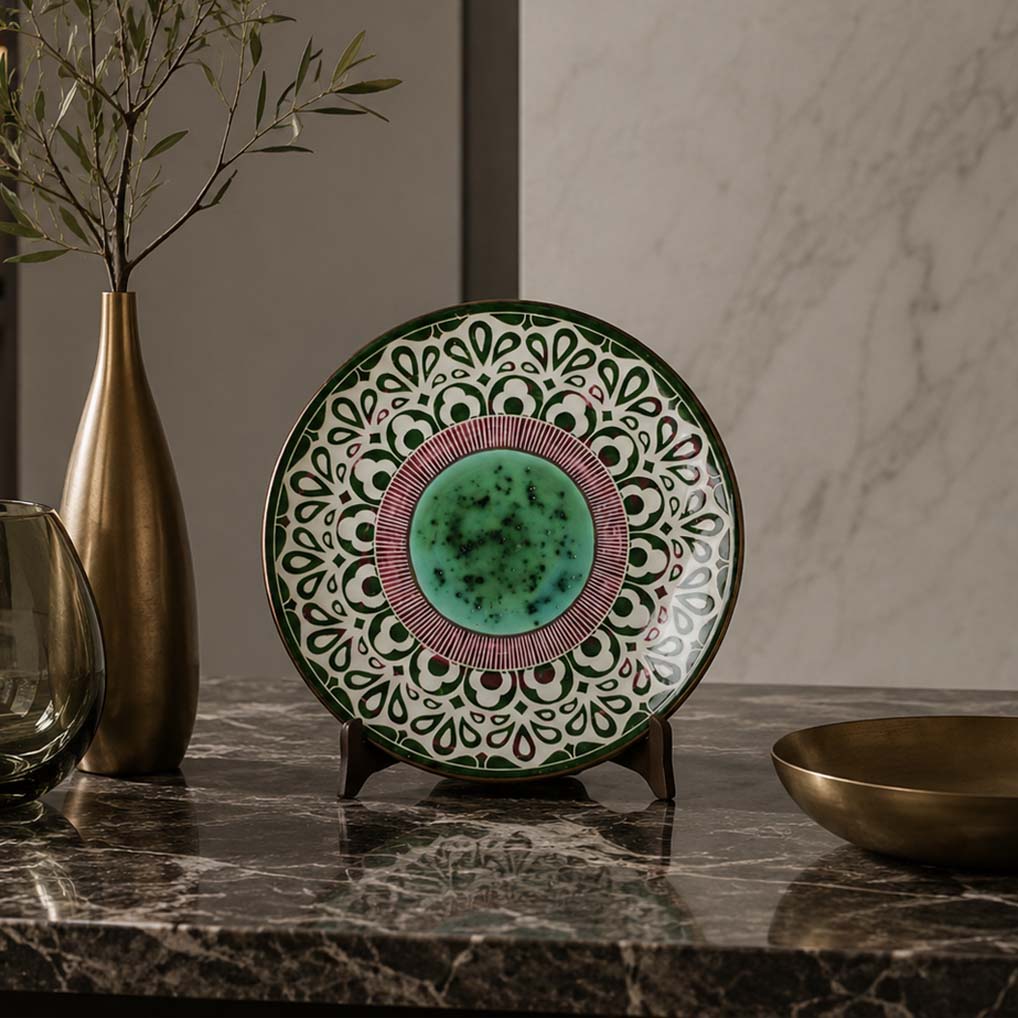
Ceramic becomes most effective when one piece or composition leads and surrounding elements support it.
Use a statement dish, jar, tile group or sculptural object as the principal ceramic moment. Then reduce the visual strength of nearby accessories through calmer colour, simpler form or more negative space.
If several ceramic pieces are required, vary height, depth and scale while maintaining a shared relationship through colour, glaze, motif or material mood.
6. Use Ceramic Wall Pieces as Architecture, Not Filler
Ceramic wall tiles, relief pieces and decorative dishes project from the wall, catch light and cast shadow. This gives them a stronger spatial effect than flat printed artwork.
For specification, consider composition size, mounting method, substrate, weight, spacing, alignment and access for future maintenance.
A tile feature should relate to the furniture or architectural element below it. A dish arrangement should be planned as a unified composition rather than hung as unrelated objects.
7. Select Freestanding Objects for Stability and Use
Console pieces, shelf objects and lidded jars must be judged for stability as well as appearance.
Check the base, centre of gravity, projection depth and risk of accidental contact. High-traffic hospitality and reception areas require more conservative placement than private residential shelves.
Display stands, discreet museum putty or fixed supports may be appropriate, but the method should suit the object and the client’s maintenance routine.
8. Distinguish Decorative Use from Functional Use
Not every ceramic object is food-safe, water-holding, dishwasher-safe, heat-resistant or suitable outdoors. Decorative appearance does not prove functional performance.
Professional specifications should state whether the object is decorative only. For food contact, planters, wet areas or exterior applications, request the relevant product information rather than making assumptions.
This distinction protects the designer, supplier and client from incorrect use.
9. Plan for Handmade Variation
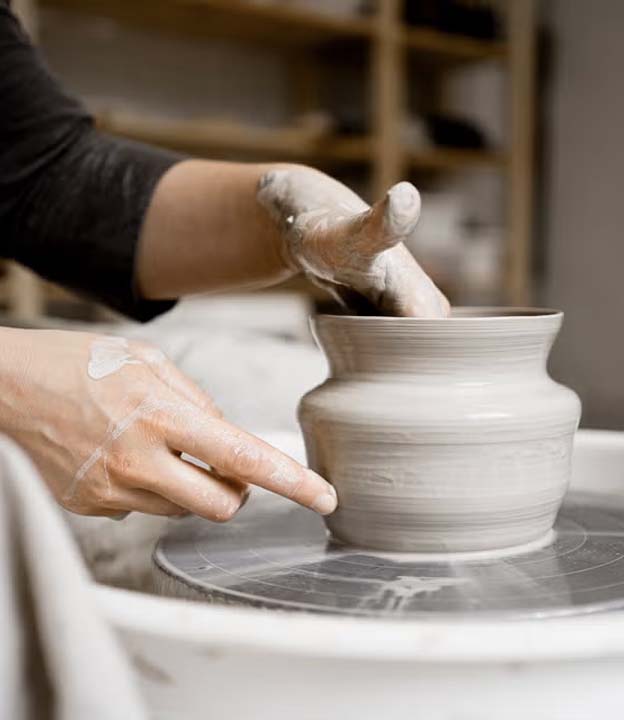
Hand-finished and hand-painted ceramics may show controlled variation in colour, glaze movement, brushwork, dimensions or surface character.
This variation can strengthen the project by making the objects feel individual, but it must be managed. For sets, pairs or repeated commercial installations, agree an acceptable variation range before ordering.
Where exact matching is critical, request photographs, samples or batch approval before final procurement.
10. Treat Procurement Information as Part of Design Quality
For B2B projects, good product presentation reduces uncertainty. Designers need dimensions, weight, finish, colour, intended use, mounting guidance, care instructions, quantity availability and realistic lead times.
For imported or limited-production ceramics, also confirm packaging, replacement policy, batch consistency and what happens if one piece arrives damaged.
A beautiful object becomes easier to specify when its commercial information is as clear as its visual presentation.
11. Coordinate Installation, Styling and Handover
The final effect depends on more than product selection. Installation height, spacing, lighting direction and surrounding objects must be resolved on site.
Photograph the final placement and provide simple care instructions at handover. For hospitality or commercial projects, include ceramic objects in the maintenance schedule so cleaning teams understand how they should be handled.
This final coordination protects both the design intent and the object.
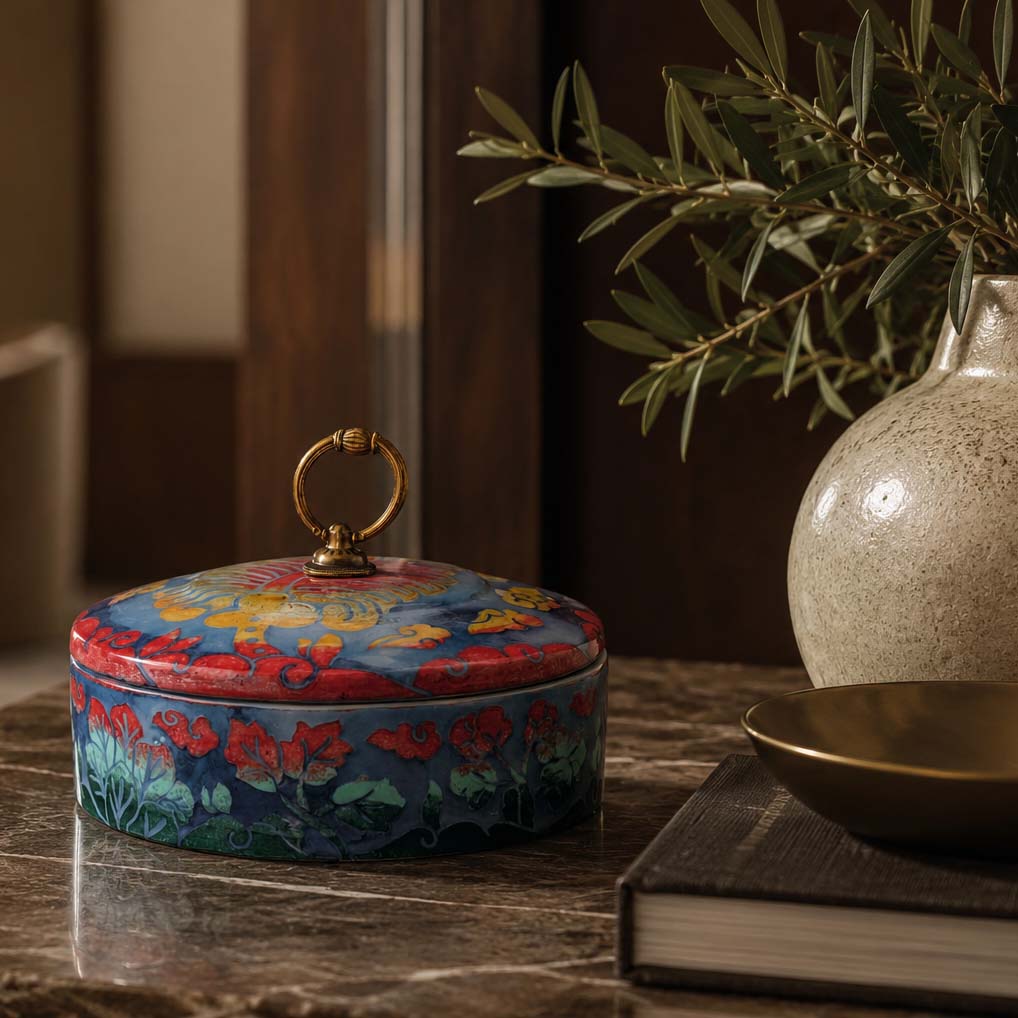
Ceramic Decor for Residential Projects
In villas and apartments, ceramic can make a polished scheme feel more personal. Use a limited number of stronger objects rather than filling every shelf.
Entrances benefit from vertical pieces and symbolic objects. Living rooms benefit from sculptural forms, dishes and wall pieces. Dining rooms can use ceramics to reinforce hospitality. Bedrooms usually require quieter scale and softer surfaces.
In Dubai homes, test reflective glazes in strong daylight and avoid unstable placement near circulation routes.
Ceramic Decor for Hospitality Projects
Hotels, restaurants and lounges need memorable material moments. Ceramic is valuable because it connects naturally with hospitality, table culture and craft.
A tile composition can define a restaurant wall. A large jar can anchor a lobby console. Decorative dishes can create a recognisable wall installation. Smaller glazed pieces can support intimate lounge areas.
For hospitality specifications, durability, cleaning, mounting and replacement planning are as important as appearance.
Ceramic Decor for Retail, Offices and Reception Areas
Retail and workplace interiors often rely on standard furniture and hard finishes. Ceramic can introduce identity without major construction.
Boutiques can use ceramic as a curated display layer. Reception areas can use one strong object to soften a corporate environment. Showrooms can use ceramic to make shelves feel designed rather than transactional.
The object should support the brand mood and remain practical for the expected level of contact and maintenance.
A Professional Ceramic Specification Checklist
Before approval, confirm the project role, exact location, dimensions, weight, finish, colour, lighting, mounting or support method, intended use, maintenance requirements, quantity, lead time and expected handmade variation.
For wall-mounted pieces, confirm the substrate and fixing method. For freestanding objects, confirm stability and clearance from edges. For commercial projects, confirm replacement availability and cleaning responsibility.
A clear specification prevents a visually strong object from being used incorrectly or installed poorly.
Common Specification Mistakes to Avoid
Treating ceramic as filler weakens the design. Each piece should have a reason to be included.
Ignoring scale, lighting or traffic conditions can make an appropriate object fail in the wrong location.
Overusing small accessories creates clutter, while too many competing statement pieces remove hierarchy.
Failing to distinguish decorative and functional use creates unnecessary risk. Assuming all handmade pieces will match exactly can also cause procurement problems.
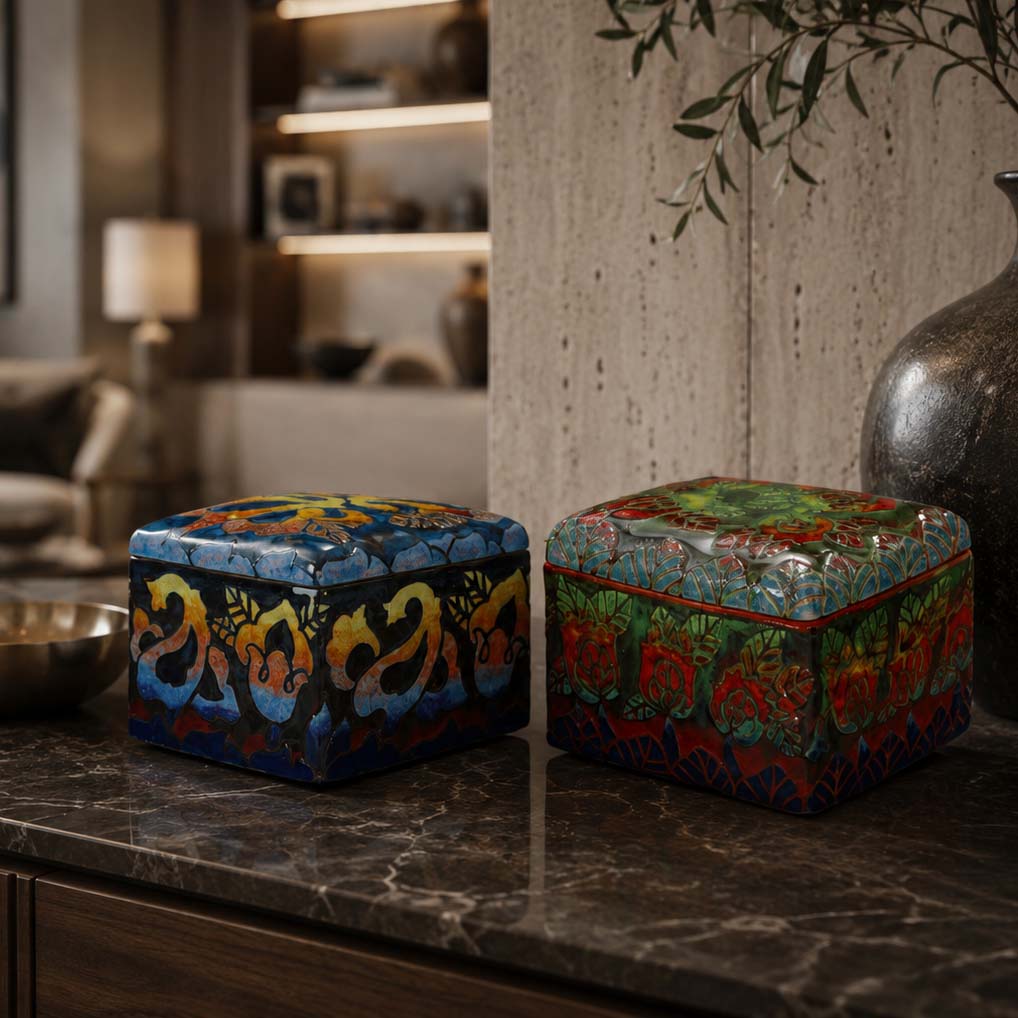
Why Ceramic Remains Valuable to Interior Designers
For wider institutional context, the V&A Ceramics Collection demonstrates the breadth of ceramics across decorative art, domestic objects, studio practice and architectural surfaces.
Ceramic brings together qualities designers repeatedly need: form, warmth, texture, colour, craft, symbolism and material permanence.
It can soften minimal spaces, enrich luxury interiors, add memory to hospitality projects and give commercial environments a more human identity.
The strongest ceramic selection is not the one with the most decoration. It is the one that performs its role clearly, fits the project technically and makes the space feel more considered.
Explore Ceramic Decor for Interior Designers at Checkmark
At Checkmark, our ceramic collection is selected for interior designers, decorators, hospitality professionals and project buyers seeking crafted objects with clear visual roles.
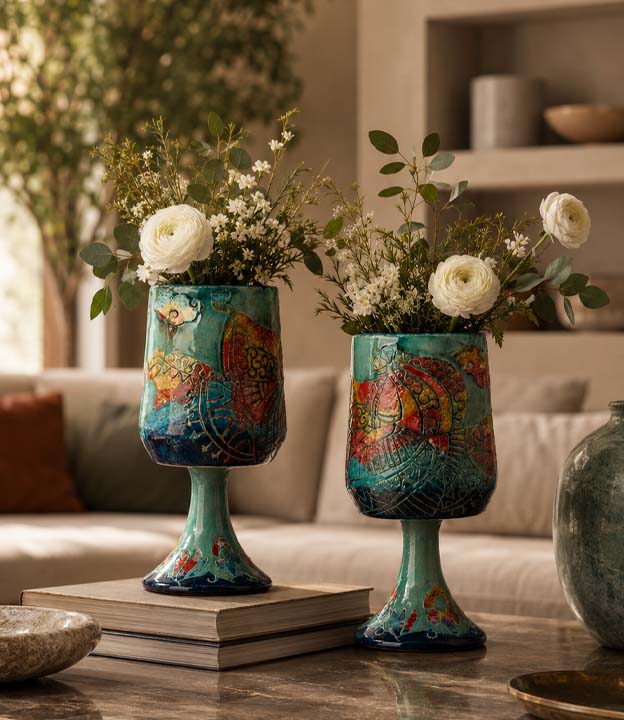
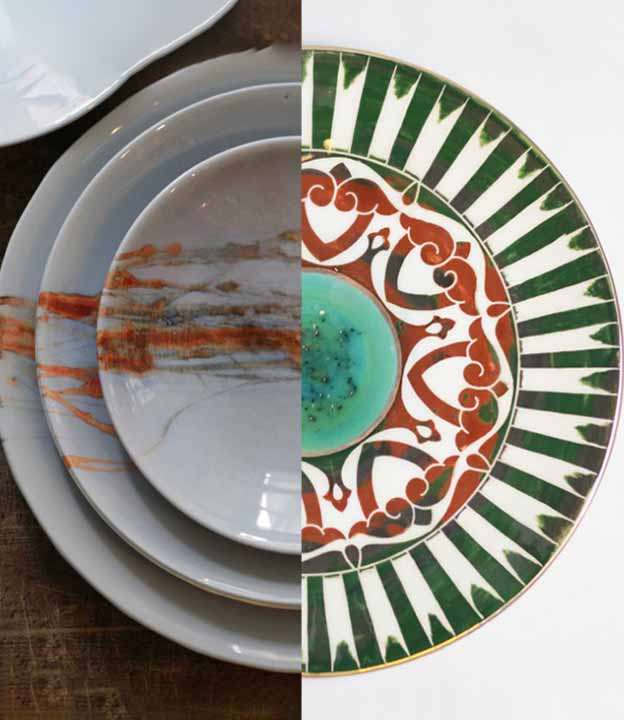
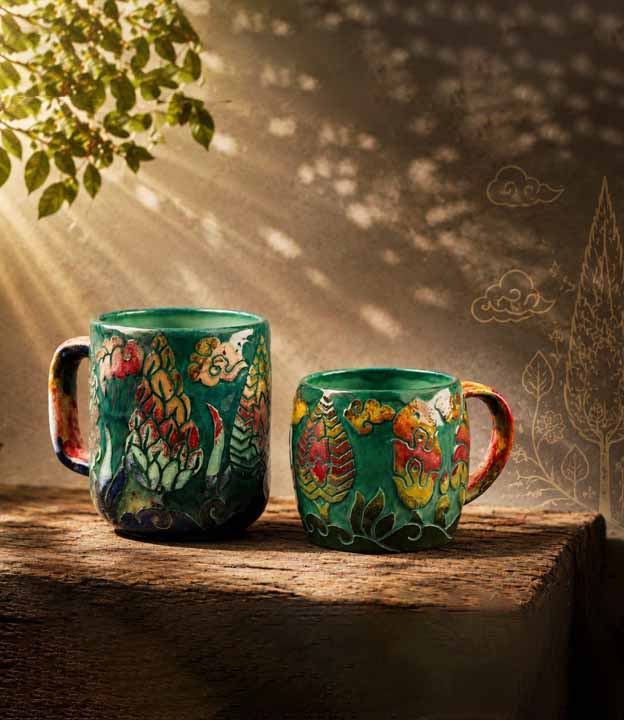
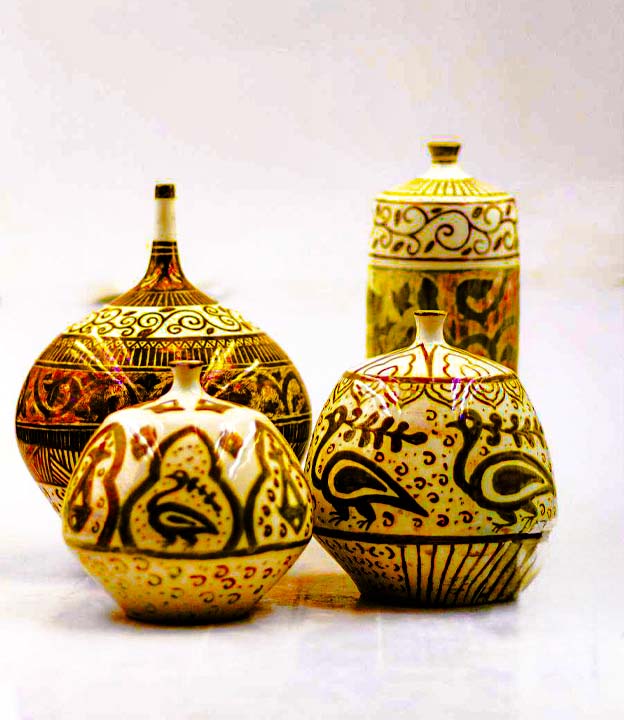
The collection includes ceramic art objects, decorative dishes, ceramic lidded jars, ceramic wall tiles, ceramic pomegranate decor, glazed pieces, hand-painted objects and statement ceramics for residential and commercial interiors.
For project selection, the most useful starting point is the intended location, required scale, material palette and design role. From there, ceramic can be specified with greater confidence and stronger visual results.