
 Chandeliers
 Pendant Lights
 Ceiling Lights
 Wall Sconces
 Table Lamps
 Floor Lamps
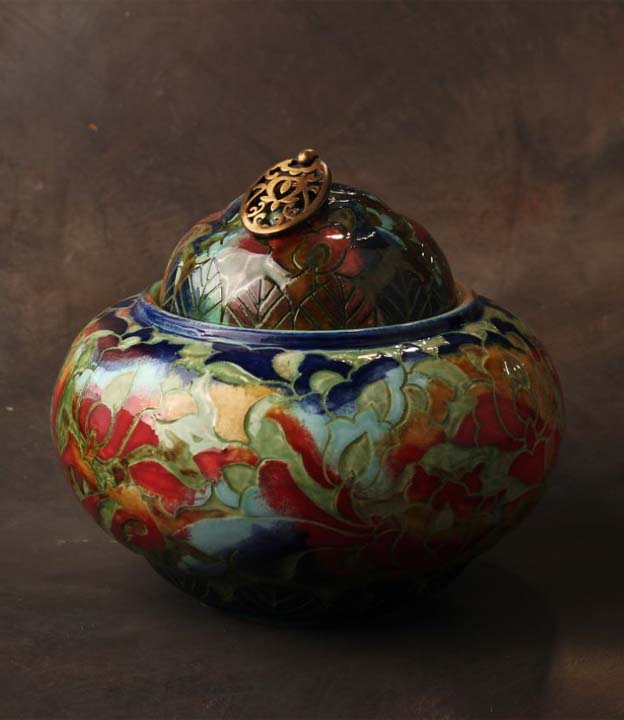
 Ceramic Lidded Jar
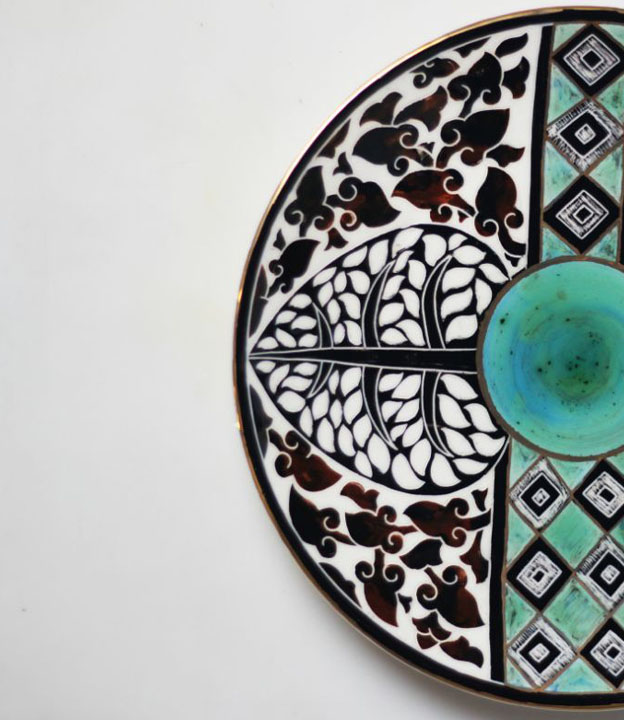
 Decorative Dishes
 Pomegranates
 Qajar Collection
 Decorative Wall Tiles
 Border Tiles
 Hand-Painted Tiles
 Block Tiles
 Wall Clocks
 Side Tables
 Candle Holders
Ceramic Console Table Styling: 9 Elegant Ideas


Table of Contents
ToggleIntroduction: Turn a Narrow Surface into a Designed Moment
Ceramic console table styling can transform a narrow piece of furniture into one of the most memorable areas in an interior. A console may stand in an entrance, behind a sofa, along a corridor or beside a dining room wall, but its limited depth means every object is immediately visible. There is little room for accidental choices.
The strongest arrangements do not depend on filling the surface. They depend on hierarchy: one object establishes presence, another creates contrast, lighting reveals texture and enough empty space allows the composition to breathe.
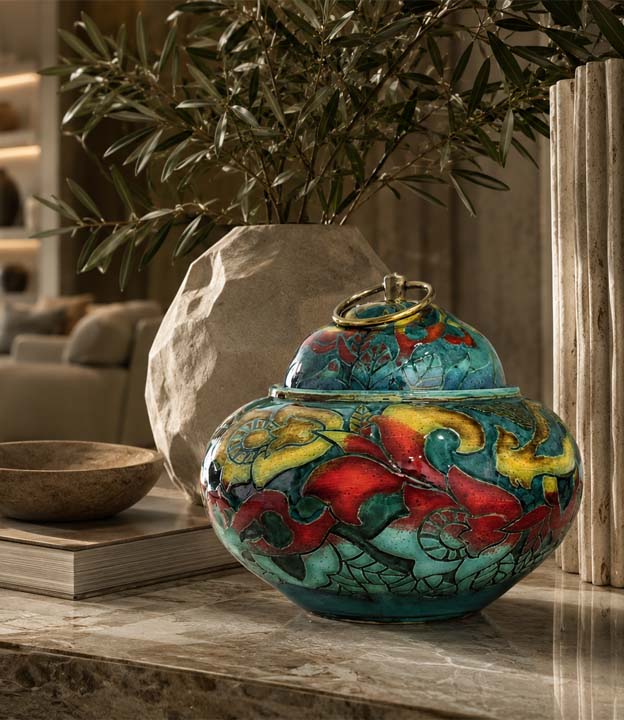
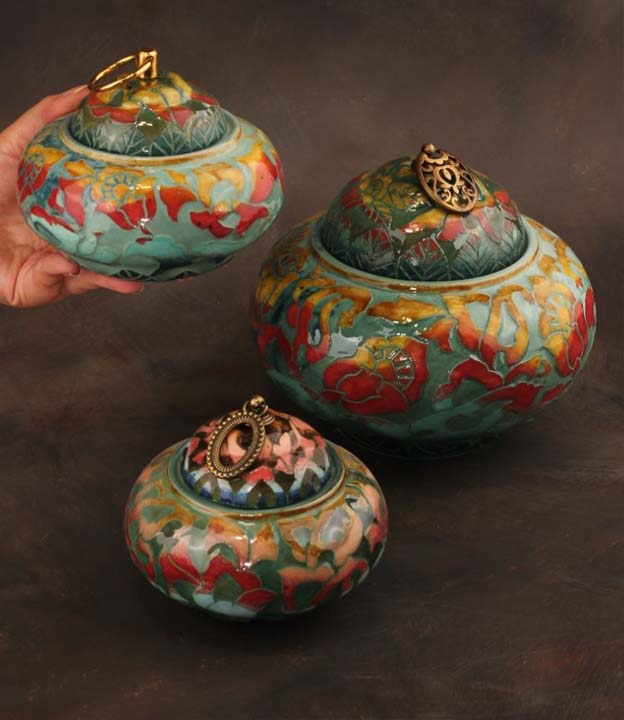
Handcrafted ceramic objects are particularly effective because one piece can contribute form, colour, glaze, texture and a sense of authorship at the same time. A lidded jar adds height, a decorative dish introduces an open curve, a ceramic pomegranate adds symbolic warmth and a glazed object changes as light moves across it.
The objective is not to create a showroom display. It is to make the console feel connected to the architecture, materials and purpose of the room.
Why Ceramic Works So Well on a Console Table
A console is usually linear: the tabletop is narrow, the wall behind it is flat and mirrors or framed artwork often repeat rectangular geometry. Ceramic introduces the curves and surface variation that this setting needs.
It also carries visual weight without requiring excessive size. A well-proportioned jar or dish can hold attention from across an entrance while remaining practical on a shallow surface.
Ceramic responds to its surroundings. Glossy glaze reflects a nearby lamp, matte clay quietens polished stone, hand-painted detail animates a neutral wall and textured surfaces hold delicate shadows. This flexibility makes ceramic suitable for modern apartments, generous villas and commercial interiors.
Historically, ceramic vessels have existed as both useful objects and works of decorative art. The V&A collection includes tableware, one-off vessels, figures and sculpture, supporting the idea that ceramic can move naturally between function and artistic presence.
Before Styling: Define the Console’s Role
Begin with the purpose of the surface rather than the objects you already own.
An entrance console should create welcome and establish the tone of the home. A living-room console should support the materials and comfort of the seating area. A dining-room console can connect to hospitality and table culture. A hallway console should create rhythm without obstructing movement. A boutique or reception console should express the character of the brand.
This decision controls scale, formality and quantity. An entrance may need one strong jar, a lamp and a tray for essentials. A dining-room sideboard may support a dish, a pair of jars and warmer symmetry. A corridor may require a slimmer, quieter composition.
Ask one question before adding anything: what should this console communicate?
The Core Formula: Anchor, Accent, Light and Space
A reliable composition uses four elements: an anchor, an accent, a source of light and negative space.
The anchor is the dominant object. It may be a tall ceramic lidded jar, a large upright dish or a sculptural vessel. The accent is smaller and more personal: a ceramic pomegranate, a compact art object or a carefully chosen book stack. Light reveals glaze and texture. Negative space prevents the arrangement from becoming decorative noise.
The pieces do not need to be symmetrical, but they need visual balance. A tall jar on one side may be balanced by a lamp, mirror edge or upright dish on the other. A low tray or books can stabilise the centre.
This formula works because it creates a clear order. The eye understands what to notice first, where to move next and where to rest.
Idea 1: Use a Lidded Jar as the Main Anchor
A ceramic lidded jar is one of the strongest anchor pieces for ceramic console table styling. Its base, body, shoulder and lid create a complete vertical silhouette.
Choose a jar that is large enough to remain visible against the wall, mirror or artwork behind it. On a long console, a small jar can appear lost; on a narrow table, an oversized jar may feel unstable or block movement.
Allow the full form to remain visible. Do not hide the lid behind a lamp or surround the base with several small accessories. If the glaze is detailed, keep nearby pieces quieter.
For formal spaces, a related pair can create symmetry. For modern or collected interiors, one distinctive jar often feels more natural.
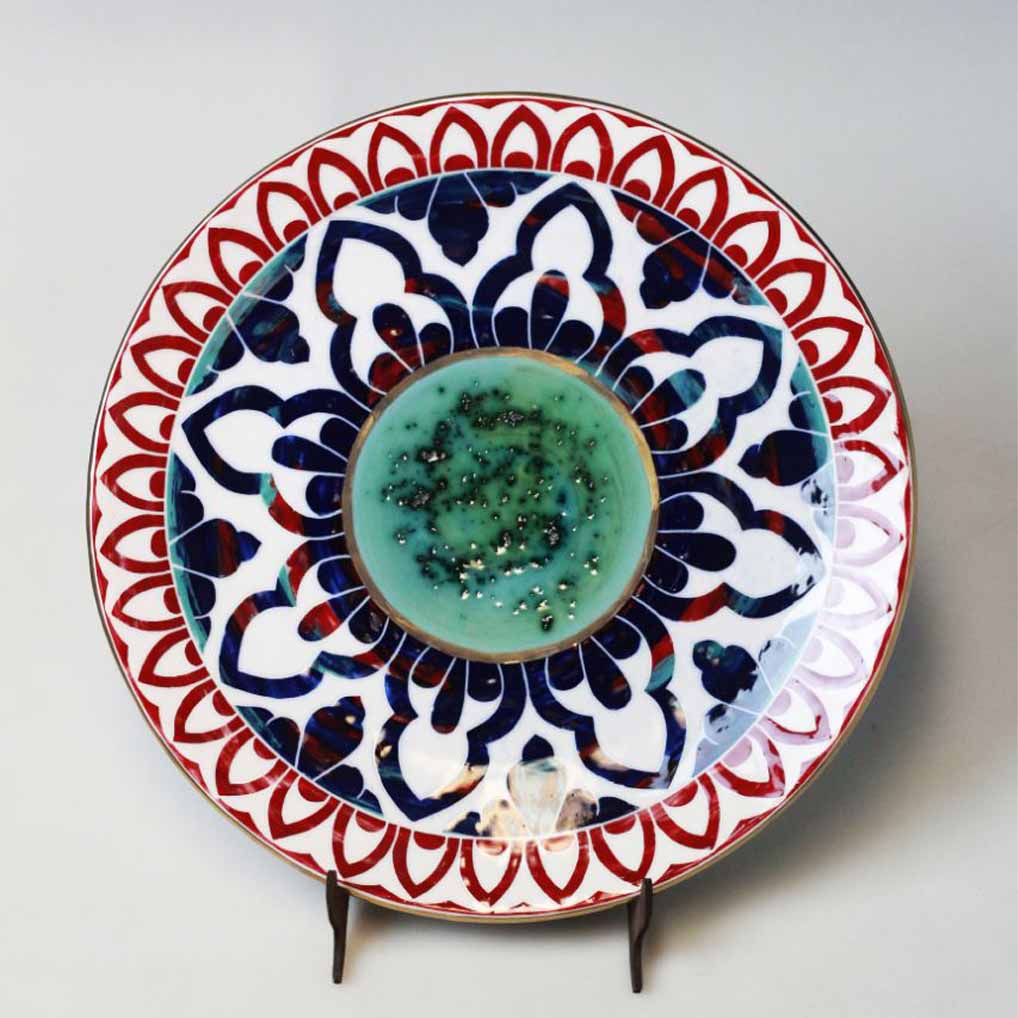
Idea 2: Display a Decorative Dish Vertically
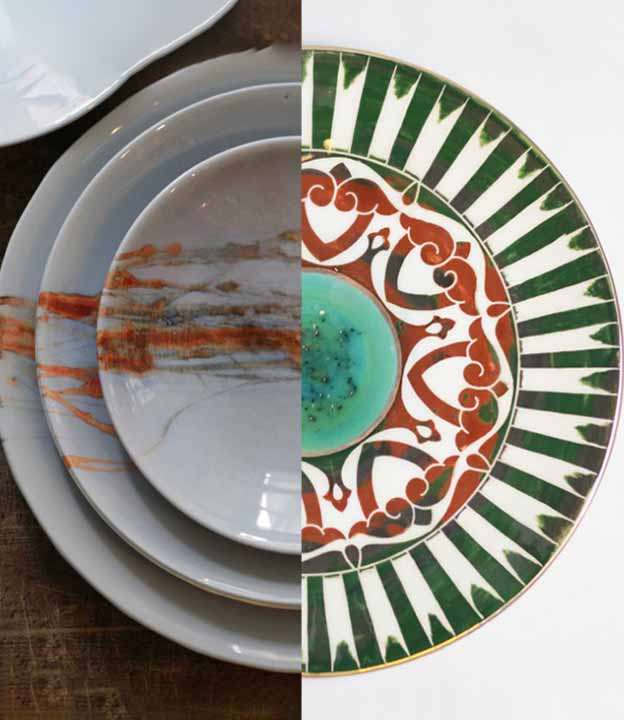
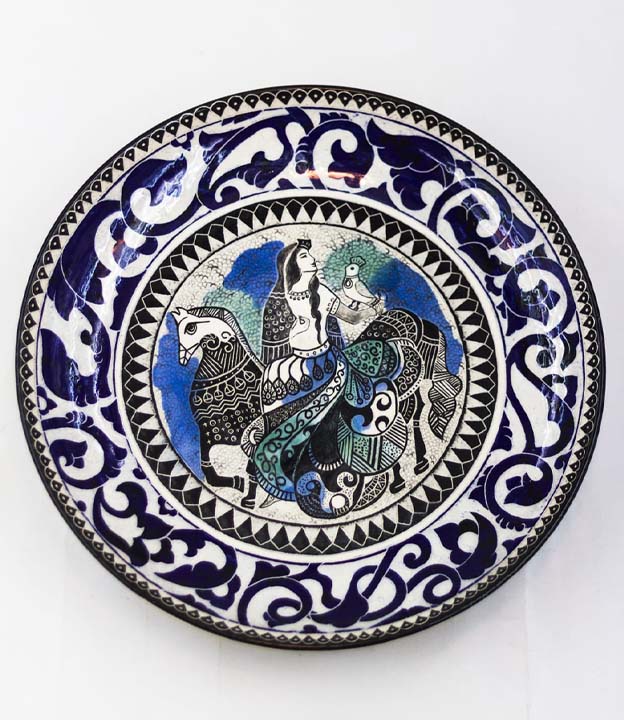
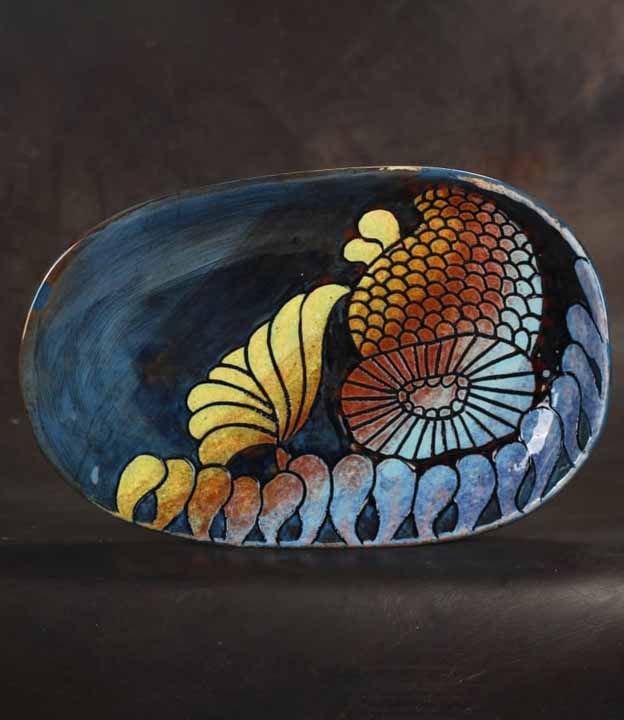
An upright decorative ceramic dish acts like dimensional artwork. It introduces an open curve, colour and hand-painted surface without occupying much depth.
Use a secure, discreet stand and check that the dish remains stable. The diameter should relate to the wall feature behind it: a small dish may disappear beneath a wide mirror, while a very large one can compete with artwork.
Place a lower object in front or slightly to one side rather than covering the central design. A small pomegranate, low tray or book stack can provide depth while leaving the painted or glazed surface readable.
A dish is most effective when its surface is treated as art rather than used to collect keys and miscellaneous objects.
Idea 3: Add Symbolism with a Ceramic Pomegranate
A ceramic pomegranate introduces a compact rounded form and a layer of symbolic meaning. In different artistic traditions, pomegranates have been associated with themes such as abundance, fertility, continuity and hospitality; the precise meaning depends on cultural and historical context.
On an entrance console, one pomegranate can suggest welcome. On a dining-room console, it can connect naturally to gathering and generosity. Its small scale makes it useful as an accent, but it needs enough open space to avoid disappearing among other accessories.
One piece suits a compact arrangement. Three related pieces can create rhythm on a longer table when their sizes vary and the rest of the surface remains restrained.
Idea 4: Let Glaze Respond to Light
Glazed ceramic becomes more expressive when light can move across it. A lamp placed slightly behind or beside a vessel can reveal pooled colour, relief and subtle irregularities. Side lighting is especially useful for textured surfaces.
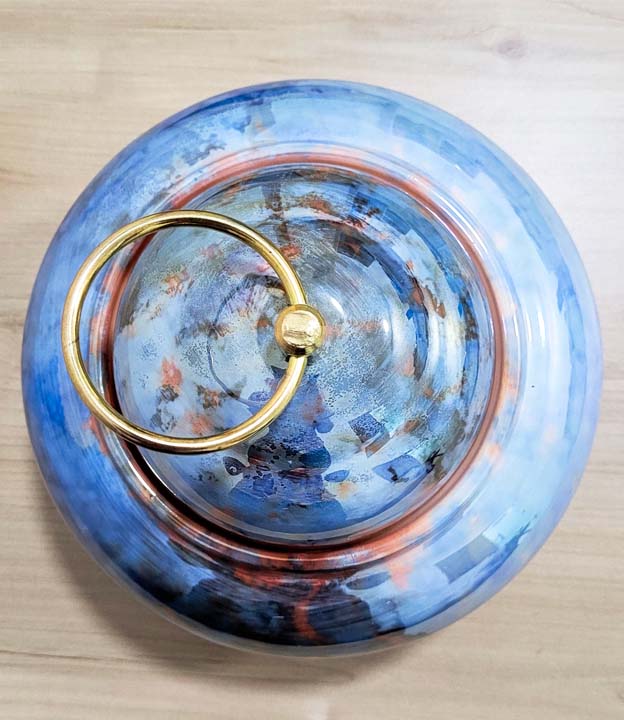
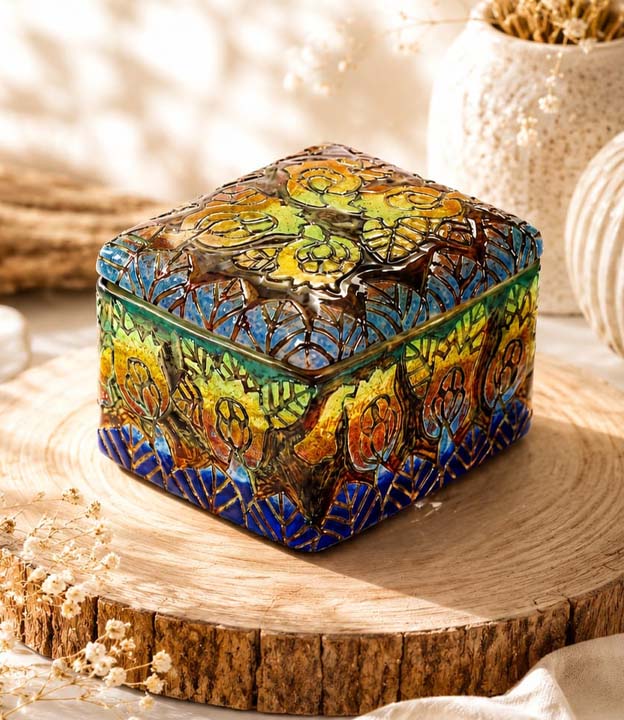
Glossy glaze creates reflection and visual richness. Matte glaze gives a quieter, architectural effect. Layered or reactive glaze rewards close viewing because its colour shifts across edges and curves.
Test the composition during daylight and after sunset. A piece that looks balanced in bright natural light may become visually dominant at night, while a dark glaze may require warmer, more focused illumination.
Lighting should reveal ceramic, not create harsh glare or flatten it with direct overhead brightness.
Idea 5: Build Height with Books or a Low Plinth
Books and low plinths can correct proportion without adding another decorative object. A small ceramic piece placed on two or three books gains height and becomes more visible against the wall.
Choose book covers that belong to the room’s palette and avoid unstable stacks. The ceramic base should sit fully on the supporting surface. A stone or timber plinth can create a more gallery-like presentation for a sculptural piece.
This technique is useful when several objects have similar heights. Raising one element creates rhythm and prevents the arrangement from looking flat.
Idea 6: Use Asymmetry without Losing Balance
Asymmetrical styling often feels more contemporary and collected than perfect symmetry. The composition may place a tall jar and lamp on one side, with a lower dish and small accent on the other.
Balance does not mean equal height. It means equal visual weight. A dark, glossy object may carry more weight than a larger pale one. A wide dish can balance a slender jar. A mirror reflection can also increase the apparent weight of an object.
Step back and view the table from the normal approach to the room. If one side appears heavy, remove an object before adding another. Editing is usually more effective than correction through accumulation.
Idea 7: Connect Ceramic to the Wall Behind It
The wall and console should read as one composition. A mirror adds depth and repeats the ceramic silhouette. Artwork introduces colour references. Ceramic wall tiles can extend texture from the tabletop into the architecture.
Leave enough distance between the tallest object and the lower edge of the mirror or artwork. Objects that nearly touch the frame can look cramped. Very tall pieces should sit beside, not directly beneath, the most important part of an artwork.
When the background is strongly patterned, choose calmer ceramics. When the wall is plain, a hand-painted dish or expressive glaze can provide the necessary focus.
Idea 8: Pair Ceramic with One or Two Supporting Materials
Ceramic becomes stronger when it is placed in a controlled material conversation. Timber adds warmth, stone provides grounding, brass introduces refinement, linen softens the scene and glass adds lightness.
A ceramic object on a timber console already has a strong natural pairing. A brass lamp can add contrast, while a stone tray can organise smaller items. Avoid introducing every material at once.
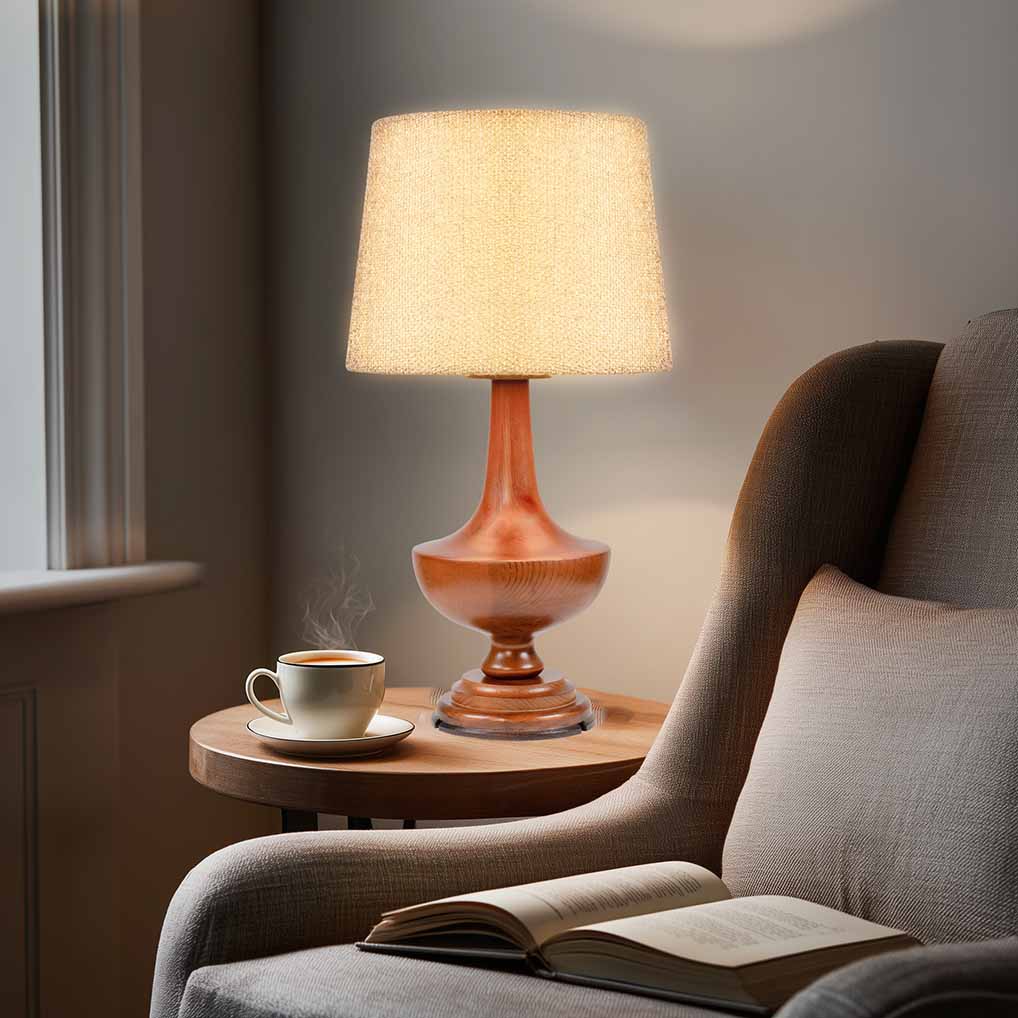
Wooden lighting is particularly effective with ceramic because grain and glaze respond differently to warm illumination. The relationship feels tactile without becoming visually busy.
Idea 9: Preserve Practical Space
A console table may still need to receive keys, mail or a handbag. Good styling respects that function.
Keep one clearly defined practical zone, usually a tray or a section of open tabletop. Do not allow daily items to spread around the ceramic composition. In entrances, secure fragile pieces away from the edge and from the path of doors or passing shoulders.
In homes with children or pets, wall-mounted dishes or heavier, stable jars may be safer than small objects near the front edge. Commercial spaces also require secure placement, easy cleaning and enough distance from customer circulation.
A beautiful arrangement that cannot survive ordinary use is not successful interior design.
Scale and Proportion: The Measurements That Matter
The correct scale depends on the console length, depth, wall height and viewing distance. No single ratio works for every room, but several practical checks help.
The main object should be visible from the entrance to the space, not only at close range. It should fit comfortably within the table depth with a safe margin at the front and back. The complete arrangement should not visually cover the entire tabletop; open surface is part of the design.
For a long console, use fewer but larger objects rather than many small pieces. For a compact table, one anchor and one accent may be enough. Beneath a large mirror or in a double-height villa entrance, increase scale so the ceramics do not appear incidental.
Photograph the arrangement from across the room. A camera view often reveals weak scale and clutter more clearly than close inspection.
Console Table Styling for Dubai Homes and Villas
Dubai interiors often combine strong daylight, pale stone, marble, timber, metallic finishes and neutral upholstery. Ceramic can soften these polished materials and introduce colour, craft and tactile depth.
In bright entrances, test glossy glaze for reflections at different times of day. In large villas, select pieces with enough visual authority for generous walls and long viewing distances. In apartments, prioritise narrow depth, stable placement and a smaller number of objects.
Air-conditioning and indoor conditions are generally suitable for decorative ceramics, but pieces should still be protected from unstable edges, harsh cleaning products and direct impact. Valuable hand-painted objects should be positioned where routine cleaning will not repeatedly disturb them.
The best ceramic console table styling in Dubai responds to the architecture and light of the actual space rather than copying a crowded showroom image.
Commercial and Hospitality Console Styling
In a boutique, hotel, restaurant or reception area, a console can become a concise expression of brand identity.
Choose ceramic that supports the desired atmosphere: calm matte forms for a minimal reception, richly glazed vessels for hospitality warmth or symbolic pieces for a more culturally layered setting.
Commercial displays need stronger practical controls than private homes. Confirm weight, stability, cleaning method and replacement availability. Avoid fragile arrangements in high-traffic areas and secure upright dishes with suitable stands or mounting systems.
The display should be memorable without obstructing service, circulation or maintenance.
Common Mistakes to Avoid
Using too many small objects is the most common error. They reduce the authority of stronger ceramics and make cleaning difficult.
Ignoring scale can make a large wall feel empty or a narrow table feel unsafe. Matching every object too closely can also produce a staged retail-display effect.
Do not hide the key surface of a dish, crowd the lid of a jar or place glossy glaze where severe glare destroys its colour. Avoid mixing unrelated symbols, finishes and materials without a clear hierarchy.
Most importantly, do not continue adding objects because the arrangement feels incomplete. Remove one item, adjust the spacing and reassess from across the room.
A Practical Five-Minute Styling Method
- Clear the console completely and identify its practical role.
- Place one ceramic anchor approximately off-centre unless formal symmetry suits the room.
- Add one lower accent with a different form, such as a dish or pomegranate.
- Introduce light or a grounding element such as books, a tray or a low plinth.
- Remove anything that does not improve balance, function or meaning.
- Check the arrangement from the doorway and again under evening light.
- Leave a practical open zone and confirm that every ceramic piece is stable.
Why Ceramic Console Table Styling Remains Timeless
Console tables occupy places of transition: entrances, corridors, dining walls and the spaces behind sofas. They naturally invite a small, concentrated expression of the interior’s character.
Ceramic suits this role because it combines material depth with compact visual presence. A jar creates dignity, a dish introduces openness, a pomegranate adds meaning and glaze brings light into the composition.
Trends may change, but proportion, craftsmanship, material harmony and restraint remain reliable. A well-styled console does not need to look fashionable. It needs to look intentional.
Explore Handcrafted Ceramic Objects at Checkmark Trading
At Checkmark, our ceramic collection is selected for interiors where craftsmanship, material warmth and artistic presence matter.
The collection includes ceramic art objects, decorative ceramic dishes, ceramic lidded jars, ceramic wall tiles and ceramic pomegranate décor for entrance consoles, dining rooms, shelves, villa interiors, boutique displays and hospitality spaces.
Whether used as one strong anchor, a symbolic accent or part of a balanced composition, handcrafted ceramic objects can turn a console table into a refined interior moment.
A console becomes memorable not when it is filled, but when every object has a reason to remain.
Authority reference: V&A Studio Pottery Collection - use once in the section “Why Ceramic Works So Well on a Console Table.”