
 Chandeliers
 Pendant Lights
 Ceiling Lights
 Wall Sconces
 Table Lamps
 Floor Lamps
 Ceramic Lidded Jar
 Decorative Dishes
 Pomegranates
 Qajar Collection
 Decorative Wall Tiles
 Border Tiles
 Hand-Painted Tiles
 Block Tiles
 Wall Clocks
 Side Tables
 Candle Holders
Decorative Ceramic Dishes: How to Style Them on Walls, Tables, and Shelves

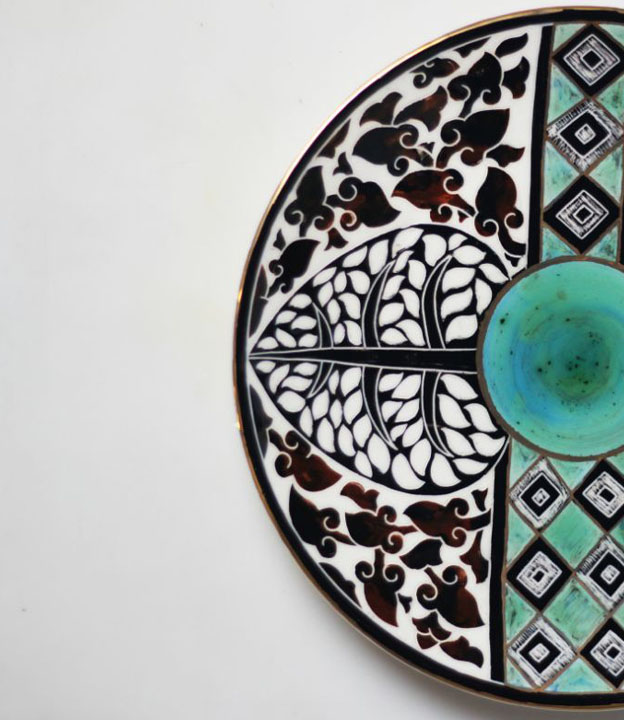
Table of Contents
ToggleIntroduction: The Dish Beyond the Table
A decorative dish carries a quiet contradiction. It is familiar, yet capable of becoming extraordinary. It belongs naturally to the table, but it can rise onto a wall like art. It is shaped for offering, yet a well-made piece can stand alone without holding anything at all.
In the hands of a skilled maker, a ceramic dish becomes a meeting point for clay, glaze, colour, pattern and light. The rim gives it silhouette. The curve gives it shadow. Brushwork or glaze gives the eye somewhere to pause. Even a restrained piece can change the balance of a shelf or soften the straight lines of a console.
This is what gives decorative ceramic dishes their particular power in interior design. They do not enter a room with the weight of furniture or the permanence of architecture. Their influence is quieter. A circular form interrupts a wall of rectangles. A glazed surface catches evening light. A painted motif rewards a closer look.
In a refined interior, a decorative dish should not look like tableware that has simply been moved elsewhere. It should be treated as a small work of art with domestic memory: an object connected to hospitality, gathering, craft and the rituals of home.
When it is placed well, it does more than fill an empty surface. It gives the room rhythm.
Why Decorative Ceramic Dishes Belong in Refined Interiors
A room becomes richer when it contains objects that can be read slowly. Decorative ceramic dishes offer that kind of experience. Their beauty is not limited to colour or pattern; it also lies in evidence of process. A softened rim, a small shift in glaze depth or the slight irregularity of handmade clay gives the piece a presence that mass-produced accessories rarely achieve.
They bring three useful qualities into an interior: form, surface and memory. Their circular or softly irregular shapes provide relief from straight architectural lines. Their glazed, matte, textured or painted surfaces add depth. Their connection to serving and hospitality gives them emotional familiarity.
As part of a broader handcrafted ceramic décor language, decorative dishes can become wall art, table accents, shelf features or part of a collected ceramic composition. A well-chosen piece does not need to be large. It needs to have enough character to justify its place.
From Functional Object to Ceramic Art Object
Ceramics have long been valued as both functional objects and works of art. V&A Ceramics Collection provides a useful museum reference for the breadth and artistic history of the medium.
Not every dish is decorative in the true sense. A dish becomes a ceramic art object when it has enough visual strength to exist beyond function. That strength may come from a distinctive glaze, a hand-painted surface, a sculptural rim, a symbolic motif or simply excellent proportion.
A purely functional plate can look misplaced when displayed. A genuine decorative dish feels complete even when it is empty. It does not need fruit, flowers or accessories to explain why it is there.
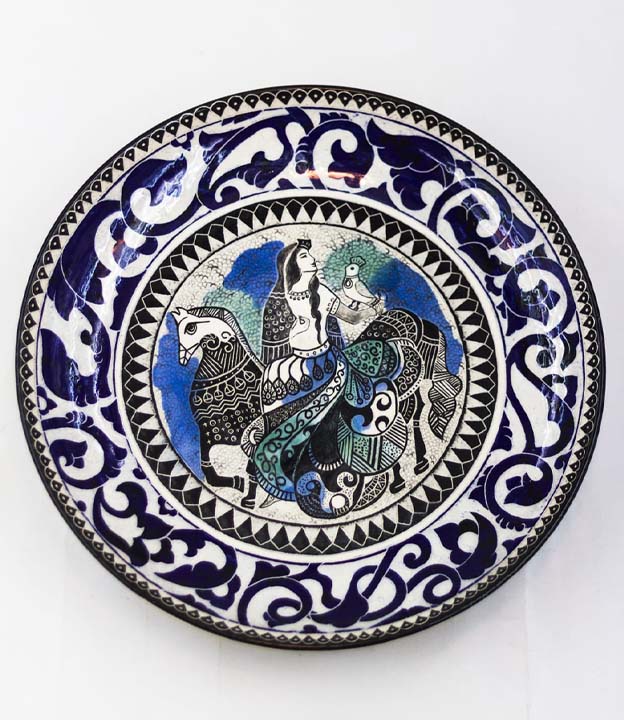
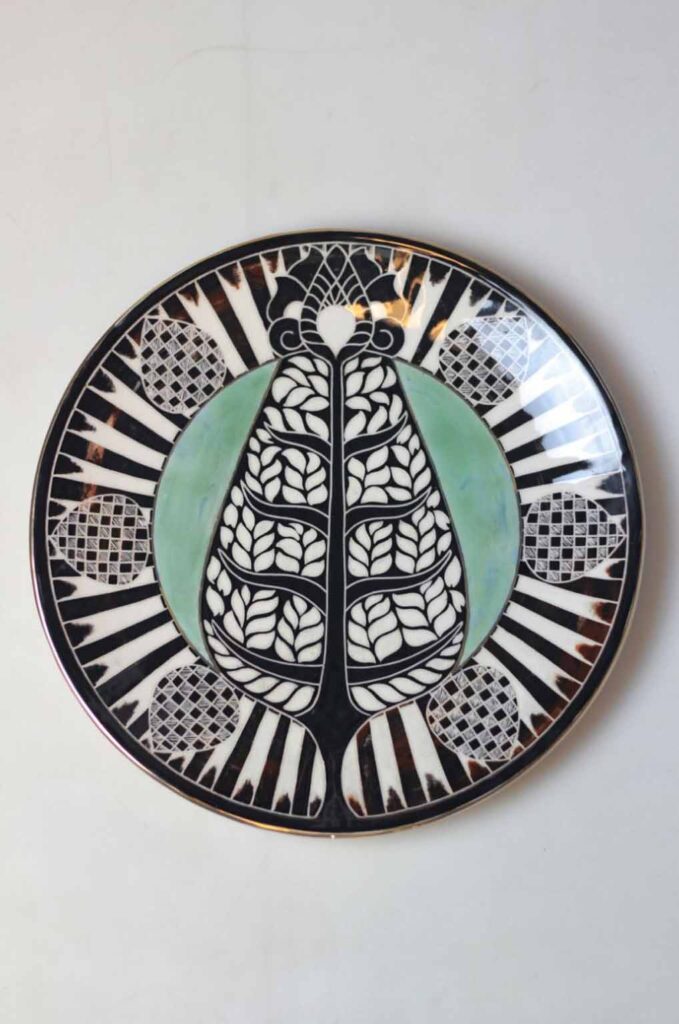
Hand-painted ceramic dishes can have the emotional effect of small paintings, but they also carry qualities that canvas cannot: curve, body, shadow and the physical depth of clay. They are art without distance and craft without casualness.
Styling Decorative Ceramic Dishes on Walls
Raising a decorative dish from a table to a wall changes its identity. It becomes part of the room’s visual architecture. Unlike a framed print, it projects from the surface, casts a rim shadow and changes subtly as the light moves.
This is why decorative ceramic dishes can make expressive ceramic wall art. A single large piece can command a quiet wall. A small group can create rhythm above a sideboard or in an entrance. The arrangement may be calm and symmetrical or loose and asymmetrical, but it must look intentional.
A ceramic wall display should never suggest that dishes were added merely because the wall was empty. It should feel as though the wall was chosen because the pieces deserved space.
Building a Ceramic Wall Composition
The strongest arrangements are compositions rather than random clusters. The dishes should relate through at least one clear principle: a shared colour family, similar glaze depth, repeated pattern language, common symbolism, controlled spacing or a consistent emotional mood.
Symmetry feels formal and composed. Asymmetry feels more relaxed and artistic. Neither approach is automatically better. A balanced arrangement often suits a dining room above a sideboard, while an entrance or stair landing may allow a freer composition.
Before fixing anything to the wall, arrange the pieces on the floor and photograph several options. This simple step makes differences in spacing and visual weight much easier to judge. Paper templates can then be taped to the wall to confirm height and balance before installation.
Leave enough open space around the arrangement. The blank wall is not unused area; it is what allows the ceramic to be seen.
Choosing the Right Wall and Mounting It Safely
The best wall is not necessarily the largest. It is the wall that can hold attention without competition. The space above a console, a dining room side wall, a stair landing, a niche or a quiet entrance can all work well.
Dining rooms are especially natural because the dish still carries an association with gathering and hospitality. Entrances are equally effective: a strong ceramic piece near the door creates an immediate impression of warmth and craft.
Avoid walls already dominated by dense wallpaper, crowded picture galleries or busy shelving. Also avoid improvised mounting. The fixing method must suit the weight, depth and construction of the piece. Reliable plate hangers or professionally specified supports are preferable to weak adhesives or visible hooks that place stress on the ceramic.
If a piece is valuable, unusually heavy or difficult to replace, professional installation is the sensible choice.
Light, Shadow, and the Ceramic Surface
Ceramic is never fully understood in flat light. A glazed dish may feel quiet during the day and richer under warm evening illumination. A textured rim casts a fine shadow. A painted line becomes more visible when light reaches it from the side.
Nearby wall sconces, pendant lights or soft directional lighting can give ceramic greater dimension. The goal is not theatrical display. It is simply to let glaze, relief and colour remain legible.
Very cool or harsh light can flatten a ceramic surface. Warm, controlled light usually gives it more intimacy. Before final placement, look at the piece in both daylight and evening light; some glazes change character more than expected.
Styling Decorative Ceramic Dishes on Tables
On a table, a decorative dish returns to its oldest language: offering, gathering and touch. It feels more intimate than a wall-mounted piece because people move around it and interact with the surface nearby.
A decorative dish can anchor a dining table, soften a coffee table, complete a console or bring craft to a reception counter. Whatever the setting, its form and surface should remain visible. It should not become a container for keys, remote controls or unrelated objects.
Before using any decorative dish for food, confirm that it is intended for food contact and that the glaze is suitable. A piece sold as décor should be treated as decorative unless its functional suitability is clearly stated.
Coffee Tables: A Quiet Centre of Gravity
A coffee table needs a point of calm. A low decorative ceramic dish can provide that calm without blocking conversation or movement.
It may sit beside one or two art books, a small sculptural object or a natural element. Often the strongest choice is to leave it empty. An expressive glaze or hand-painted surface may already offer enough interest.
If the dish holds something, keep the addition restrained and avoid anything abrasive that may scratch the glaze. The table should remain usable, and the dish should remain visible.
Dining Tables: Beauty Connected to Hospitality
A dining table gives a decorative ceramic dish its most natural stage. Here the object carries an emotional connection to serving, conversation and welcome.
A large handcrafted dish can work as a centrepiece when paired with linen, wood, simple tableware or warm lighting. It may hold fruit or a small botanical arrangement, but it does not have to. An empty dish with a beautiful interior surface can be the most elegant option.
The arrangement should not make the table untouchable. Keep the height low enough for conversation and leave enough space for dining. Ceramic should deepen the sense of hospitality, not interfere with it.
Console Tables and Sideboards: A Curated Interior Moment
Console tables and sideboards give decorative ceramic dishes a composed, almost architectural role. Displayed upright on a discreet stand, layered in front of a mirror or placed beside a lamp, the dish can set the tone for an entrance, corridor, dining room or living area.
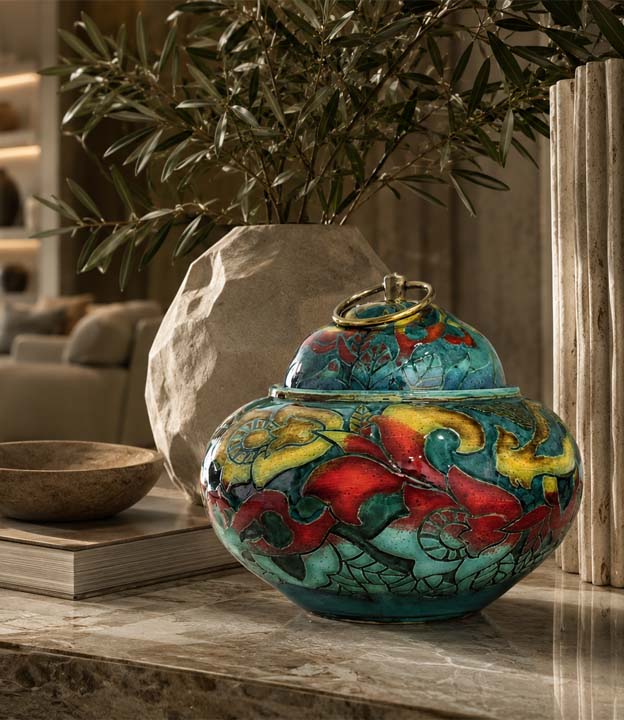
A decorative dish pairs naturally with vertical and contrasting elements: a tall lamp, books, a ceramic lidded jar, a sculptural object, stone, brass or glass.
The surrounding pieces should support it. A richly painted dish benefits from quieter companions. A minimal dish can sit beside stronger textures. A deep glaze should be positioned where light can reach it.
The finished arrangement should feel collected, not over-arranged.
Styling Decorative Ceramic Dishes on Shelves
Shelves are built from straight lines: horizontal boards, vertical dividers, rectangular books and framed photographs. A circular or oval ceramic dish interrupts that geometry and softens the composition.
Displayed upright, it can act as a backdrop. Set alone, it becomes a focal point. Placed beside books or a jar, it adds surface and curve.
The mistake is repetition. A dish on every shelf quickly turns a collection into inventory. Use them selectively. One strong piece can influence an entire shelving system; two or three can create continuity when they are separated by enough open space.
Choosing by Colour, Pattern and Glaze
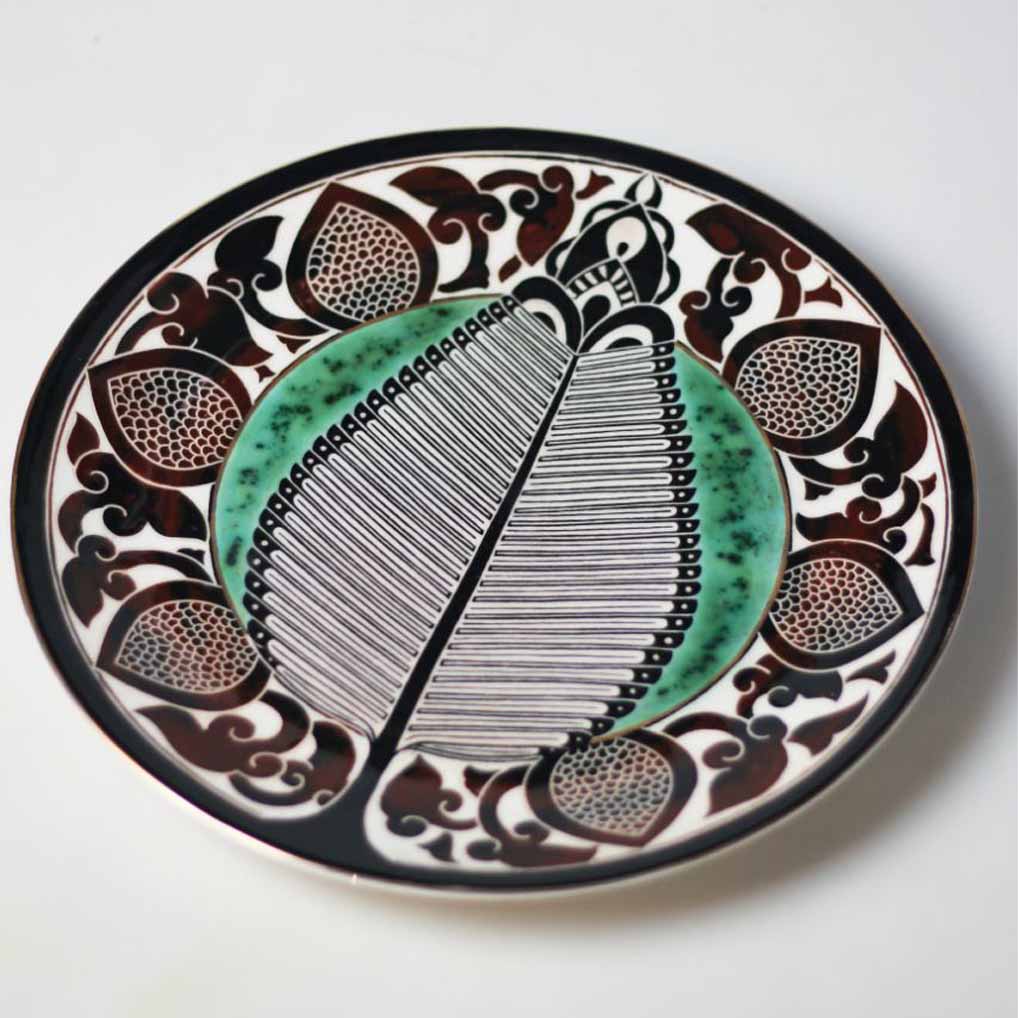
Colour is usually the first thing people notice, but a successful choice depends on the relationship between colour, pattern and glaze.
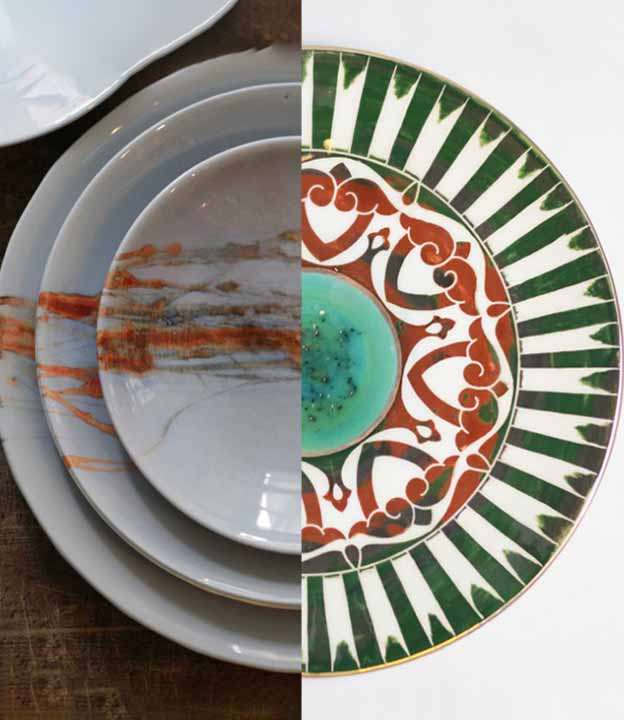
Colour decides whether the dish harmonises with the room or creates contrast. Pattern introduces movement and identity. Glaze controls the way the surface reacts to light.
Blue and turquoise can bring depth and calm. Warm earth tones create hospitality and visual warmth. Monochrome pieces often feel architectural. Richly patterned dishes behave more like paintings and need quieter surroundings.
Glossy glazes appear luminous and refined. Matte surfaces feel quieter. Layered or crackled glazes can give a piece visual age and depth. The useful question is not simply whether the dish is beautiful, but what kind of beauty the room needs.
Scale and Proportion: Choosing the Right Piece
Scale is one of the most common reasons a beautiful dish fails in a room. A small piece can disappear above a wide console. A large piece can overwhelm a narrow shelf.
For walls, consider the width of the furniture below and the viewing distance. A dish above a sideboard should relate to the sideboard rather than float as a separate object. For shelves, measure both height and depth, including the stand. For coffee tables, check that the dish leaves practical space around it.
Large villa entrances and double-height living spaces often require stronger scale than apartments or compact rooms. In Dubai interiors, where stone, marble, wood and tall architectural volumes are common, a dish needs enough visual weight to remain present without becoming loud.
Decorative Ceramic Dishes in Modern Interiors
Handmade ceramic dishes are sometimes associated only with traditional interiors, yet they can be even more effective in modern spaces.
Modern rooms often depend on pale walls, clean lines and smooth surfaces. These qualities create calm, but without natural variation they can also feel impersonal. A decorative ceramic dish introduces curve, texture and evidence of handcraft without disturbing the room’s discipline.
In a modern interior, restraint matters. One handcrafted piece on a plain wall or console can be more sophisticated than a full arrangement with no hierarchy.
Classic, Layered and Artistic Interiors
In classic or layered rooms, decorative ceramic dishes can join a richer visual language of carved wood, textiles, mirrors, books, paintings and warm light.
These interiors can support more expressive glaze, pattern and symbolism, but editing is still essential. If every object is ornate, no object carries importance.
Let the dish either lead the composition or support it. Luxury is not the number of beautiful objects in a room; it is the quality of their relationship.
Decorative Ceramic Dishes for Dubai Homes and Villas
Decorative ceramic dishes are particularly useful in Dubai homes because they can add warmth to interiors built around polished stone, neutral upholstery, metal details and strong natural light.
In villa entrances, one large dish above a console can create an immediate focal point. In a majlis or formal living room, a restrained group can soften architectural lines. In dining rooms, the connection to hospitality feels especially appropriate.
Strong daylight can reveal glaze beautifully, but it can also produce glare on highly reflective surfaces. Test the placement at different hours. Keep valuable hand-painted pieces away from unstable ledges and busy circulation paths, particularly in large family spaces.
For clients seeking ceramic décor in Dubai, scale and placement are as important as pattern. A piece should suit the architecture, not merely match the colour palette.
Decorative Ceramic Dishes in Interior and Hospitality Projects
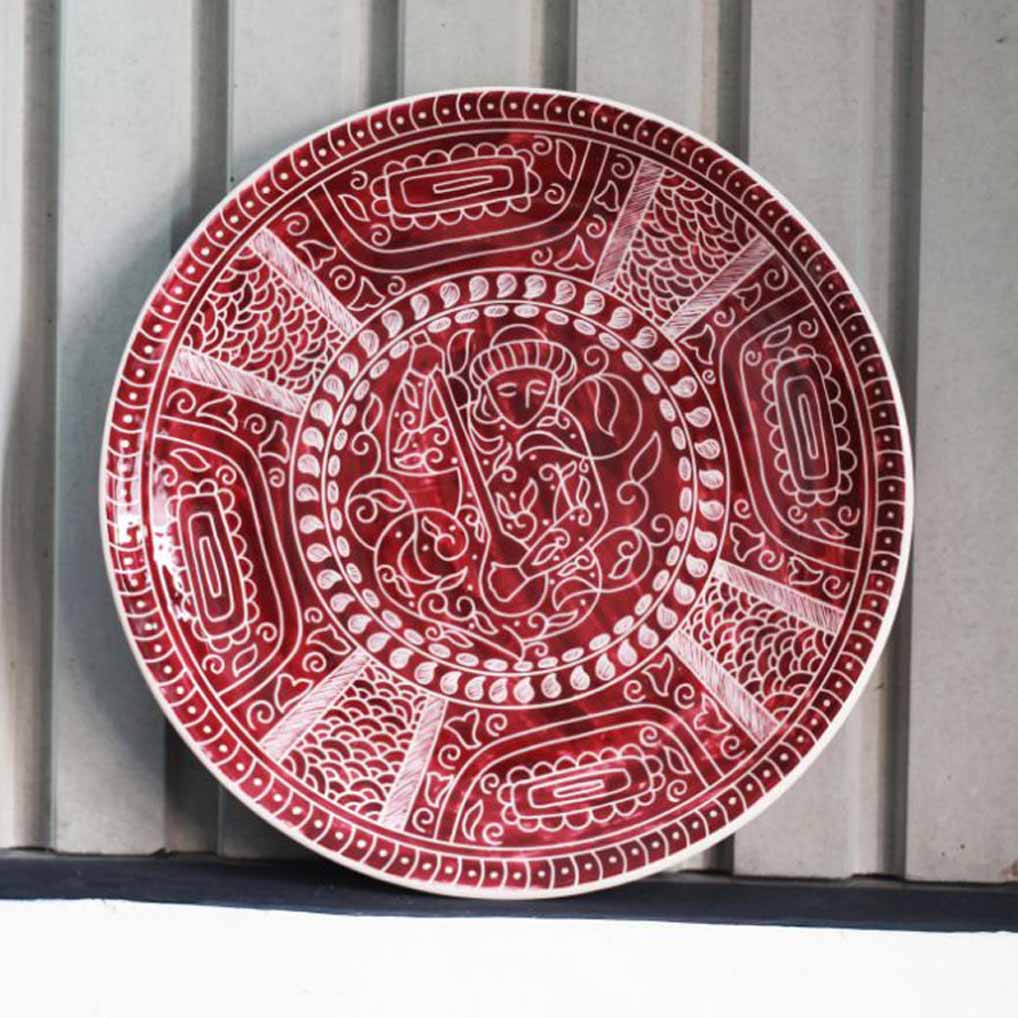
Decorative ceramic dishes also work well in restaurants, boutiques, reception areas, offices and hospitality interiors. They add cultural and material identity without requiring major architectural intervention.
For professional projects, selection should be more systematic. Confirm dimensions, weight, mounting method, finish, quantity and replacement availability. Repeated motifs may work across a restaurant or boutique, while one-off statement pieces suit reception areas and private rooms.
Interior designers may also use dishes to connect other materials across a project: timber, stone, brass, textiles or wooden lighting. The ceramic objects should support the design concept rather than appear as a late decorative addition.
How to Recognise a Well-Made Decorative Ceramic Dish
Handmade variation is part of ceramic character, but not every irregularity is desirable. A well-made decorative dish should feel intentional.
Look for a stable base, balanced rim, appropriate weight and a surface that has been resolved rather than merely covered. Painted details should appear deliberate. Glaze should support the design and should not conceal structural cracks.
Check the underside and edge quality. For an upright display, confirm that the shape sits safely on a stand. For wall mounting, consider whether the form can be supported without placing pressure on delicate areas.
On a lustered, metallic or heavily textured piece, ask about cleaning and handling. On any dish intended for serving, ask separately about food safety. Decorative quality and functional suitability are not the same thing.
How Many Decorative Ceramic Dishes Should You Use?
There is no universal number. Wall size, room scale, dish design and surrounding objects all matter.
A single large dish can be powerful. Three to seven smaller pieces can create rhythm when spacing and visual relationships are controlled. On a dining table, one strong piece is often enough. On shelves, dishes should punctuate the composition rather than repeat on every level.
Use enough to show intention, but not so many that the room loses clarity. The eye should feel rhythm, not inventory.
Common Styling Mistakes
Treating a decorative dish like ordinary tableware weakens its presence. If the piece is chosen for art display, let its surface remain visible.
Competing patterns are another problem. Several patterned dishes can work together, but they need a shared palette, clear spacing or a common visual mood.
Background matters. A beautiful dish may disappear against busy wallpaper or among unrelated objects. The support also matters: unstable, bulky or visible stands immediately reduce the quality of the presentation.
Finally, avoid overfilling. A decorative dish does not always need to hold something. Its emptiness may be part of the design
Pairing Decorative Ceramic Dishes with Other Materials
Ceramic becomes stronger when it is placed in conversation with other materials. With wood it feels warmer. With stone it feels grounded. With brass it becomes more refined. With linen it feels softer. With glass it feels lighter.
The relationship between ceramic dishes and wooden lighting is especially effective because both materials carry natural variation and craft. Used together, they can soften an interior that might otherwise feel too polished.
The objective is not to gather many beautiful objects in one place. It is to create one coherent interior moment.
Care and Placement
Display pieces should be handled gently. Use stable stands on shelves and tables, and keep dishes away from edges or high-traffic paths.
For routine cleaning, a soft dry cloth is usually sufficient. If necessary, use a slightly damp cloth and dry the piece immediately. Avoid abrasive pads, harsh chemicals and unnecessary soaking, especially with hand-painted, metallic or delicate glaze details.
When moving a large dish, hold it with both hands rather than lifting it by the rim. For wall pieces, periodically inspect the mounting hardware.
Good care is not complicated, but it should respect the fact that a handcrafted dish is both a decorative object and a breakable material.
Explore Decorative Ceramic Dishes at Checkmark
At Checkmark, our decorative ceramic dishes are selected for interiors where craftsmanship, artistic presence and lasting beauty matter.
Each piece is considered not only as an object, but as part of an interior language: suitable for walls, tables, shelves, console arrangements, hospitality spaces, boutique displays and carefully composed homes.
Whether used as ceramic wall art, a table centerpiece, a shelf accent or part of a collected arrangement, decorative ceramic dishes bring texture, meaning and human craftsmanship into a room.
They do not simply occupy space. They make the space more worth remembering.