
 Chandeliers
 Pendant Lights
 Ceiling Lights
 Wall Sconces
 Table Lamps
 Floor Lamps
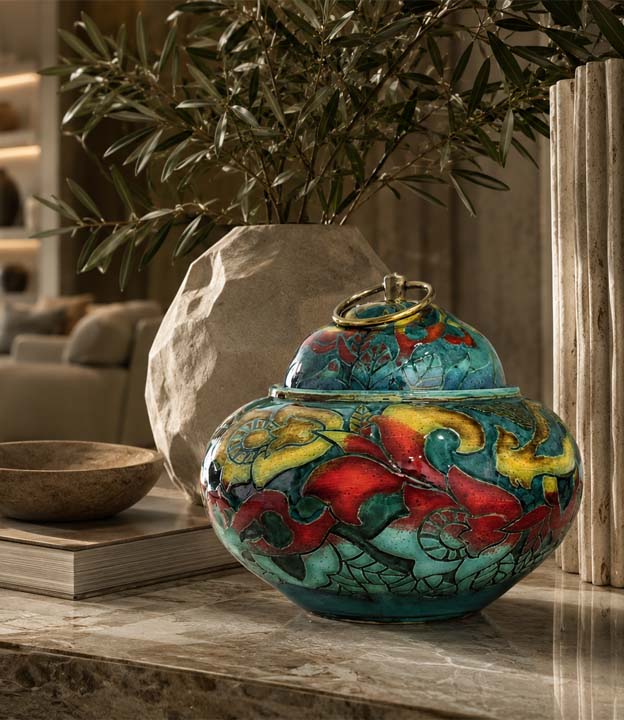
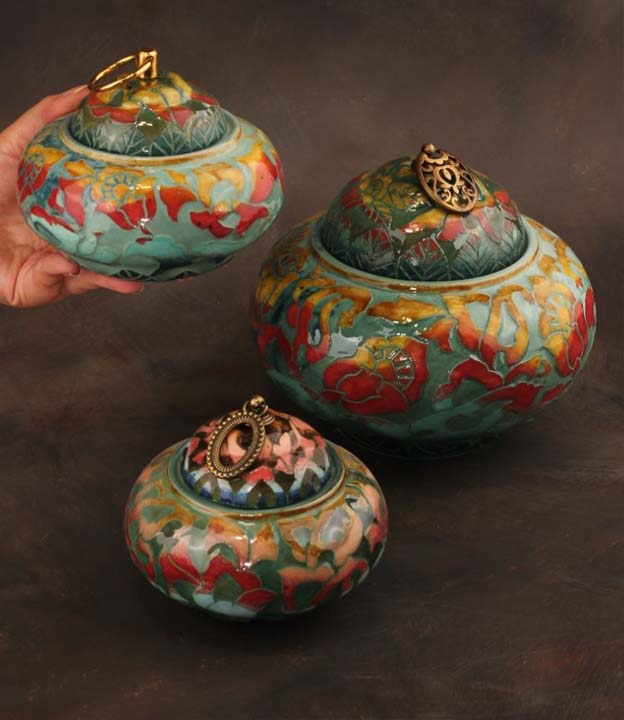
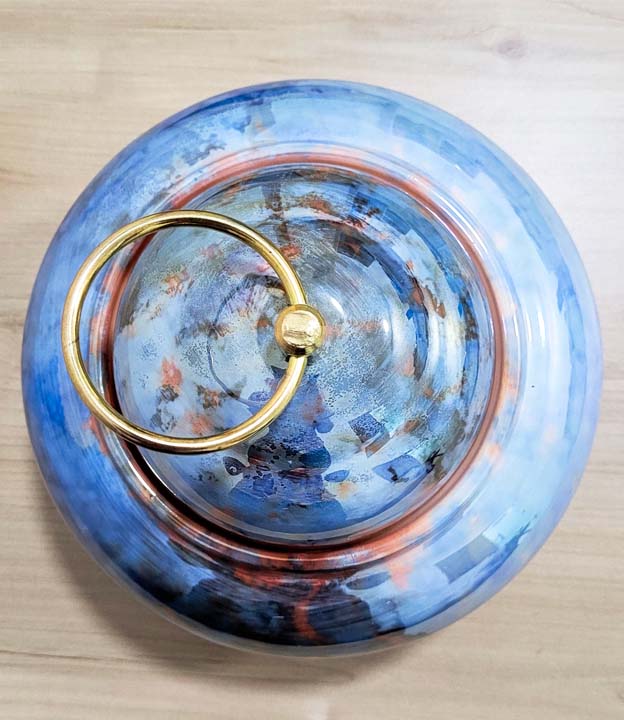
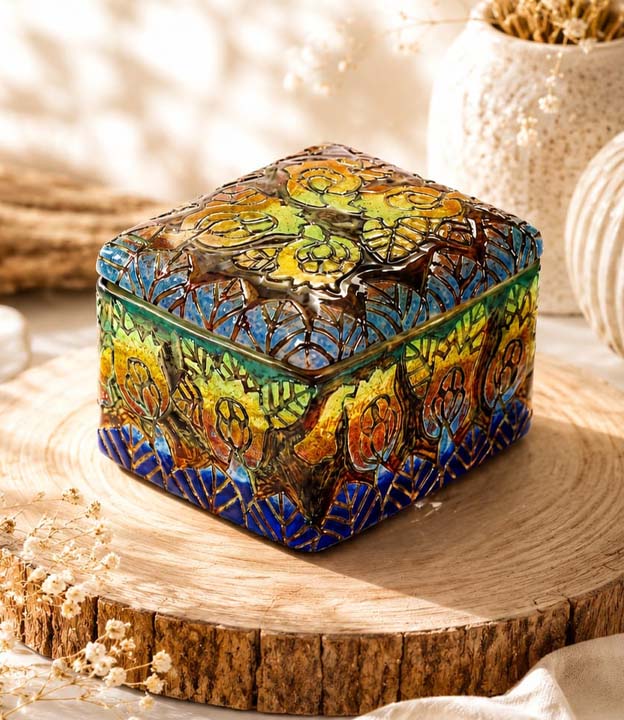
 Ceramic Lidded Jar
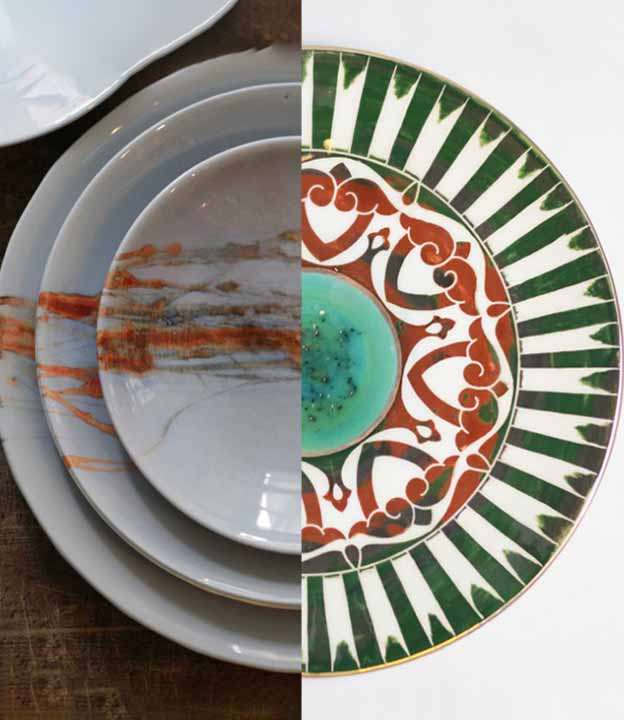
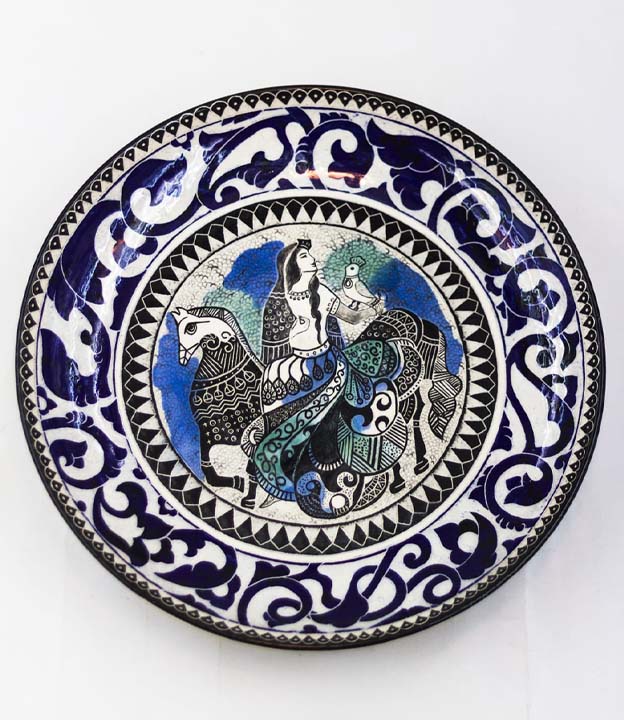
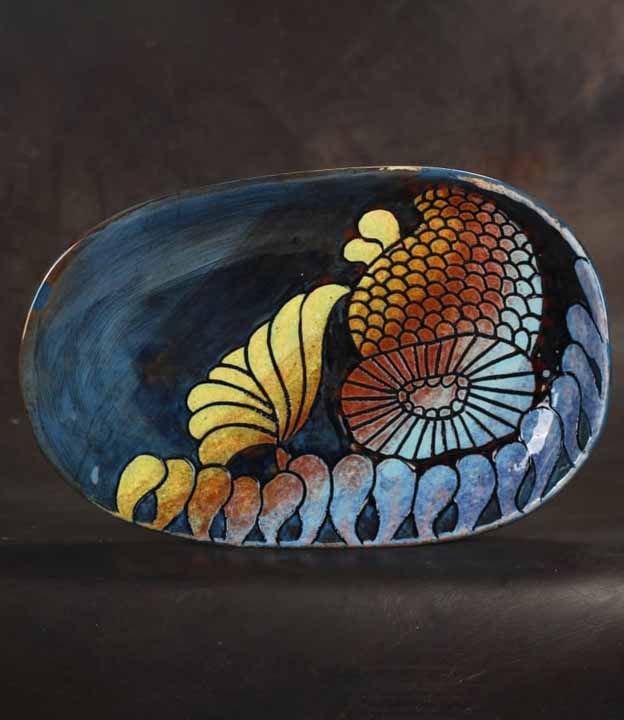
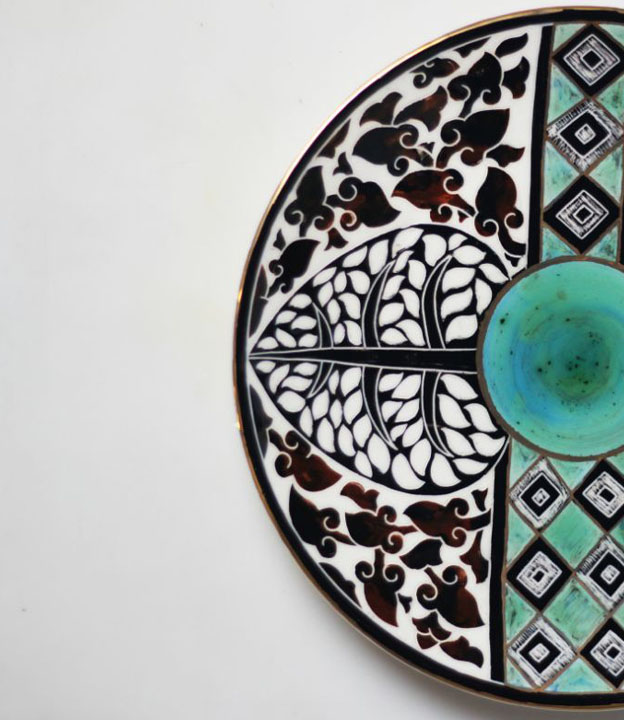
 Decorative Dishes
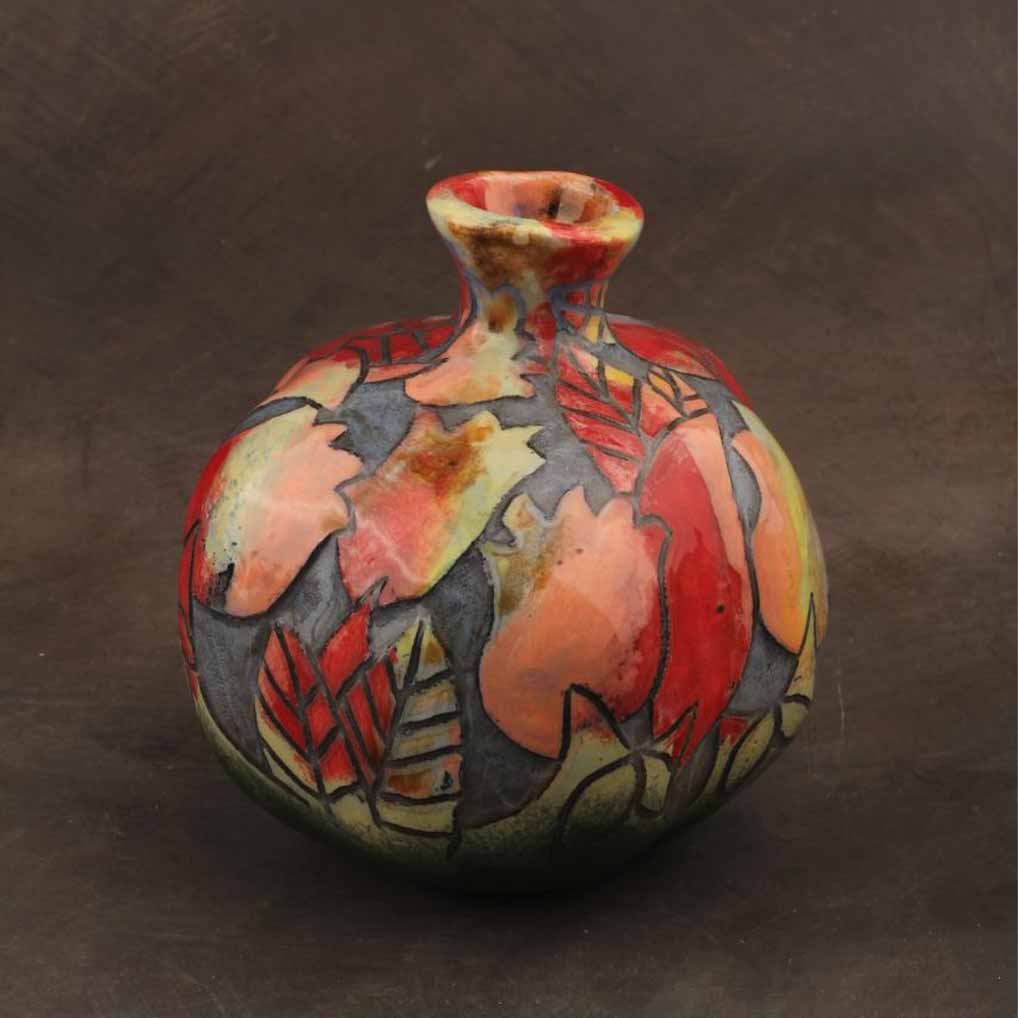
 Pomegranates
 Qajar Collection
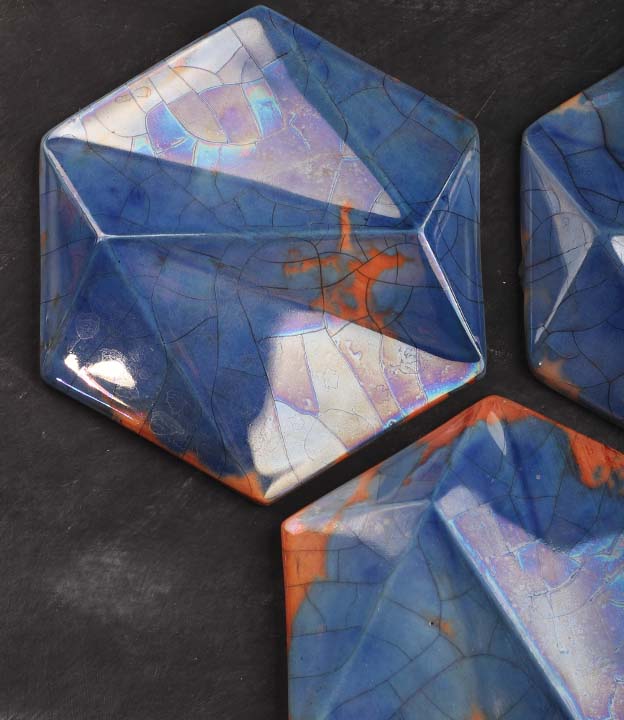
 Decorative Wall Tiles
 Border Tiles
 Hand-Painted Tiles
 Block Tiles
 Wall Clocks
 Side Tables
 Candle Holders
Handmade Ceramics vs Mass-Produced Ceramic Decor: What Really Makes the Difference?

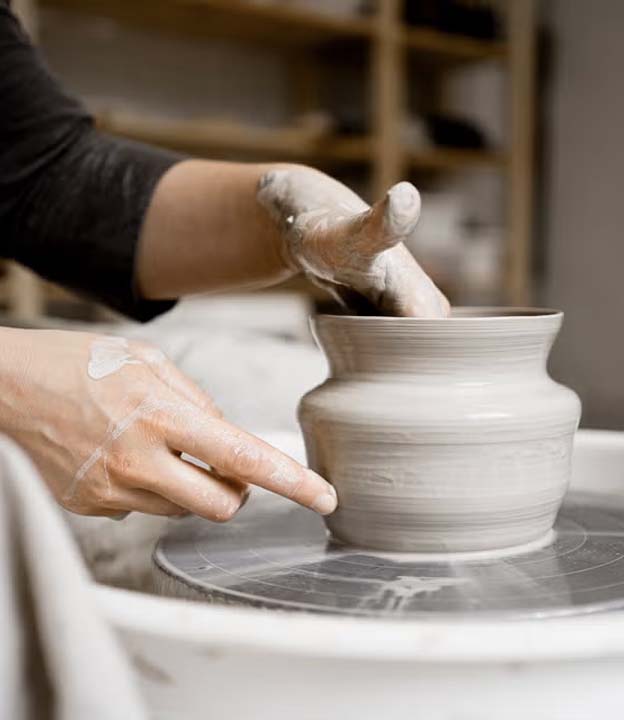
Table of Contents
ToggleIntroduction: Similar at First Glance, Different in Character
Two ceramic objects can look similar from across a room. Both may have a pleasing colour, a polished surface and a shape that works on a shelf or console. Yet one may reward attention while the other disappears into the background.
The difference often becomes visible only when you look more closely: the depth of a glaze, the movement of brushwork, the balance of the form, the finish of the base and the way light settles across the surface. These details reveal whether an object was primarily made for repetition or shaped through a process in which judgement, variation and craft remained important.
The comparison between handmade ceramics and mass-produced ceramic decor should not be reduced to a simple claim that one is always good and the other is always bad. Both have legitimate uses. Their value depends on what the room requires, how the piece was made and what the buyer expects it to contribute.
Mass-produced decor may provide affordability, consistency and easy replacement. Well-made handmade ceramics can offer individuality, material depth and a stronger sense of authorship. Understanding that difference makes it easier to buy with confidence rather than relying on labels alone.
What Handmade Ceramics Actually Mean
Ceramics have long connected function, art and material culture. The V&A Ceramics Collection provides a broad institutional reference for ceramics as useful objects, decorative works and artistic expression.
Handmade ceramics involve meaningful human participation in shaping, finishing, decorating or assembling the piece. That participation may include wheel throwing, hand building, pressing into a mould, carving, painting, glazing, polishing or a combination of methods.
The term does not necessarily mean that every stage was performed without tools or machinery. A responsible description should explain where the hand of the maker genuinely enters the process. In many contemporary workshops, moulds, wheels or cutting tools may be used alongside hand painting, hand finishing and individual quality control.
What matters is whether the process allows judgement and variation to influence the final object. The maker may refine a rim, adjust a curve, vary a brushstroke, choose how glaze is applied or decide whether a fired piece meets the intended standard.
This can produce subtle differences between pieces. Those differences should feel intentional and controlled, not careless. The finest handmade ceramic art combines human character with technical discipline.
What Mass-Produced Ceramic Decor Actually Means
Mass-produced ceramic decor is designed for volume, consistency and repeatability. Shapes are standardised, decoration is often printed or mechanically applied and quality checks are organised around keeping one unit close to the next.
This approach has practical advantages. Prices are usually lower, stock is easier to replenish and repeated pieces can be supplied for staging, rental properties or projects that require visual consistency.
Well-designed mass-produced ceramics can be attractive and useful. The limitation is not necessarily poor appearance; it is that individuality is normally reduced because variation complicates large-scale production.
A mass-produced piece may support a colour scheme or complete a background arrangement effectively. It is less likely to become the object that gives the room its identity.
The Most Useful Comparison: Purpose Before Prestige
The correct choice begins with purpose. A buyer furnishing several rental units has different priorities from someone choosing one piece for a villa entrance or a dining-room focal point.
Choose mass-produced decor when consistency, speed, budget and easy replacement are the main requirements. Choose handmade ceramics when the object is expected to carry artistic presence, become a focal point or contribute a more personal sense of material and craft.
In many successful interiors, the two can coexist. Background accessories may be simple and repeatable, while a few important surfaces are reserved for stronger handmade pieces. This hierarchy is often more convincing than insisting that every object must be rare or expensive.
Surface: Where the Difference Often Becomes Visible
Ceramic is understood through surface. Glaze, texture, painted detail and reflected light can reveal more about quality than a product description.
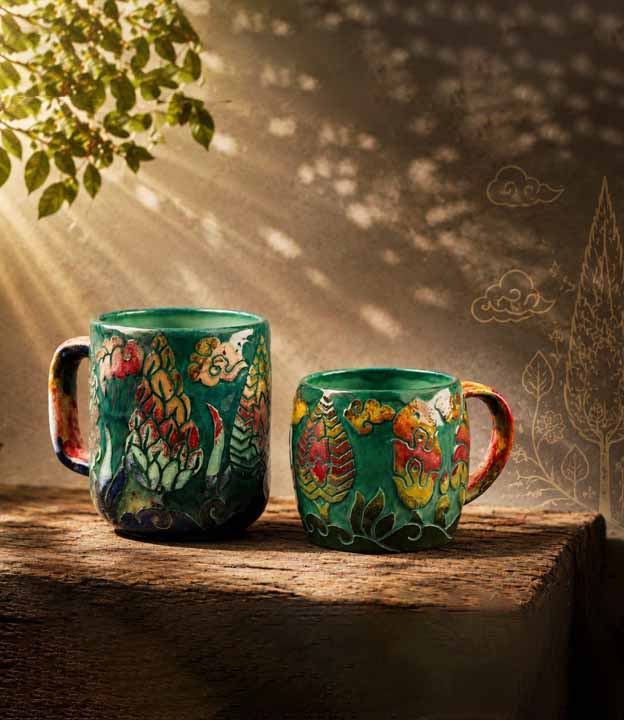
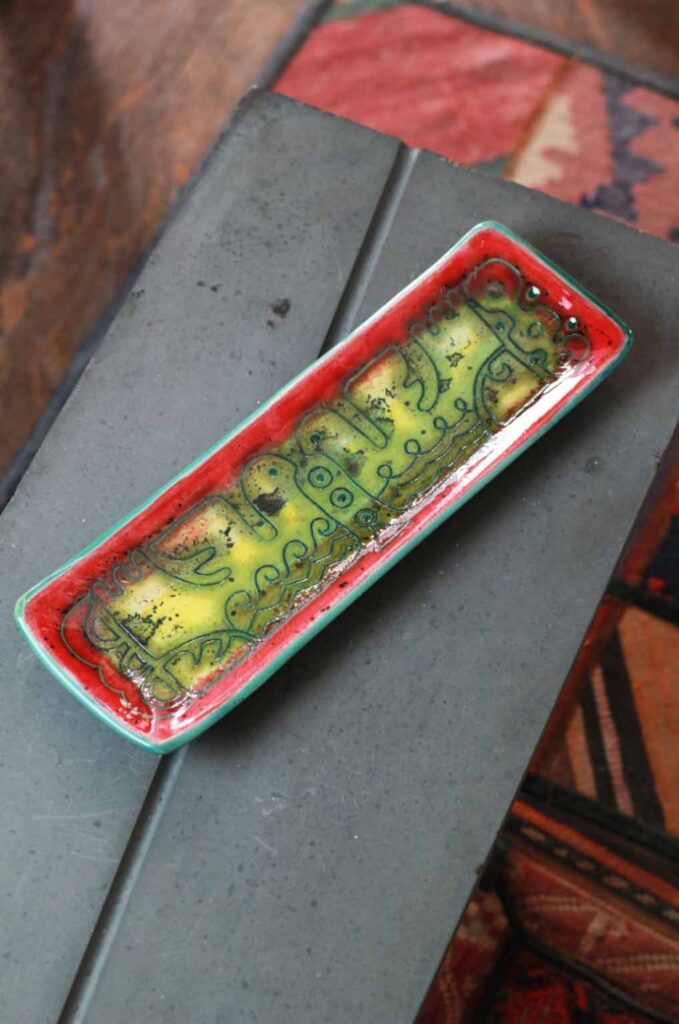
On handmade pieces, glaze may deepen at an edge, gather inside a curve or shift slightly across textured clay. Hand-painted lines may show controlled pressure and rhythm. These variations can create depth because the surface does not behave exactly the same everywhere.
Mass-produced finishes generally aim for uniformity. Printed decoration can be crisp and repeatable, while sprayed or mechanically applied glaze can appear clean and even. This may suit a minimal background role, but it can feel flatter when the object is expected to reward close viewing.
Neither unevenness nor variation is automatically valuable. A strong handmade surface should look intentional. Blotchy glaze, poor adhesion, accidental marks or unfinished edges should not be excused merely because a piece is described as handmade.
Form: Individuality Must Still Be Balanced
Before considering colour or pattern, examine the silhouette. The form determines whether an object has authority.
A handmade dish may open with a softer curve. A jar may show a more expressive shoulder. A sculptural piece may have a balance that feels specific rather than generic. Controlled individuality can make the object memorable.
Mass production usually favours exact repetition. This can be an advantage when several matching pieces are required. It becomes a limitation when the room needs one object with a singular visual identity.
The standard should remain balance. A handmade piece should stand securely, feel resolved from several angles and maintain proportion. Individuality is not a substitute for structure.
Craftsmanship: The Label Is Not Enough
The word handmade is not a guarantee of quality. It describes a process, not the success of the result.
Check the base, edges, glaze application, painted details and overall stability. Look for intentional finishing. On lidded jars, confirm that the lid sits properly. On wall pieces, consider whether the form can be mounted safely. On dishes intended for food, ask specifically about food-contact suitability; decorative ceramics should not be assumed to be functional tableware.
A high-quality handmade object shows both character and control. It may include minor variation, but the piece should not feel unresolved, structurally weak or carelessly finished.
The same judgement applies to mass-produced pieces. A factory-made object can still be well designed, stable and durable. Buyers should assess the actual object rather than relying on romantic or dismissive assumptions.
Emotional Value: Object, Memory and Authorship
Interiors are not experienced only through style. Objects also influence how personal or anonymous a room feels.
A handmade ceramic piece may carry a clearer sense of authorship. Someone selected the shape, judged the surface, applied colour and decided that the fired result was worth keeping. For many buyers, this connection adds emotional value.
Mass-produced decor usually carries less visible authorship because the design is separated from the repeated manufacturing process. It can still be attractive, but the relationship is often more functional than personal.
This distinction matters most in rooms intended to feel collected rather than simply completed. One meaningful object can create more emotional depth than several interchangeable accessories.
Interior Design Impact: Background Layer or Focal Point?
Mass-produced ceramic decor often performs well as a supporting layer. It can repeat colour, create symmetry and complete shelves or staging arrangements within a controlled budget.
Handmade ceramics are usually stronger where the eye is expected to pause. A decorative ceramic dish can become wall art. A handcrafted tile can transform a niche. A lidded jar can anchor a console. A sculptural ceramic object can provide focus on a shelf or table.
The difference is one of visual hierarchy. Background objects support the scheme. Focal objects justify attention.
Luxury and boutique interiors benefit from this hierarchy because not every object should compete. A few carefully selected handmade pieces can prevent the room from feeling generic while simpler objects maintain balance.
Price and Value: What Are You Really Paying For?
Handmade ceramics often cost more because production is slower and may involve specialist skill, multiple firings, surface work, rejection of unsuccessful pieces and smaller quantities.
The price may reflect artistic development, labour, materials, finishing, packaging and the risk of variation during firing. It should not be assumed that every higher-priced piece is better, but the process can justify a different cost structure.
Mass-produced decor benefits from scale. Tooling, moulds and repeated workflows reduce the cost per unit. This makes it suitable when quantity matters more than individuality.
The useful question is not simply which option is cheaper. Ask what the piece needs to deliver over time. If it is a temporary accessory, affordability may be the right priority. If it is expected to become a lasting focal point, deeper craftsmanship and stronger design may offer better value.
Durability and Care: Handmade Is Not Necessarily More Fragile
Durability depends on clay body, firing, glaze, thickness, construction and intended use, not simply whether the piece was handmade or factory produced.
A well-fired handmade ceramic object can be durable, while a poorly designed mass-produced piece may chip easily. The reverse can also be true. Ask how the object is intended to be used and follow the maker or supplier’s care instructions.
Display ceramics should be cleaned gently with a soft dry or slightly damp cloth. Avoid abrasive pads and harsh chemicals, particularly on hand-painted, metallic or textured finishes. Wall pieces require secure mounting suited to their weight.
For food use, decorative appearance is not enough. Confirm that the piece was made and tested for the intended contact with food, heat or washing method.
How to Recognise Quality Handmade Ceramics
Begin with the form. Does the silhouette feel balanced and purposeful? Would the object still be attractive without its decoration?
Then inspect the surface. Look for glaze depth, controlled brushwork and texture that supports the form. Variation should feel integrated rather than accidental.
Check the finish. The base should be stable, edges considered and any lid or fitted component should work properly. Look at the object from more than one angle.
Finally, consider presence. Does it improve the room from the expected viewing distance? Does it add warmth, focus or material interest? A strong ceramic art object should contribute more than a label or a trend.
How Handmade Ceramics Behave in Refined Interiors
Handmade ceramics are strongest when their form and surface can be seen. They should not be buried among unrelated accessories.
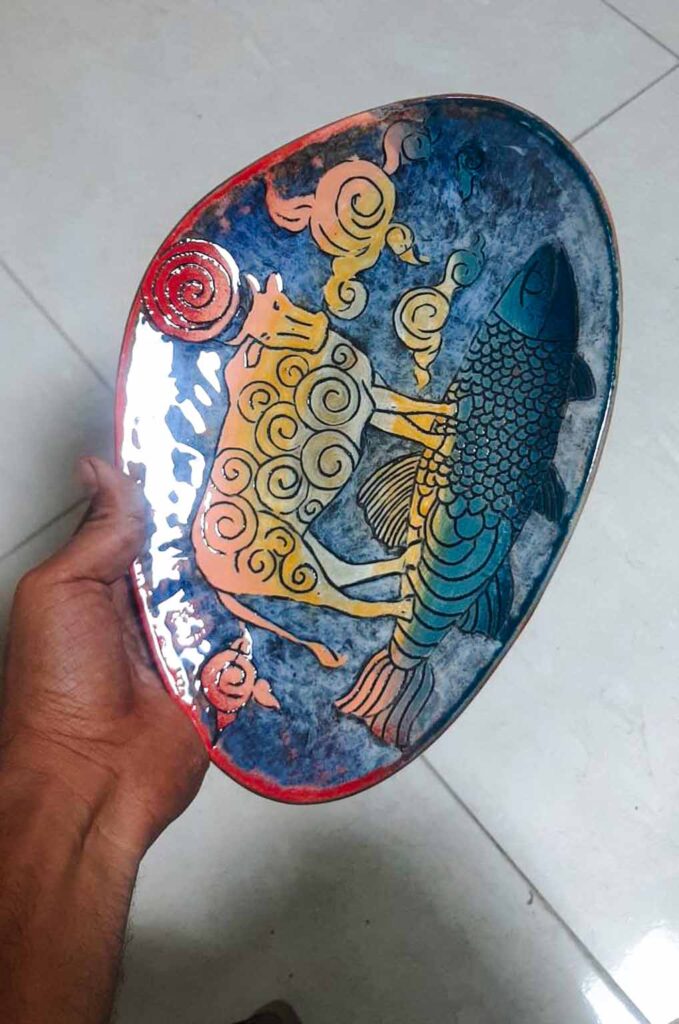
Place a decorative dish upright on a shelf or wall. Use a lidded jar to add height on a console. Allow a sculptural piece to occupy a quiet section of a coffee table. Use ceramic wall tiles where texture and pattern can become part of the architecture.
Pair ceramic with wood for warmth, stone for grounding, brass for refinement, linen for softness and warm lighting for atmosphere. The materials should appear to belong to one composition.
Restraint matters. The object needs enough negative space to remain legible. Handmade ceramics do not require excessive styling; they require thoughtful placement.
Handmade Ceramics in Dubai Homes and Villas
Dubai interiors often combine bright natural light, stone, marble, timber, metal and neutral upholstery. Handmade ceramics can soften this palette and introduce a more tactile layer.
In a large villa entrance or double-height living area, choose pieces with enough scale to remain visible. In apartments, one well-positioned dish, jar or sculptural object may be more effective than a crowded group.
Strong daylight can reveal glaze beautifully but may also create glare on highly reflective surfaces. Test placement at different times of day. Keep valuable pieces away from unstable edges and busy circulation routes.
For ceramic decor in Dubai, the strongest purchase is not necessarily the most ornate object. It is the piece that suits the architecture, light, viewing distance and material palette of the room.
When Mass-Produced Ceramic Decor Is the Better Choice
Mass-produced ceramics may be the more sensible choice for temporary displays, rental interiors, budget-conscious styling, repeated matching pieces or projects where replacement must be easy.
They can also provide a quiet background layer while handmade pieces are reserved for the most visible locations. This approach keeps the interior practical without removing all individuality.
The key is honesty about purpose. A supporting object does not need to pretend to be collectible art. It needs to be well chosen, well placed and suitable for the budget.
When Handmade Ceramics Are Worth the Investment
Choose handmade ceramics when the space needs a memorable focal point, a sense of authorship, tactile depth or a piece that will remain meaningful after short-lived trends pass.
They are especially effective in entrances, dining rooms, living rooms, niches, boutique interiors, reception areas and hospitality spaces where visitors naturally pause.
The investment is most justified when the object has strong form, refined craftsmanship and a clear relationship with the room. Handmade alone is not enough; the piece must also be worth looking at and living with.
A Fair Buying Checklist
Before deciding, ask what role the object will play. Is it a focal point or a background accessory? Does the space require individuality or repeatability?
Examine the form, glaze, finish, stability and scale. Confirm the intended use and any care or mounting requirements.
Consider whether replacement matters. For large projects, consistency and availability may be more important than uniqueness. For a private focal point, individuality may matter more.
Finally, ask whether the object improves the room. A good purchase should add visual value, emotional value or practical value. Ideally, it should do more than one.
Why the Difference Matters
The difference between handmade ceramics and mass-produced ceramic decor is not simply the difference between good and bad. It is the difference between two production priorities.
Mass production prioritises consistency, efficiency and access. Handmade practice allows more room for judgement, variation and authorship. Either can succeed when it is well designed and used for the right purpose.
For interiors that need character, handmade ceramics often provide the stronger focal point. For spaces that need quantity, coordination or easy replacement, mass-produced pieces may be more practical.
Good interior design depends on choosing intentionally. The object should earn its place through function, beauty, meaning or presence.
Explore Handmade Ceramic Art at Checkmark Trading
At Checkmark, our ceramic collection is curated for interiors where craftsmanship, artistic presence and material warmth matter.
The collection includes ceramic art objects, decorative ceramic dishes, ceramic wall tiles, ceramic lidded jars and symbolic ceramic pieces for refined homes, villa interiors, hospitality spaces, entrances, dining rooms and carefully composed design projects.
Whether selected as a single statement piece, wall composition, table accent or part of a wider ceramic collection, well-chosen handmade ceramics can bring individuality and quiet distinction into an interior.
Mass-produced decor can complete a scheme. A strong handmade piece can help define it.