
 Chandeliers
 Pendant Lights
 Ceiling Lights
 Wall Sconces
 Table Lamps
 Floor Lamps
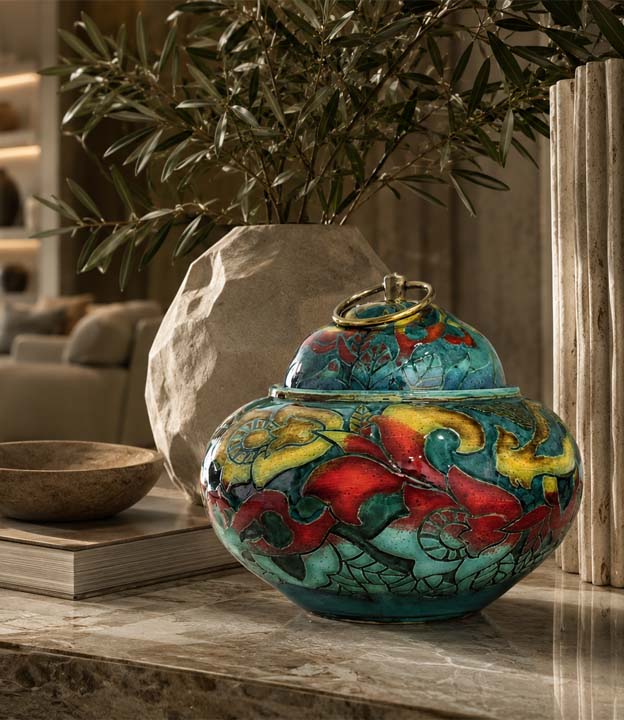
 Ceramic Lidded Jar
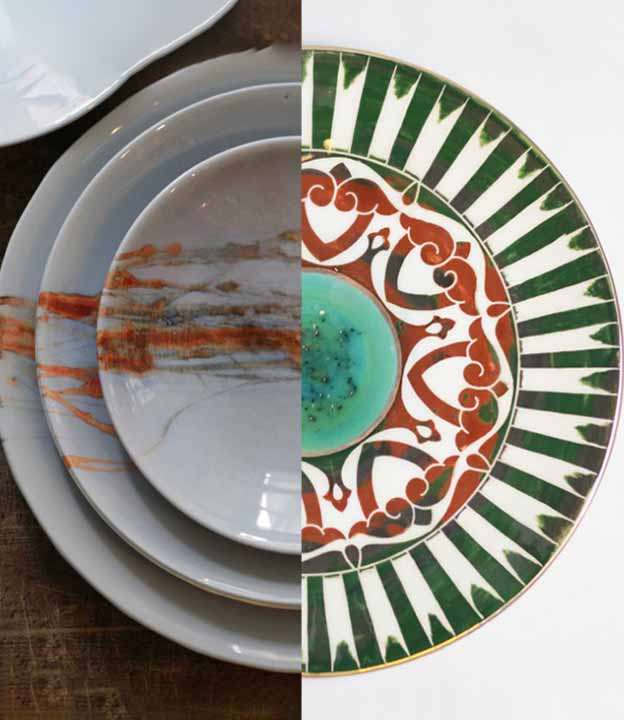
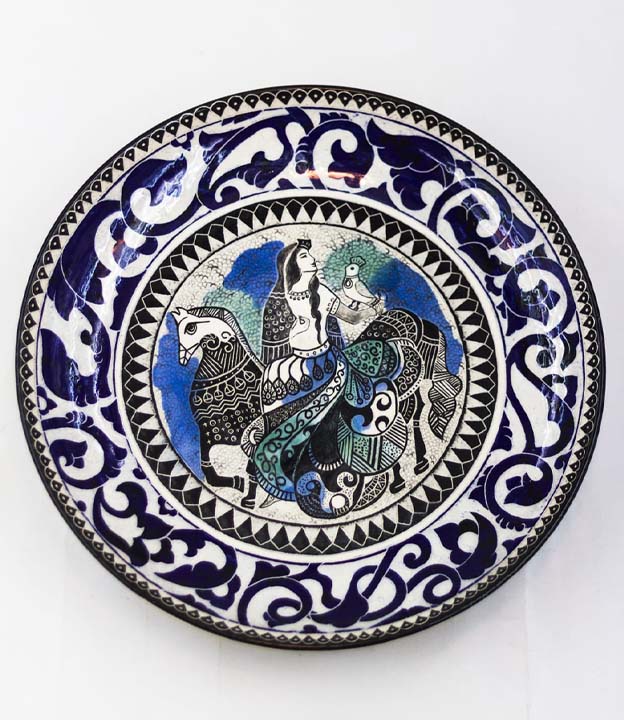
 Decorative Dishes
 Pomegranates
 Qajar Collection
 Decorative Wall Tiles
 Border Tiles
 Hand-Painted Tiles
 Block Tiles
 Wall Clocks
 Side Tables
 Candle Holders
Handcrafted Ceramic Décor: A Complete Guide to Timeless Interior Elegance

A room becomes memorable when it contains something that still carries the trace of the hand. It might be a softened brushstroke, a slight variation in form, a glaze that gathers more deeply around an edge, or a textured surface that looks different as daylight moves across it. These details are not defects. They are evidence that an object was shaped rather than merely produced.
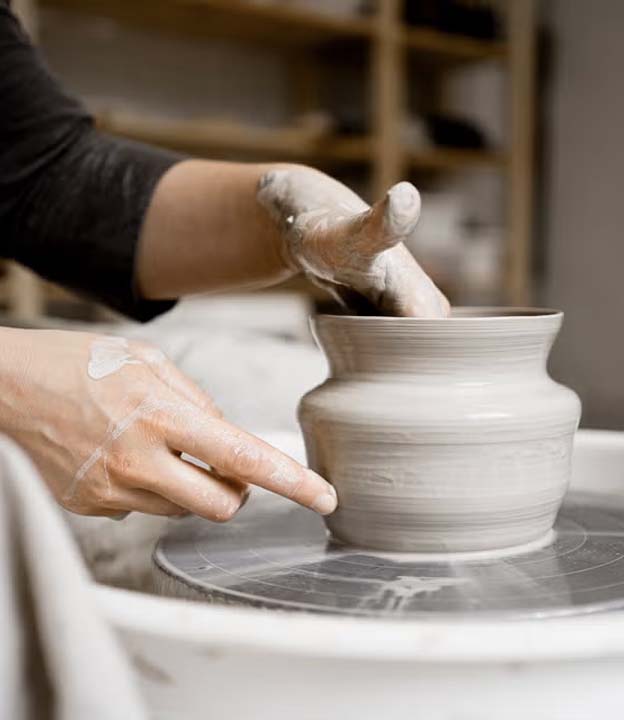
Handcrafted ceramic décor brings that human presence into contemporary interiors. Clay begins as earth, is shaped through pressure and patience, and is transformed by heat into an object that can hold colour, pattern, texture, symbolism, and sculptural form. The result can feel at home in a quiet apartment, a generous villa, a dining room, a reception area, or a carefully composed living space.
The strongest ceramic pieces are not chosen simply because a shelf or console looks empty. They are chosen because the room needs something: warmth beside stone, softness beside glass, colour in a neutral scheme, or a focal point that does not rely on size alone.
This guide looks at the pieces most often used in interiors—decorative dishes, ceramic wall décor, decorative ceramic jars, tiles, and symbolic objects—and explains how to choose and place them without turning a thoughtful room into an over-styled one.
Table of Contents
ToggleWhy Lighting Temperature Matters for Wooden Fixtures
Every successful interior depends on contrast. Clean architecture benefits from an object with irregular human detail. Neutral colours benefit from surface variation. Luxury materials benefit from something tactile and sincere. A carefully chosen ceramic piece can provide all three without making the room visually heavy.
Ceramic also works at several levels at once. Its silhouette affects the composition of a shelf or console. Its surface responds to light. Its glaze or brushwork introduces colour and rhythm. Its cultural or symbolic associations can give the room emotional weight. One well-chosen piece may act as sculpture, material contrast, colour accent, and personal expression at the same time.
That versatility is not new. Museum ceramic collections include vessels, dishes, sculptural works, exhibition pieces, and tiles made across many periods and regions, showing how naturally ceramics move between daily life, craft, architecture, and art.
The lesson for an interior is simple: use ceramic selectively. Elegance rarely comes from placing objects on every available surface. It comes from recognising where the room needs warmth, scale, texture, or visual emphasis, and choosing a piece capable of doing that work.
Clay, Glaze, Pattern, and Light
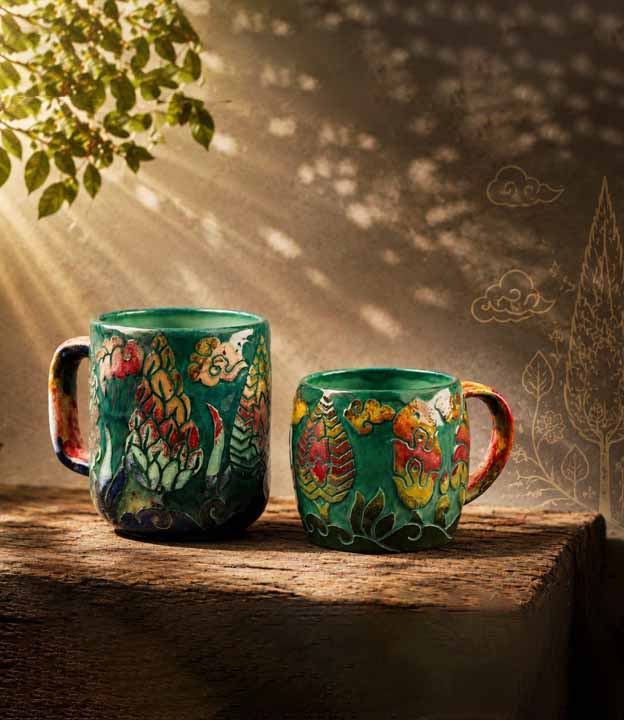
Much of ceramic’s character lives in the surface. A glossy glaze can create depth and reflection. A matte glaze can feel calm and architectural. Relief work catches shadow. Hand-painted motifs introduce rhythm and narrative. Even a plain piece can become expressive when the clay body, edge, or firing marks remain visible.
Light changes ceramic more than many buyers expect. Daylight may reveal transparency or layers in a glaze, while warm evening light can make the same piece appear richer and more intimate. Before deciding on a permanent position, look at the object in the lighting conditions in which the room is usually used.
Material pairing matters just as much. Ceramic beside wood feels warmer; beside stone it feels grounded; beside brass it feels more formal; beside linen it feels softer; beside glass it feels lighter. Handcrafted ceramics also sit naturally near wooden lighting because both materials carry visible variation and soften interiors dominated by polished or industrial finishes.
Choose the Piece by Its Purpose
A common mistake is to begin with colour: “Does this match the sofa?” A better question is, “What should this object do for the room?”
It may need to add height to a low arrangement, soften the straight lines of furniture, bring pattern into a restrained scheme, connect two colours already present, or become the quiet focal point of an otherwise empty wall. Once that role is clear, decisions about size, finish, colour, and placement become much easier.
This approach is especially useful for interior designers. A ceramic object should support the wider concept rather than behave as an isolated accessory. The shape, visual weight, finish, and placement should have a reason, even if the finished room feels effortless.
Scale Matters More Than Most People Think
Ceramic styling often fails because the piece is technically able to fit, but visually too small or too large for the surface. A compact object can disappear on a long console, while a tall jar can overwhelm a narrow shelf. Dark colour, dense pattern, glossy finish, and a complex silhouette also increase visual weight, so measurements alone do not tell the whole story.
For large villas and generous entrance halls, stronger proportions are usually necessary. A substantial console may need one tall jar, a large dish displayed upright, or a controlled group of two or three pieces. In a
smaller apartment, one compact but distinctive object may create more impact than several weaker accessories.
Measure the surface before buying. Consider the viewing distance, nearby furniture, ceiling height, and the amount of open space around the object. The piece should look deliberately proportioned, not merely accommodated.
Decorative Ceramic Dishes: Art with Depth
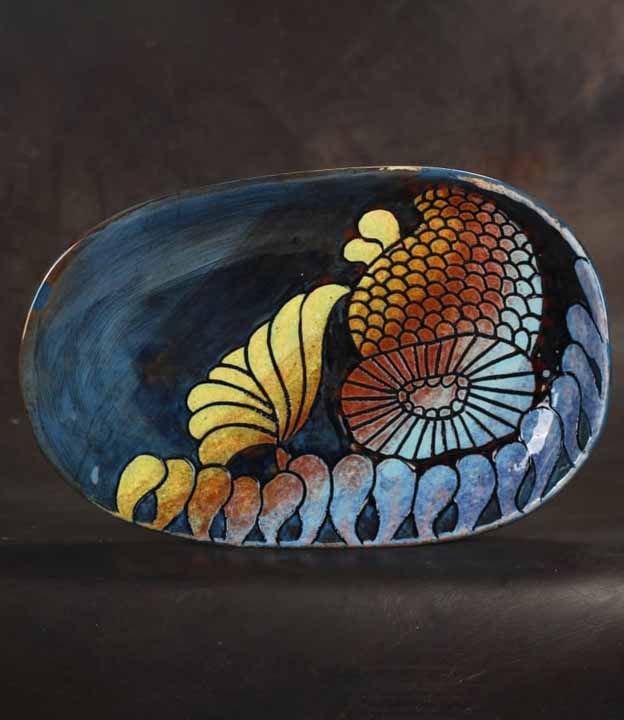
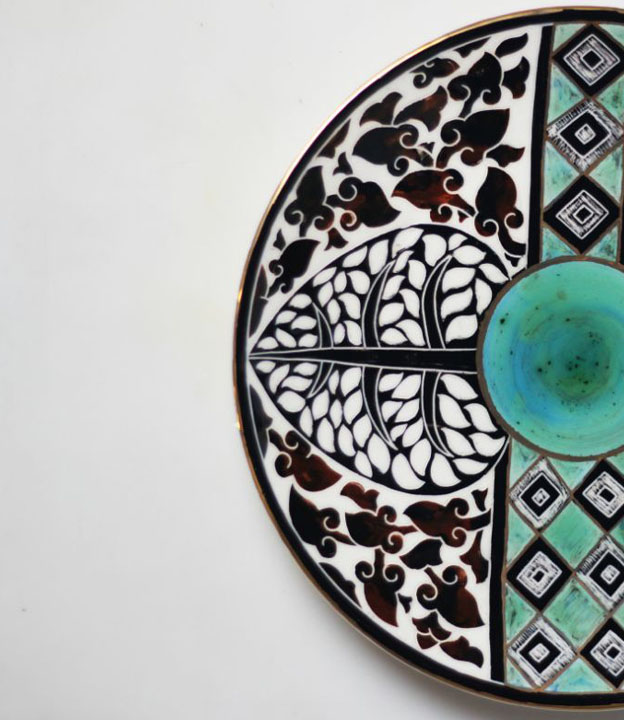
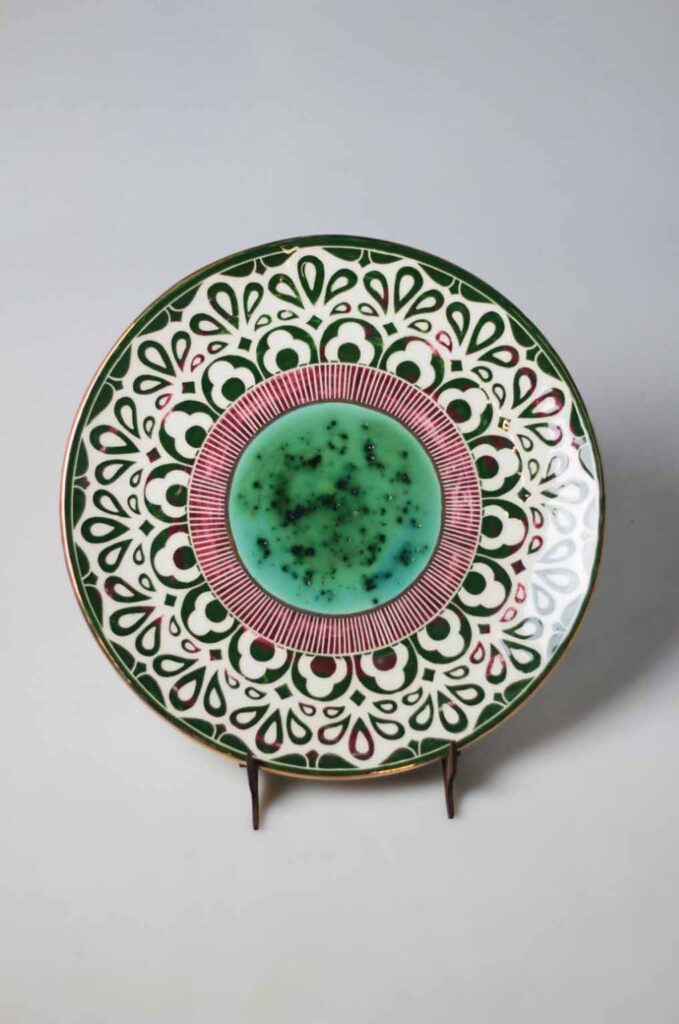
Decorative ceramic dishes are among the most adaptable pieces in a ceramic collection. On a table, they bring colour and material richness. Displayed upright, they behave like small paintings with a physical edge. Mounted on a wall, they cast shadows and create a more tactile composition than a flat print.
Their circular or oval forms are particularly useful in rooms dominated by straight architectural lines. A single large dish can soften a console arrangement; a small group can bring rhythm to a dining wall or hallway. The important point is to treat the dish as art. Do not hide a carefully glazed or painted surface beneath keys, remotes, or unrelated objects.
In dining rooms, these pieces carry another association: hospitality. They echo serving, gathering, and shared meals without needing to be used as tableware. Unless the product is specifically identified as food-safe, however, it should remain decorative.
Ceramic Wall Tiles: When Decoration Becomes Architecture
Ceramic wall tiles have a different presence from movable objects because they become part of the room itself. A hand-painted tile can give a narrow wall identity. A small arrangement can define an entrance or a niche. A larger composition can turn an otherwise blank surface into an architectural feature.
The best use of decorative tiles is not to cover every available area. It is to choose a surface where colour, pattern, and relief can be appreciated at the right distance. A quiet wall beside an entrance console, the back of a display niche, or a measured section above a sideboard often works better than a visually crowded location.
When selecting ceramic tiles in Dubai, consider the intensity of natural light as well as artificial lighting. Strong daylight can reveal glaze variations beautifully, but it can also make highly reflective surfaces appear more dominant. Samples should be viewed in the intended space whenever possible.
Ceramic Lidded Jars: The Elegance of Contained Form
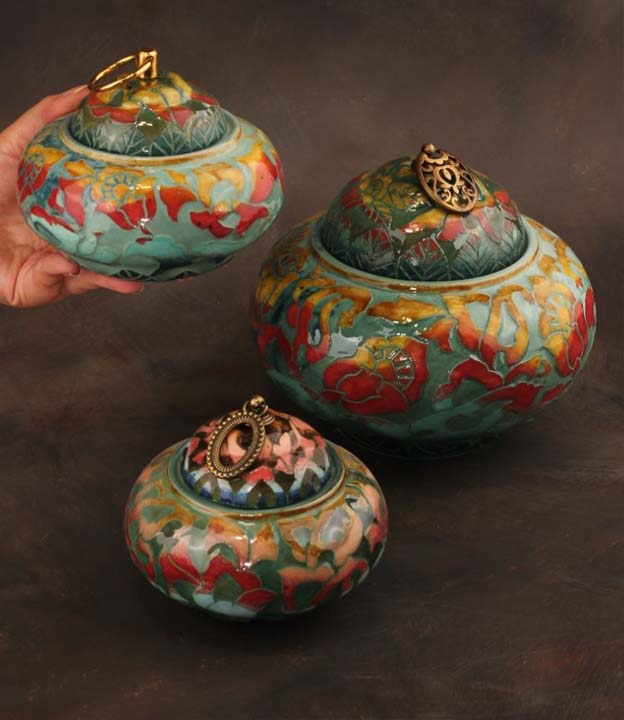
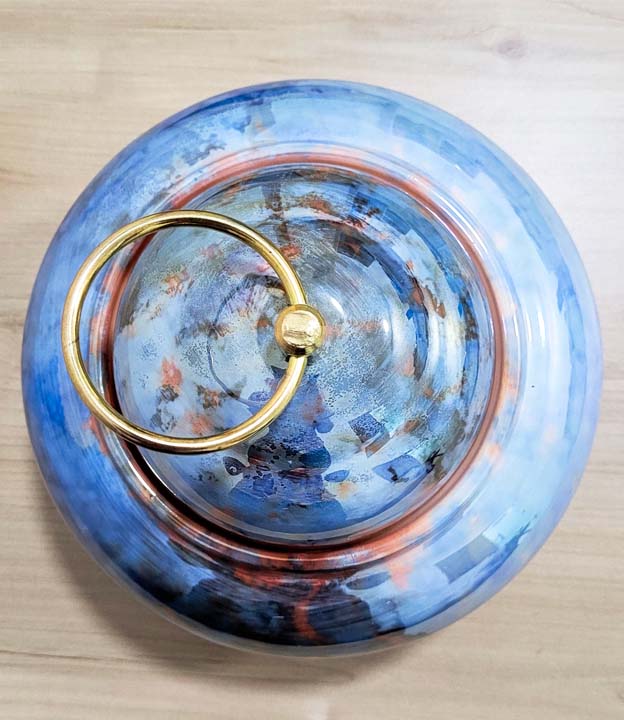
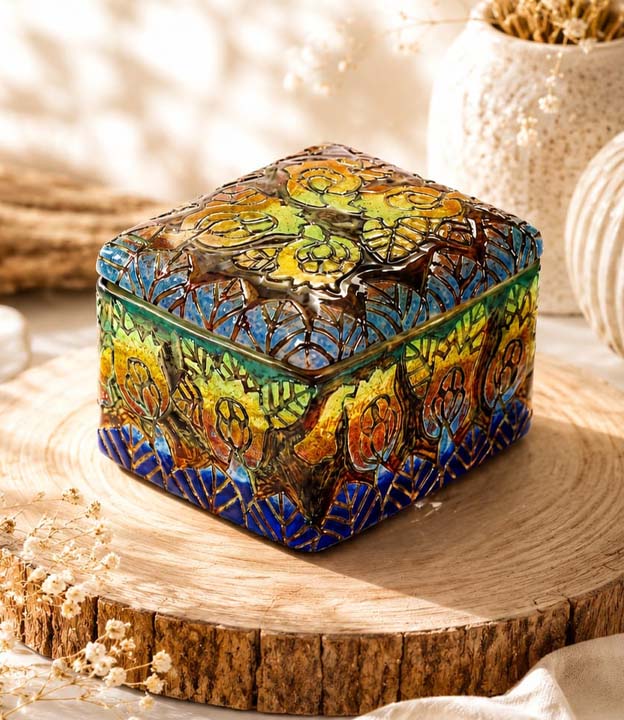
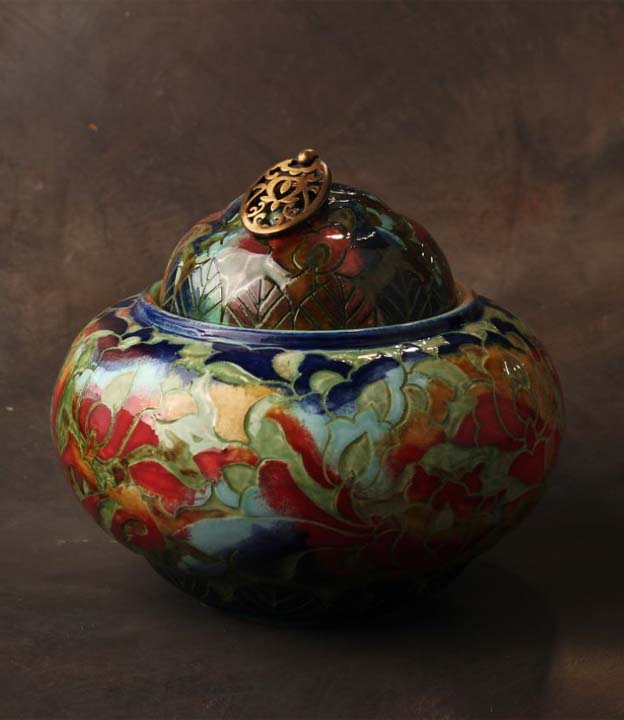
A ceramic lidded jar has a particular dignity. Even when it is used only as decoration, it suggests storage, ritual, privacy, and care. Its form also has an architectural logic: base, body, shoulder, lid, and crown. When those elements are balanced, the object feels complete from every angle.
Tall decorative ceramic jars bring vertical strength to a console or large shelf. Smaller jars work beside books, lamps, trays, or a displayed dish. In a neutral interior, a richly glazed jar can provide depth without requiring a strong colour change elsewhere in the room.
Check that the base is stable and the lid sits properly. A slight handmade variation can be part of the character, but a lid that rocks sharply or a body that feels unstable is a practical weakness, not an artistic virtue.
Symbolic Ceramic Objects
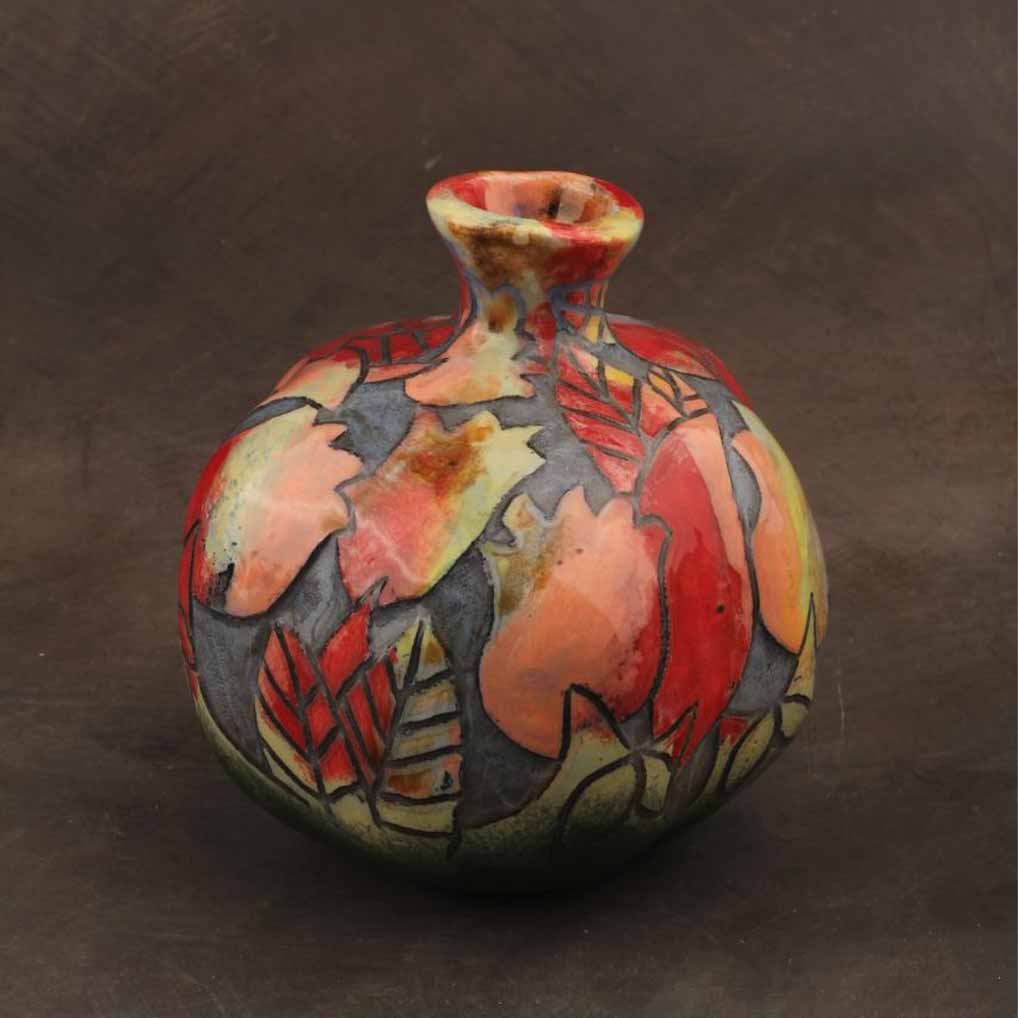
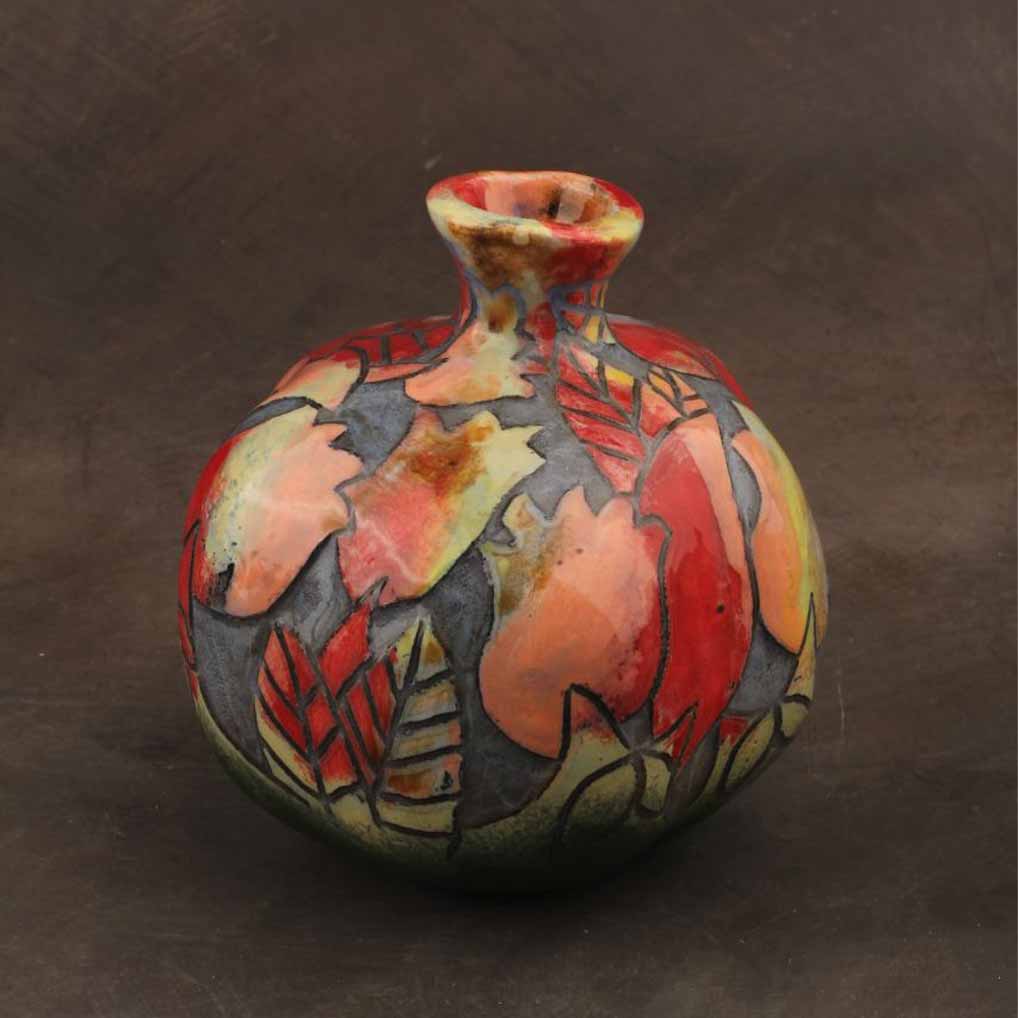
Some ceramic pieces carry meaning before they are considered as decoration. A pomegranate, for example, may suggest abundance, continuity, hospitality, or celebration. Used with restraint, a symbolic object can make a shelf, dining table, entrance console, or niche feel more personal.
These pieces are strongest when they are allowed to speak quietly. One carefully placed object usually has more emotional weight than a crowded group. The point is not to explain the symbolism to every visitor. It is to choose something that belongs to the identity of the home.
How to Style Ceramic Without Making a Room Feel Staged
The simplest rule is to leave room around the object. Negative space is not an unfinished area; it is what allows shape, glaze, and detail to be seen. One jar on a console can be more convincing than five small accessories placed without hierarchy. One dish on a wall can be stronger than a large group that has no relationship in colour, scale, or pattern.
When several pieces are used together, give them a reason to belong. They may share a glaze family, a repeated motif, compatible proportions, or a similar emotional mood. They do not need to match exactly. In fact, a collection often feels more personal when the relationship is clear but not overly perfect.
Ceramic should also converse with the rest of the room. Place it near wood for warmth, stone for permanence, brass for refinement, linen for softness, books for an informal sense of collection, or warm lighting for atmosphere. The object should not look as if it was added after the room was finished. It should feel as though the room made space for it.
Ceramic Décor in Different Rooms
Living Rooms
Living rooms can carry a wider range of ceramic forms than most spaces. A sculptural object on a coffee table, a lidded jar on a console, or decorative dishes on a wall can create focus without disturbing comfort. Because this is usually the room where the taste of the home is most visible, the pieces should feel selected rather than accumulated.
Dining Rooms
Dining rooms are natural settings for ceramic. Decorative dishes and wall tiles connect with the rituals of gathering and hospitality, while jars and symbolic objects bring height or meaning to a sideboard. Keep table arrangements low enough for conversation and easy to move when the table is in use.
Entrances
An entrance creates the first emotional impression of a home. A strong ceramic piece on a console can communicate warmth and care before a visitor reaches the main living area. Entrances usually benefit from fewer pieces with greater presence, particularly in villas with large halls or high ceilings.
Bedrooms and Studies
Bedrooms call for quieter forms, softer glazes, and less visual activity. In a study, a small ceramic object can soften shelves dominated by books, screens, and straight lines. In both rooms, the piece should support calm rather than perform as a dramatic focal point.
Choosing Ceramic Décor for Dubai Villas and Interior Projects
Dubai interiors vary widely, but many share a few practical conditions: strong daylight, generous use of stone and glass, open-plan living areas, and, in villas, large entrance halls or long console surfaces. Ceramic can bring warmth to these spaces, but the scale and finish need to be chosen with the room rather than from a product image alone.
For a villa entrance, a small accessory may look lost from the doorway. A tall jar, a substantial decorative dish, or a carefully grouped pair may be more appropriate. In a sunlit room, highly reflective glaze will appear more prominent, while matte or textured surfaces may feel calmer. Against marble, polished stone, or glass, ceramic with visible handwork can prevent the room from feeling impersonal.
For interior designers and fit-out projects, practical information matters as much as appearance. Confirm dimensions, weight, availability, finish variations, wall-mounting requirements, and lead times before specifying a piece. Where several items are required, ask whether variations are expected from one handmade piece to another. Those differences can be desirable, but they should be understood before installation.
Ceramic decorative items in Dubai are often presented as individual accessories, yet the strongest results come from considering the whole composition: furniture dimensions, lighting direction, surrounding
materials, and the distance from which the object will be viewed. This is particularly important for ceramic décor for villas, reception areas, restaurants, and professional interior projects.
How to Recognise a Well-Made Piece
Handmade does not mean that every imperfection should be accepted. Good ceramic work shows control, even when variation is part of its character.
Check | What to look for |
Stability | The base sits securely without excessive rocking. |
Proportion | The body, opening, lid, handles, or decorative details feel visually balanced. |
Glaze | Pooling, variation, or crackle looks intentional; there are no sharp, unfinished areas. |
Painted detail | Lines and motifs show control, even when the brushwork remains expressive. |
Structural condition | There are no cracks that weaken the body or mounting points. |
Edges and underside | Visible edges are finished cleanly and the underside does not damage furniture. |
Lids and fittings | Lids sit safely; wall pieces have an appropriate hanging or mounting method. |
Intended use | Decorative and food-safe products are clearly distinguished. |
Handmade Ceramic and Mass-Produced Décor
Mass-produced décor usually aims for consistency. Handmade ceramic aims for character, but character alone is not enough. Proportion, finish, weight, glaze control, and artistic judgement still matter.
When a handcrafted piece is well made, its individuality appears in small ways: the edge of a dish, the depth of the glaze, the movement of a painted line, or a slight variation in form. These differences should make the object feel alive, not unfinished.
A home filled only with factory-perfect accessories can look complete while still feeling anonymous. A few well-chosen handmade ceramic home accessories introduce evidence that someone shaped, selected, and cared. That is often what makes a room feel inhabited rather than assembled.
Building a Ceramic Collection Over Time
A good collection rarely needs to be purchased all at once. Begin with one piece that feels right in both scale and mood. It may be a decorative dish, a tile, a lidded jar, or a symbolic object. Let that first piece establish a direction, then add others only when they contribute something different.
Look for relationships rather than exact matches: compatible glaze depth, related colour families, repeated motifs, balanced silhouettes, or a shared sense of calm or richness. Each object should have its own presence, but none should make the others disappear.
The most convincing collections carry the impression of time. Not everything needs to look new, and not everything needs to look perfectly coordinated. What matters is that every piece appears to have been chosen.
Explore Handcrafted Ceramic Décor at Checkmark
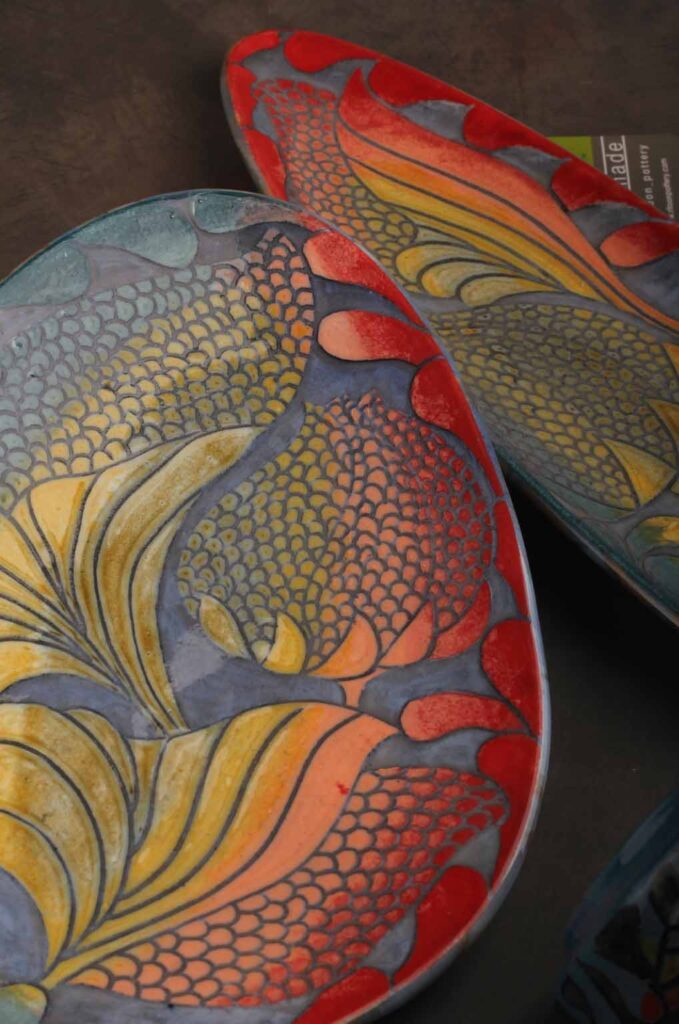
At Checkmark, our ceramic collection is selected for interiors where craftsmanship, artistic presence, and material warmth matter. The range includes decorative ceramic dishes, ceramic wall tiles, lidded jars, pomegranate ceramic art, and other ceramic art objects suited to living rooms, dining rooms, entrances, villas, gifts, and professional interior projects.
Whether a piece is placed on a console, displayed as wall art, used to bring warmth to a shelf, or chosen as a meaningful gift, the aim is the same: to move the interior beyond simply furnished and towards thoughtfully composed.
A room becomes more memorable when it contains something with a human trace. Ceramic carries that trace beautifully.