

 Chandeliers
 Pendant Lights
 Ceiling Lights
 Wall Sconces
 Table Lamps
 Floor Lamps
 Ceramic Lidded Jar
 Decorative Dishes
 Pomegranates
 Qajar Collection
 Decorative Wall Tiles
 Border Tiles
 Hand-Painted Tiles
 Block Tiles
 Wall Clocks
 Side Tables
 Candle Holders
Layered Lighting: Using Wooden Fixtures for Perfect Ambience


Layered lighting wooden fixtures represent one of the most sophisticated and effective ways to create ambience in modern interior design. Instead of relying on a single overhead light—which often causes harsh shadows or flat illumination—layered lighting uses multiple light sources to produce depth, warmth, and visual balance.
Wooden fixtures play a uniquely powerful role in this system. Their natural tones soften artificial light, add organic texture, and create emotional warmth that elevates any room. When layered correctly, wooden chandeliers, pendants, wall sconces, table lamps, and floor lamps work together to form interiors that feel welcoming, intentional, and beautifully composed.
This guide explains how to build a layered lighting plan using wooden fixtures and how each layer contributes to perfect ambience.
Understanding how layered lighting wooden fixtures interact with each other is the key to designing rooms that feel warm, balanced, and professionally composed.
Table of Contents
Toggle1. What Layered Lighting Really Means (And Why It Matters)
Layered lighting is the method of combining ambient, task, and accent lighting to shape the character of a room.
Ambient Lighting — The foundation layer
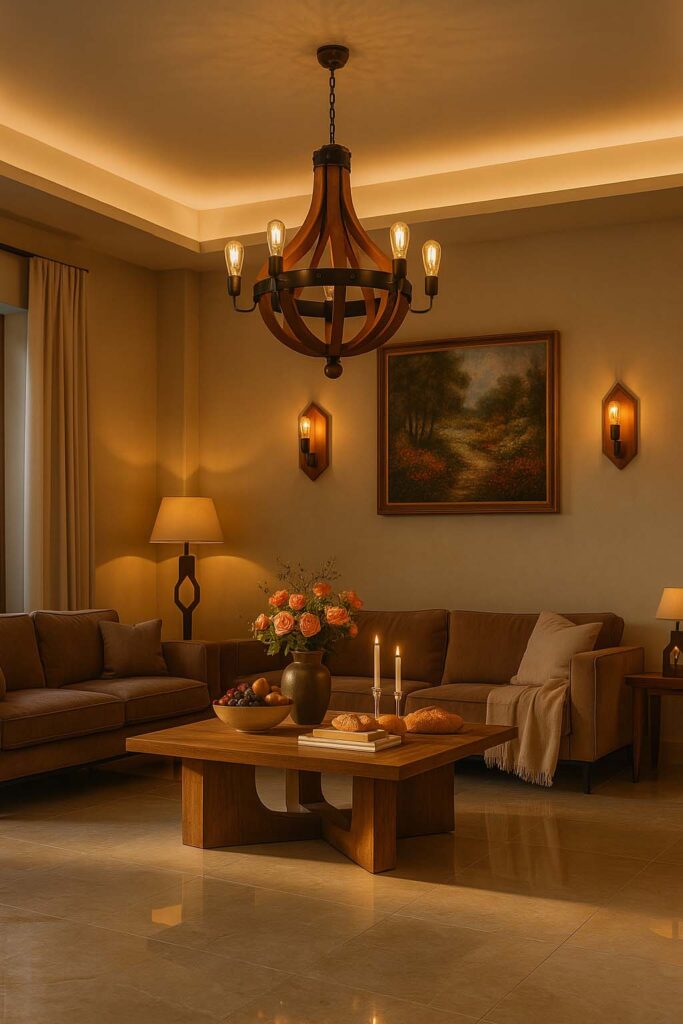
This is the main illumination of the room. Wooden chandeliers or wooden ceiling lights provide broad, diffused light that fills the space. Ambient lighting sets the emotional baseline — calm, bright, warm, or dramatic.
Task Lighting — Practical, focused illumination
Placed where specific activities occur, such as reading, studying, or cooking. Wooden table lamps, desk lamps, and tripod floor lamps offer targeted brightness without sacrificing style or warmth.
Accent Lighting — The emotional and artistic layer
Designed to highlight details, create shadows, and add depth. Wooden wall sconces, corner pendants, and decorative wooden lamps draw attention to architecture, artwork, textures, and focal points.
A properly layered system ensures that a room feels complete, functional, and emotionally engaging.
2. Why Wooden Fixtures Are Essential for Perfect Ambience
Wood interacts with light differently than metal, glass, or plastic. This makes it ideal for atmospheric interiors.
Key advantages of wooden fixtures:
• Their natural grain softens the intensity of artificial light
• Wood introduces warmth into cold or modern interiors
• The texture absorbs harsh reflections and reduces glare
• They blend effortlessly with nearly all design styles
• Wooden fixtures create an immediate sense of comfort and belonging
This is why layered lighting wooden fixtures produce such exceptional ambience — they transform technical lighting into an emotional experience.
3. Building the First Layer: Ambient Wooden Lighting
Begin your lighting plan with a wooden chandelier or wooden ceiling light. This layer shapes the overall brightness and mood of your room.
How to choose ambient wooden lighting:
• Use warm LEDs (2700K–3000K) to enhance wood tones
• Select a fixture size appropriate for your room dimensions
• Match wood color to your décor (light, medium, or dark tones)
• For low ceilings, choose flush or semi-flush wooden ceiling lights
• For villas or high ceilings, consider multi-tier wooden chandeliers
- This foundational layer should feel calm, soft, and evenly distributed.
4. Enhancing Functionality with Wooden Task Lighting
Task lighting ensures comfort and clarity during daily activities.
Examples of effective wooden task fixtures:
• Wooden table lamps for reading corners
• Wooden tripod floor lamps for living rooms
• Wooden desk lamps for workspaces
• Bedside wooden pendants to free up table space
Task lighting adds usability without breaking the ambience created by ambient lighting. It also helps reduce eye strain.
Because of their organic texture and soft illumination, layered lighting wooden fixtures consistently outperform metal or plastic options when the goal is natural ambience.
5. Adding Accent Wooden Lighting for Emotional Depth
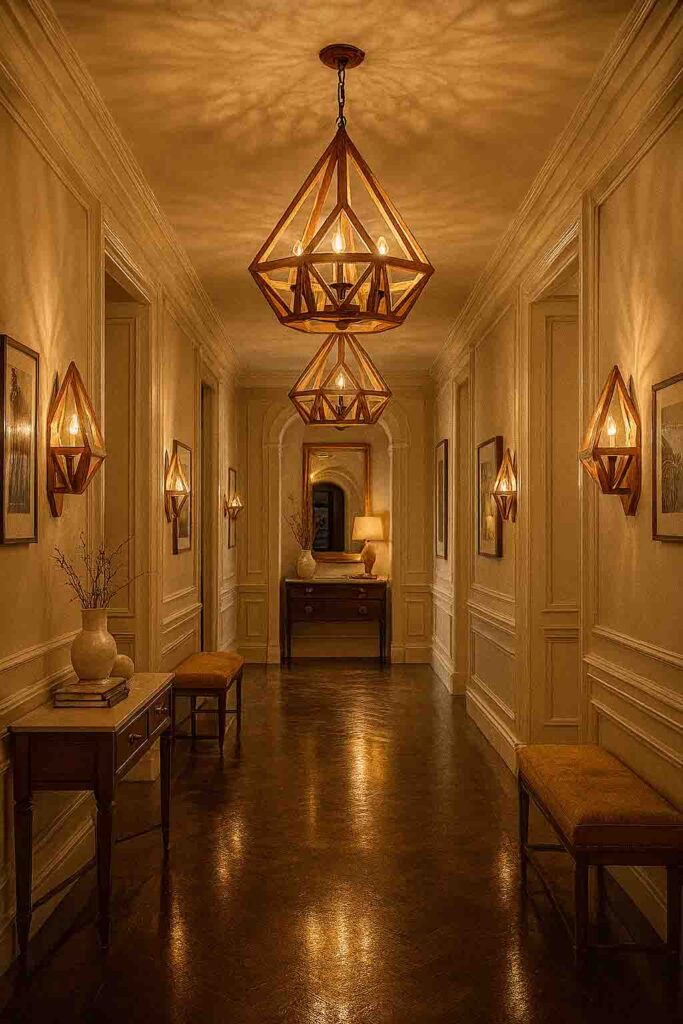
Accent lighting brings artistry and character into your home. Without this layer, interiors often feel incomplete.
Best wooden accent options:
• Wooden wall sconces for gentle side illumination
• Hanging corner pendants to soften unused spaces
• Wooden decorative lamps to highlight textures
• Shelf-mounted wooden lights for showcasing décor pieces
Accent light is what creates the “designer look” — subtle, emotional, and visually rich.
6. How to Balance the Three Layers for Seamless Ambience
Creating perfect ambience requires harmony among the three layers:
- Ambient provides general illumination
• Task ensures functionality
• Accent adds beauty, dimension, and depth
When all three use wooden fixtures, the aesthetic becomes unified and natural. The room feels warm without being dark, bright without being harsh, and stylish without being overwhelming.
7. Expert Styling Tips for Layered Wooden Lighting
Keep wood tones consistent
- Use one wood family (light, medium, or dark) to avoid visual clutter.
Install dimmers
Dimmers allow you to shift instantly from bright functionality to soft ambience.
Warm bulbs only
- Wood looks best under 2700K–3000K illumination.
Use asymmetry wisely
Perfect symmetry is not necessary—one pendant on one side and a wooden lamp on another can still create harmony.

Explore Wooden Fixtures for Layered Lighting
Browse chandeliers, pendants, table lamps, and sconces designed for beautiful layered lighting here
Global Lighting Inspiration
For international lighting concepts and professional design ideas click here
FAQ — Layered Lighting Wooden Fixtures
Why is layered lighting important for ambience?
- It creates depth, comfort, and a visually rich interior experience.
Do wooden fixtures work with modern décor?
- Yes — they soften modern materials and add organic warmth.
How many layers does a professional lighting plan need?
- Three: ambient, task, and accent lighting.
Are wooden fixtures a good investment?
- Absolutely — they add timeless style and emotional warmth.