
 Chandeliers
 Pendant Lights
 Ceiling Lights
 Wall Sconces
 Table Lamps
 Floor Lamps
 Ceramic Lidded Jar
 Decorative Dishes
 Pomegranates
 Qajar Collection
 Decorative Wall Tiles
 Border Tiles
 Hand-Painted Tiles
 Block Tiles
 Wall Clocks
 Side Tables
 Candle Holders
Ceramic Wall Tiles as Art: Turning Empty Walls into Statement Surfaces

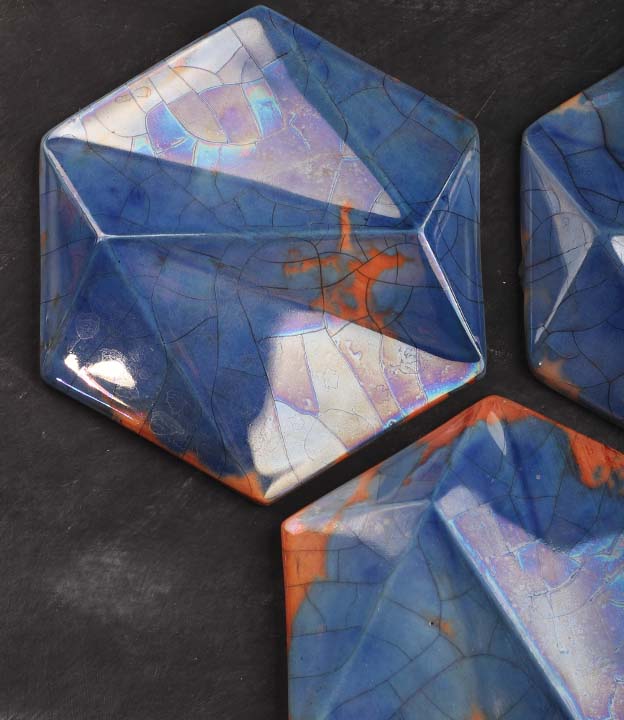
Table of Contents
ToggleIntroduction: The Wall as a Surface Waiting for Meaning
A wall is never only a boundary. It holds the room together, receives light, frames movement and determines where the eye comes to rest. Left empty, it can feel calm. It can also feel unresolved, as though the room has structure but no voice.
This is where ceramic wall tiles become more than a finishing material. A handcrafted tile brings clay, glaze, edge, depth, pattern and shadow into the architecture of a room. It does not sit loosely on a surface like a temporary accessory. It becomes part of the wall itself.
A framed artwork brings image. Paint brings colour. Wallpaper brings repetition. Ceramic brings something more tactile: earth shaped, decorated and transformed by fire into a surface that can hold both ornament and memory.
A single tile can create a pause. A vertical row can give a narrow wall height. A small group can create rhythm. A larger composition can turn a blank wall into a statement surface.
Used with restraint, ceramic wall tiles do not merely cover emptiness. They give the wall a reason to be remembered.
Why Ceramic Wall Tiles Belong in Refined Interiors
A refined interior is not defined by how much it contains. It is defined by how carefully each element earns its place.
Ceramic wall tiles occupy a rare position between object, surface and architecture. They are not loose accessories and they are not ordinary background covering. They are crafted fragments of visual language.
They can enrich an entrance without taking floor space, bring warmth to a dining wall, give a niche the dignity of a small gallery or create identity in a boutique, restaurant, reception area or hospitality interior.
Their value lies in the way they merge craft with structure. A decorative object sits inside a room. A ceramic tile becomes part of the room’s surface. That distinction gives it permanence and architectural presence.
Ceramic Tiles as Architectural Art
Ceramic tiles have long connected architecture, craft and ornament. V&A Ceramics Collection provides a museum reference for the breadth of ceramic production, including historic and contemporary tiles.
To treat ceramic tiles only as practical finishing material is to miss their deeper potential. A hand-painted or glazed tile can function as architectural art because it carries composition, colour, rhythm and surface while remaining physically connected to the wall.
Its edge casts a shadow. Its glaze receives light. Relief creates dimension. Brushwork records the movement of the hand. These qualities give ceramic wall art a presence that flat decoration cannot fully reproduce.
A tile belongs to architecture because it is attached to the building surface. It belongs to art because it carries image, pattern, gesture and material beauty. The strongest tile compositions do not look added after the room was finished. They look as though the wall was waiting for them.
Decorative Ceramic Tiles Versus Ordinary Wall Tiles
Not every tile has the authority to stand as art. Ordinary wall tiles are usually chosen for coverage, repetition and practicality. Decorative ceramic tiles are chosen for presence.
A decorative tile may carry hand-painted detail, expressive glaze, relief, symbolic pattern or intentional variation. It should offer something from a distance and something richer up close.
From across the room, it should contribute to the composition of the wall. At close range, it should reveal glaze depth, brushwork, edge quality or texture. A decorative ceramic tile should never feel like leftover material. It should feel selected.
Turning an Empty Wall into a Statement Surface
A statement wall does not need to be loud. It can become memorable through proportion, rhythm, texture, shadow and placement.
One carefully positioned tile can be stronger than a full wall covered without purpose. A vertical arrangement creates height. A horizontal composition creates calm. A grid creates order. An asymmetrical group creates artistic movement.
The goal is not to decorate every centimetre. It is to give the wall identity. The strongest statement surfaces are composed, not merely filled.
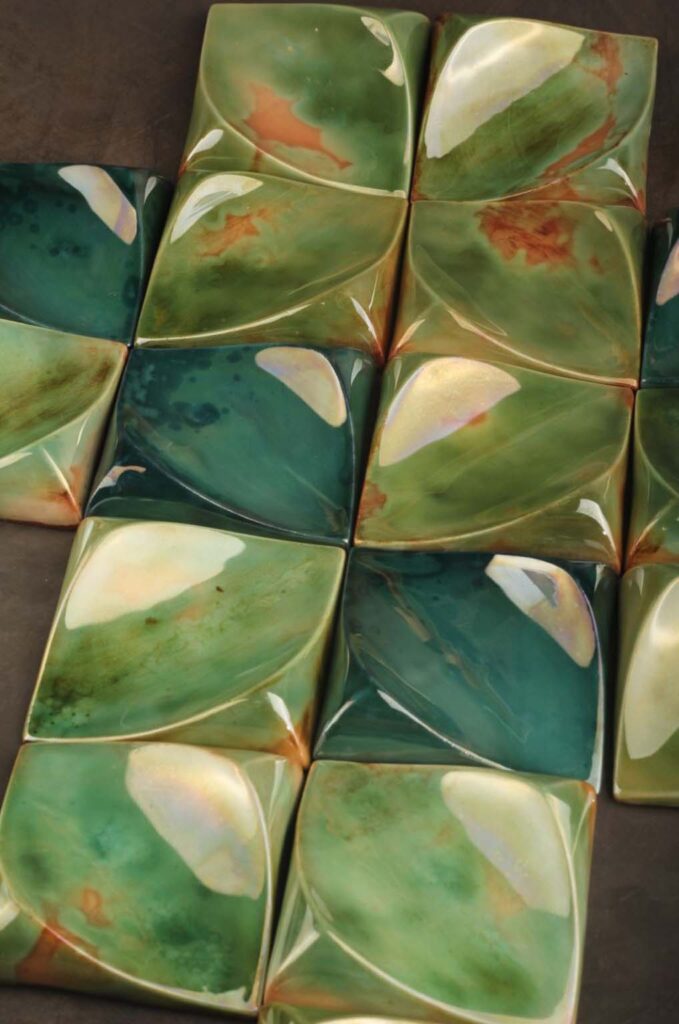
Choosing the Right Wall
A beautiful tile can lose impact on the wrong wall. A modest piece can become extraordinary when placed where the eye naturally pauses.
Good locations include an entrance wall, the space above a console, a dining room side wall, the end of a corridor, a stair landing, an alcove, a niche, a reception area or a boutique display wall.
The surrounding space matters. Ceramic needs breathing room. If the wall is already crowded with shelving, mirrors, heavy wallpaper or competing artwork, the tile may lose clarity.
Ceramic does not need emptiness because it is weak. It needs space because the wall and the tile must be read together.
Entrances: First Impressions in Clay and Glaze
An entrance is the first sentence of an interior. It should establish tone without revealing everything.
A single handcrafted tile above a console can feel precise and intimate. A vertical group beside a mirror can give rhythm to a narrow entrance. A larger piece can anchor the foyer of a villa without taking up floor space.
This is especially useful where furniture would feel forced. Ceramic creates presence without clutter and makes the entrance feel composed rather than merely passed through.
Dining Rooms: Ornament Connected to Gathering
Dining rooms are natural settings for ceramic because the material already belongs to the language of table culture, offering and hospitality.
A horizontal tile composition above a sideboard can create a quiet focal point. A hand-painted group near warm lighting can make the room feel more intimate and crafted. A small feature behind a serving area can connect the wall to the rituals of the table.
Unlike a print, ceramic brings tactile presence. It does not only show beauty; it embodies material and process.
Hallways and Corridors: Turning Movement into Experience
Hallways are often treated as leftover spaces, yet they are ideal for ceramic wall tiles because they do not require furniture or depth to create impact.
A vertical line can give a corridor rhythm. A single tile at the end of a passage creates a focal point. A small arrangement on a stair landing turns movement into a moment of pause.
Ceramic allows transitional spaces to become part of the interior story rather than simply routes between rooms.
Niches and Architectural Details: The Gallery Effect
A niche already behaves like a frame. When a tile is placed inside it, the architecture focuses attention and gives the piece immediate importance.
A hand-painted tile can feel like a small artwork. A group of glazed tiles can add colour and depth to a recess. Warm lighting can reveal the brushwork, glaze and fine shadow at the tile edge.
In this setting, ceramic is not simply mounted. It is presented.
Pattern as Rhythm, Not Noise
Pattern can bring movement, symbolism and identity to a wall, but it must be controlled. The aim is rhythm, not visual fatigue.
A bold pattern usually needs a smaller composition and generous space around it. A softer motif can be repeated more freely. Geometric designs bring order; floral or organic motifs soften the room; symbolic patterns add emotional depth.
If the room already contains strong textiles or artwork, quieter tiles are usually wiser. In a restrained room, a more expressive tile can provide the focal point the space needs.
Glaze, Texture and the Intelligence of Light
Ceramic changes under light. This is one reason a tiled composition can feel alive rather than static.
A glossy glaze can appear luminous. A matte tile can feel architectural. Relief creates changing shadows. Layered glaze adds depth as the viewer moves across the room.
Lighting should be considered before installation. Warm, controlled light usually reveals ceramic best. Harsh cool light can flatten colour and texture. The aim is not theatrical spotlighting, but light that respects the material.
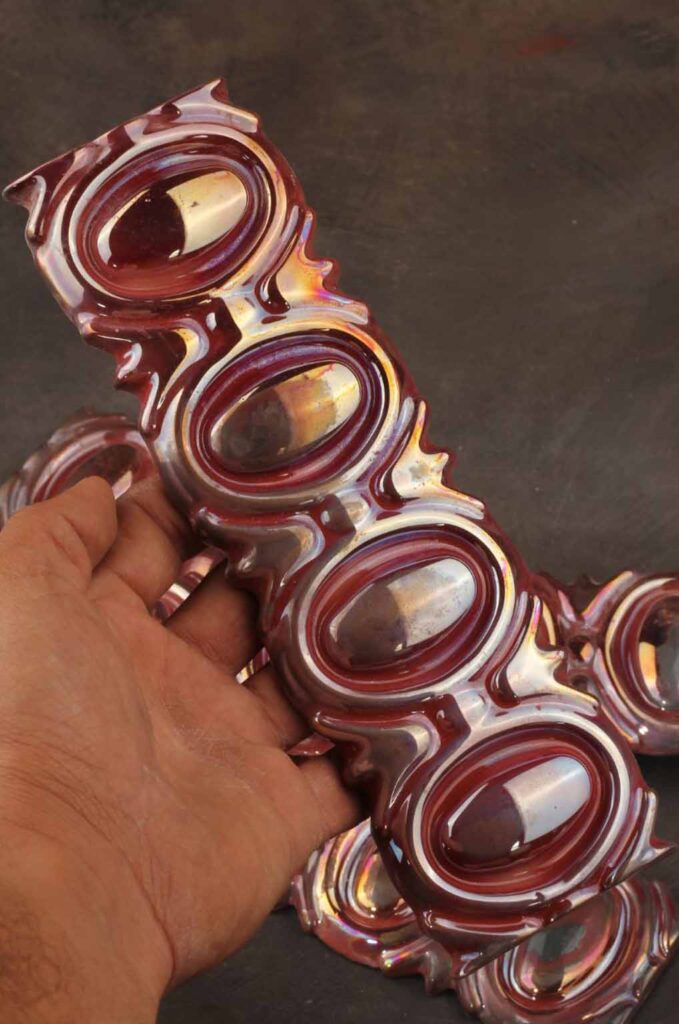
Choosing Ceramic Wall Tiles by Colour
Colour should serve the purpose of the wall. A tile can be beautiful in isolation and still fail in a room if it does not belong to the surrounding atmosphere.
Soft neutrals create calm. Deep glazes bring richness. Blue and green tones introduce depth. Earth colours add warmth. Monochrome tiles feel architectural, while multicoloured hand-painted pieces create stronger artistic focus.
The useful question is not simply which tile is attractive. It is what the wall needs to become: calmer, warmer, more ordered, more expressive or more memorable.
Scale, Spacing and Composition
Scale is one of the main reasons a ceramic installation succeeds or fails. Small tiles can disappear on a wide wall, while large pieces can overwhelm a narrow corridor or niche.
Consider the wall size, viewing distance, nearby furniture and ceiling height. Above a console or sideboard, the composition should relate to the furniture rather than float independently.
Spacing is equally important. Too little space makes the display heavy. Too much space breaks the relationship between pieces. Before installation, arrange the tiles on the floor or prepare full-size paper templates and test them on the wall.
A successful composition should work from two distances: from afar it creates structure, and up close it rewards attention.
Pairing Ceramic Tiles with Wood, Stone, Metal and Light
Ceramic becomes richer when it is placed in conversation with nearby materials. With wood it feels warmer. With stone it feels more architectural. With brass it becomes refined. With glass it feels lighter.
The relationship between ceramic tiles and wooden lighting is especially effective because both materials carry natural variation and evidence of craft. A wooden wall sconce or pendant can reveal glaze and texture gradually without making the wall feel busy.
The objective is not to collect many attractive elements. It is to create one coherent interior moment.
Ceramic Wall Tiles for Dubai Homes and Villas
Ceramic wall tiles are particularly effective in Dubai interiors, where stone, marble, timber, metal details and strong daylight are common.
In a villa entrance, a large tile or controlled composition can hold its own against generous architectural scale. In a majlis or formal living room, ceramic can soften polished finishes. In dining areas, it can add hospitality and visual warmth without taking valuable floor space.
Strong daylight can reveal glaze beautifully, but reflective surfaces may also produce glare. Test the intended wall at different times of day. In double-height spaces, choose enough scale and contrast for the installation to remain visible from a distance.
For ceramic tiles in Dubai homes, the success of the design depends as much on placement, installation and lighting as on colour or pattern.
Ceramic Wall Tiles in Commercial and Hospitality Interiors
Boutiques, restaurants, hotels, reception areas, offices and showrooms need more than clean finishes. They need surfaces people remember.
Ceramic wall tiles add identity without requiring large furniture or major structural change. A restaurant can use them to reinforce hospitality. A boutique can create a crafted backdrop. A reception space can gain warmth and cultural character.
For professional projects, confirm dimensions, weight, quantity, repeatability, colour variation, installation method, lead time and replacement availability. The tile should support the project concept rather than appear as a late decorative addition.
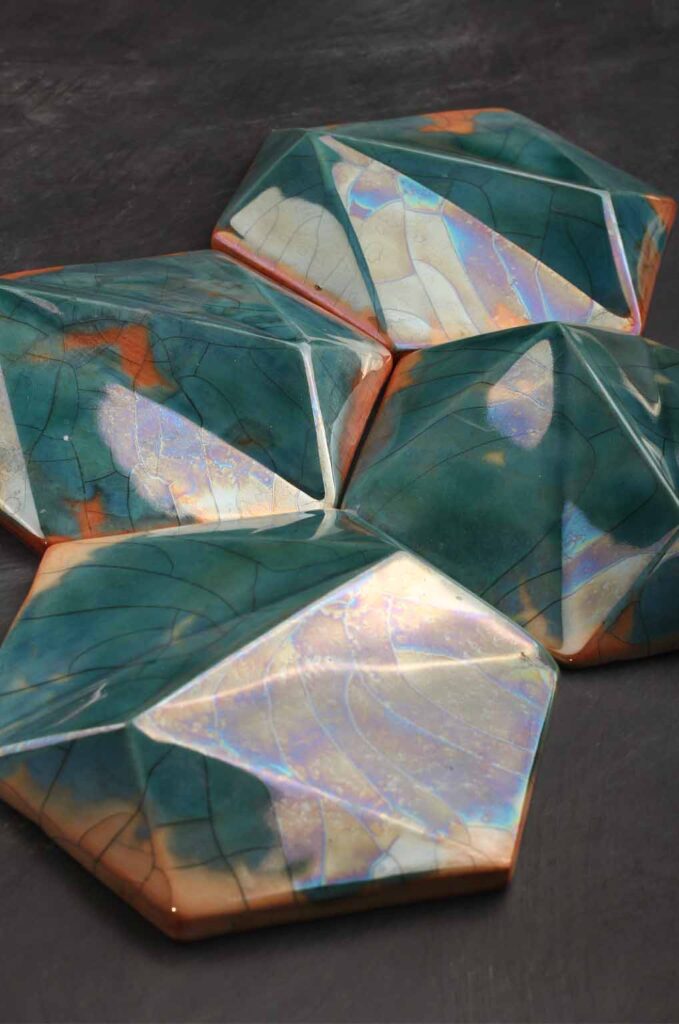
How to Recognise a Well-Made Decorative Tile
Handmade variation is part of ceramic character, but quality should still feel intentional.
Look for balanced edges, controlled glaze, clean finishing and a surface that appears resolved. Check for structural cracks, severe warping or defects that may complicate installation. Relief and texture should support the design rather than weaken the tile.
For grouped installations, compare colour and size variation before fixing the pieces. Natural variation can create richness, but it should be understood and planned rather than discovered after installation.
If the tile is intended for a wet or exterior environment, confirm the relevant technical suitability separately. A decorative interior tile should not automatically be assumed to meet those conditions.
Installation: Where Craft Meets Precision
A beautiful tile can look poor if the installation is careless. Alignment, spacing, adhesive choice, wall preparation, edge treatment and grout colour all influence the final result.
The method depends on whether the tile is permanently installed, mounted as an individual art object, placed in a frame or displayed inside a niche. Weight, wall material, humidity and long-term stability must all be considered.
For permanent work, professional installation is recommended. For individual art mounting, use a support system designed for the weight and form of the tile. Avoid improvised adhesives or visible fixings that diminish the presentation.
Installation is not a technical detail added at the end. It is part of the artwork.
Care and Maintenance
Decorative ceramic wall tiles are generally easy to care for when handled properly.
Use a soft dry cloth for routine dusting. If needed, use a slightly damp cloth and dry the surface afterwards. Avoid abrasive pads, harsh chemicals and excessive moisture, especially on hand-painted, metallic or delicate glazes.
For permanent installations, inspect grout and edge details periodically. For individually mounted pieces, check the fixing system occasionally, particularly in busy spaces.
Good care is simple, but it should respect the fact that ceramic is both durable and breakable.
Explore Ceramic Wall Tiles at Checkmark
At Checkmark, our ceramic wall tiles are selected for interiors where craftsmanship, texture and artistic presence matter.
Each piece is considered as a crafted surface accent for entrance walls, dining rooms, niches, corridors, boutique displays, hospitality spaces, reception areas and carefully composed homes.
Whether used as a single statement tile, a wall composition, a niche feature or part of a wider handcrafted ceramic décor concept, ceramic wall tiles can transform empty walls into surfaces with rhythm and lasting beauty.
A wall should not always remain silent. Sometimes, it deserves to become art.