
 Chandeliers
 Pendant Lights
 Ceiling Lights
 Wall Sconces
 Table Lamps
 Floor Lamps
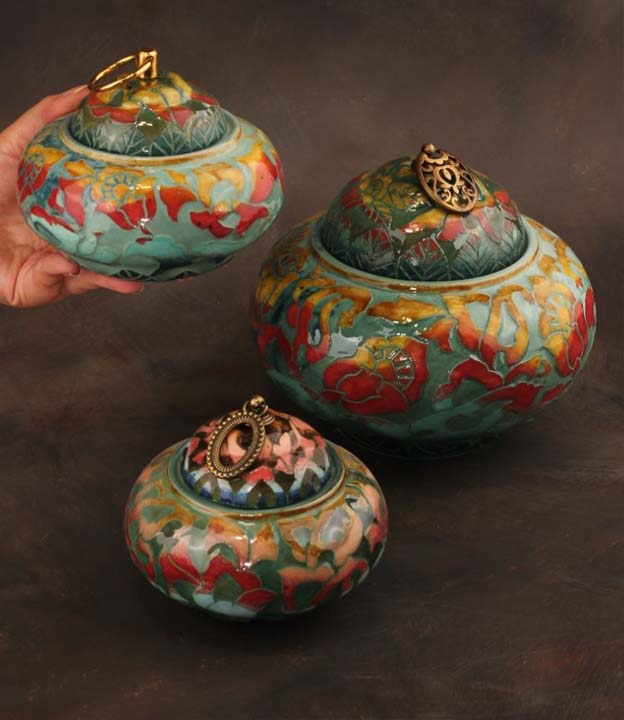
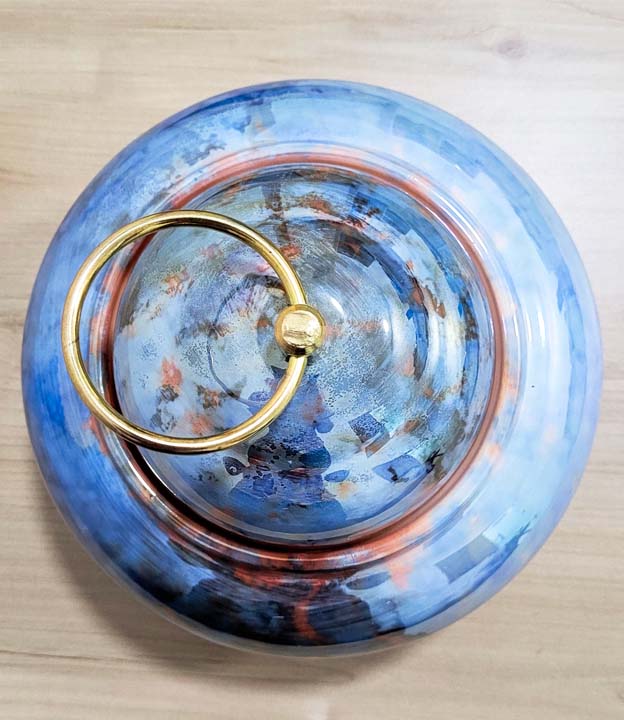
 Ceramic Lidded Jar
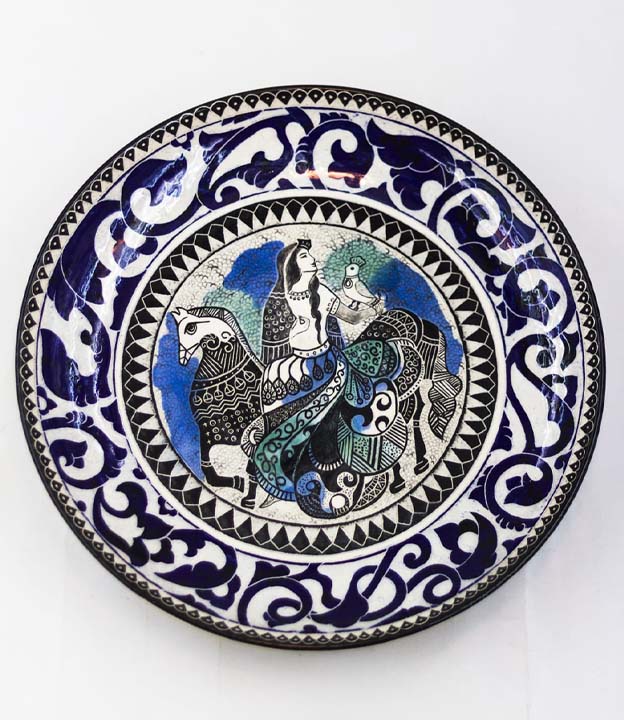
 Decorative Dishes
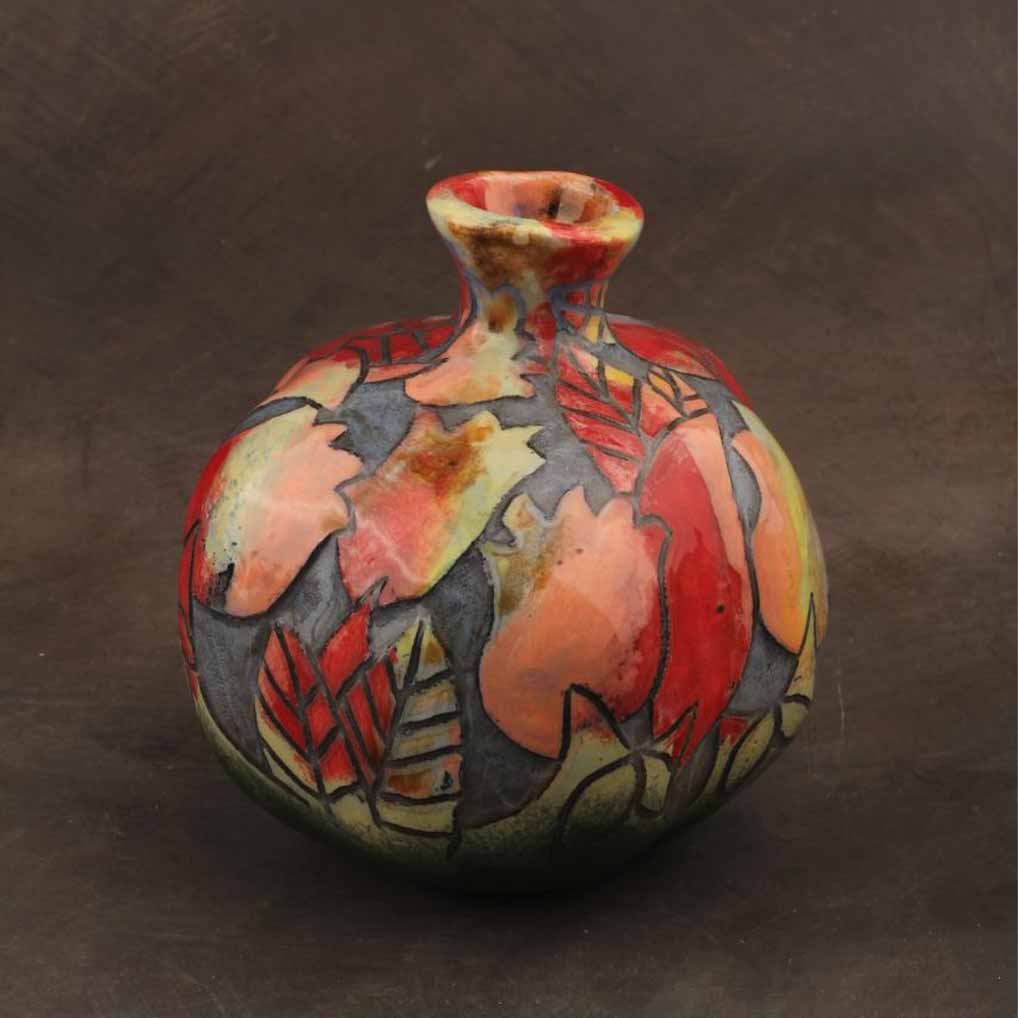
 Pomegranates
 Qajar Collection
 Decorative Wall Tiles
 Border Tiles
 Hand-Painted Tiles
 Block Tiles
 Wall Clocks
 Side Tables
 Candle Holders
Ceramic Art for Living Rooms: 9 Elegant Styling Ideas

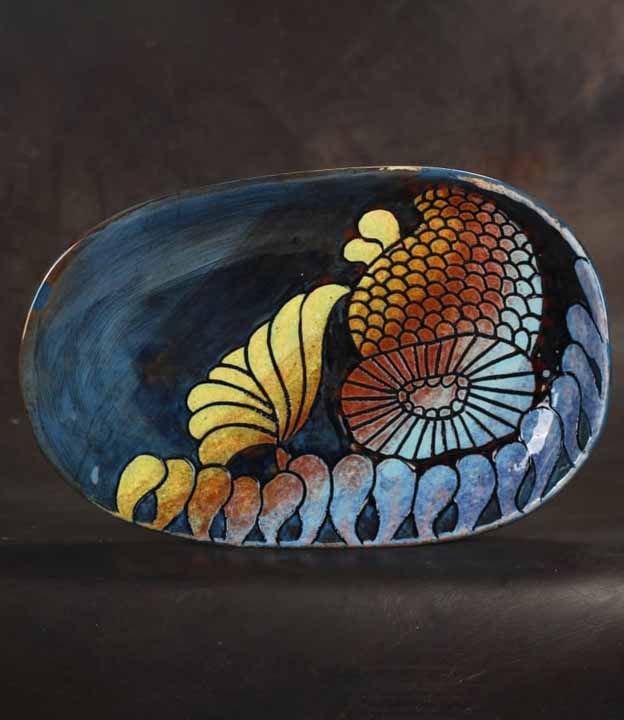
Table of Contents
ToggleIntroduction: A Living Room Should Feel Collected, Not Filled
Ceramic art for living rooms can transform an ordinary space into one that feels personal, layered and deliberately composed. Furniture establishes comfort and scale, but smaller objects often determine whether the room feels distinctive or generic.
A ceramic piece contributes qualities that mass-produced accessories often struggle to provide: material depth, tactile surface, controlled irregularity, sculptural form and the visible influence of craft. It can soften straight architecture, warm a neutral palette, introduce a symbolic detail or create a focal point without overwhelming the room.
The most successful approach is not to place ceramic on every available surface. It is to choose a few pieces with clear roles and give each one enough space, light and visual importance.
This guide explains how to select, position and combine ceramic art for living rooms so shelves, coffee tables, consoles and walls feel curated rather than crowded.
Why Ceramic Art for Living Rooms Works So Well
Studio pottery includes vessels, figures and sculptural ceramic works. The V&A introduction to studio pottery provides an institutional overview of the breadth of ceramic practice and its relationship with interiors and architecture.
A living room must balance comfort with visual discipline. It should feel relaxed without appearing careless, refined without becoming cold and personal without turning into clutter.
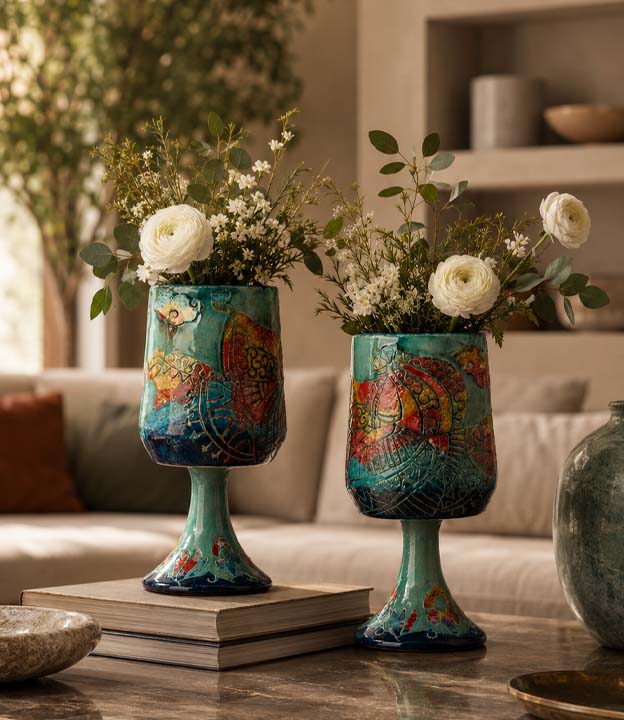
Ceramic supports this balance because one object can combine form, colour, texture, symbolism and visual weight. A lidded jar adds height. A decorative dish introduces an open curve. A sculptural vessel creates focus. A glazed piece catches light. A wall tile adds dimension to architecture.
Ceramic also works across many interior styles. Quiet matte forms suit minimal rooms. Rich glazes complement layered interiors. Hand-painted dishes bring pattern to neutral spaces. Earth-toned pieces connect naturally with wood, stone and linen.
The value lies in selectivity. Ceramic should not merely occupy an empty place; it should improve the composition around it.
Begin with the Mood, Palette and Architecture
Before selecting individual pieces, define the emotional direction of the room. Should it feel calm and minimal, warm and layered, artistic and expressive, formal and elegant or natural and earthy?
For calm interiors, use fewer ceramic objects, muted colour, simple silhouettes and matte or satin finishes. For warmer rooms, consider richer glaze, visible brushwork, rounded forms and combinations with wood, books and woven textiles.
Architecture matters as much as colour. A large wall can support a stronger ceramic composition. A narrow shelf needs compact forms. A double-height villa living room requires objects with greater visual weight than a small apartment lounge.
Choose ceramic after understanding the room, not before. A beautiful object can still feel misplaced when its scale, finish or mood conflicts with the space.
Give Every Ceramic Piece a Clear Role
A curated room does not need many objects; it needs objects with purpose.
One piece may provide height. Another may bring colour. A third may add symbolic meaning. One may soften a hard wall, while another anchors a low table.
Useful roles include an anchor object, a smaller accent, a wall feature, a symbolic element, a textural contrast and a colour note.
When each ceramic piece has a role, the room feels deliberate. When objects are added only because they are attractive, the result can quickly look busy.
1. Style Ceramic Art on Living Room Shelves
Shelves are one of the strongest locations for ceramic art because books and storage objects create many straight lines. Ceramic introduces curve, volume and surface variation.
Display an upright decorative dish to interrupt horizontal shelf lines. Use a lidded jar for height. Place a compact sculptural object beside books. Add a symbolic pomegranate only where it can remain visible rather than being buried among small accessories.
Avoid placing ceramic on every shelf. Repeat the material selectively across the display so the eye moves from one ceramic moment to another. Leave open areas around the strongest pieces.
A reliable shelf arrangement uses one ceramic object, a small book group, one contrasting material and visible negative space.

2. Use Ceramic Art on Coffee Tables
A coffee table sits close to daily activity, so the ceramic object must be visually strong, physically stable and appropriately scaled.
A low sculptural form or glazed dish can create a centre of gravity without blocking sightlines across the seating area. A compact symbolic object can add warmth, but it should not be surrounded by many loose accessories.
Consider practical circulation. Leave enough open tabletop for drinks, books and daily use. In homes with children or frequent guests, avoid fragile pieces near the edge and choose broad, stable bases.
A refined coffee-table composition may include one ceramic anchor, one book or tray and one natural accent, with much of the surface left clear.
3. Build a Strong Console or Sideboard Composition
Consoles and sideboards allow ceramic objects to appear more formal and architectural. These surfaces work particularly well for taller jars, upright dishes and sculptural vessels.
Use one dominant ceramic anchor and support it with a lower object, a lamp, a book stack or a small tray. If the wall behind the console is large, the ceramic must have enough scale to remain visible from across the room.
When a mirror is present, consider the reflected view. Too many small pieces can double the appearance of clutter. One strong silhouette often looks better than several competing forms.
For a complete step-by-step arrangement, link readers to the dedicated ceramic console table styling guide.
4. Introduce Ceramic Wall Art
Ceramic wall art brings depth that framed prints cannot provide. Dishes and tiles project from the wall, catch light and cast fine shadows that change during the day.
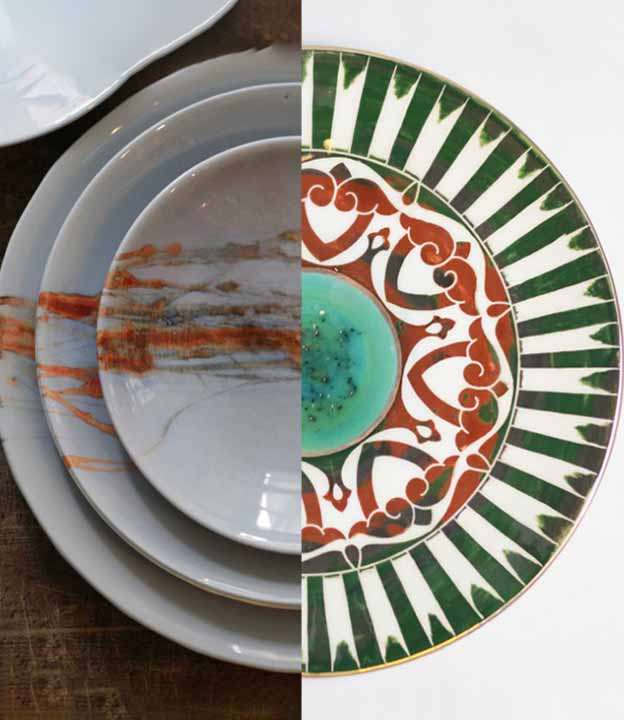
A single large dish can create a focal point above a console. A controlled group of smaller pieces can produce rhythm beside a seating area. Decorative tiles can create a compact feature within a niche or on a quiet wall.
Plan the composition before mounting. Measure furniture width, maintain consistent spacing and use hardware suited to the weight and shape of each piece.
Ceramic wall art should relate to the sofa, console, lighting and surrounding architecture rather than floating without context.
5. Use Glaze to Shape Light and Atmosphere
Glazed ceramic art for living rooms changes character as lighting changes. Daylight can reveal colour variation, while warm evening light can deepen glaze and make a surface appear more luminous.
Glossy pieces create reflection and visual energy. Matte finishes feel quieter and more architectural. Textured or reactive glazes hold shadow and reward close viewing.
Use one or two glazed focal points rather than filling the room with reflective ceramics. Too much shine can compete with glass, polished stone and metal.
Test the object in its intended position during the day and at night before deciding that the placement is final.
6. Add Symbolism with Ceramic Pomegranate Decor
A ceramic pomegranate can bring symbolic warmth to the room. Its rounded form softens shelving and table arrangements, while its associations with abundance, welcome and continuity can add meaning without making the interior feel themed.
Place one piece beside books, near a dish or within a console composition. If several pomegranates are grouped, vary their height or finish and keep enough space around them.
The symbolic object should remain visually clear. Repeating it excessively reduces its significance and can make the display look commercial rather than curated.
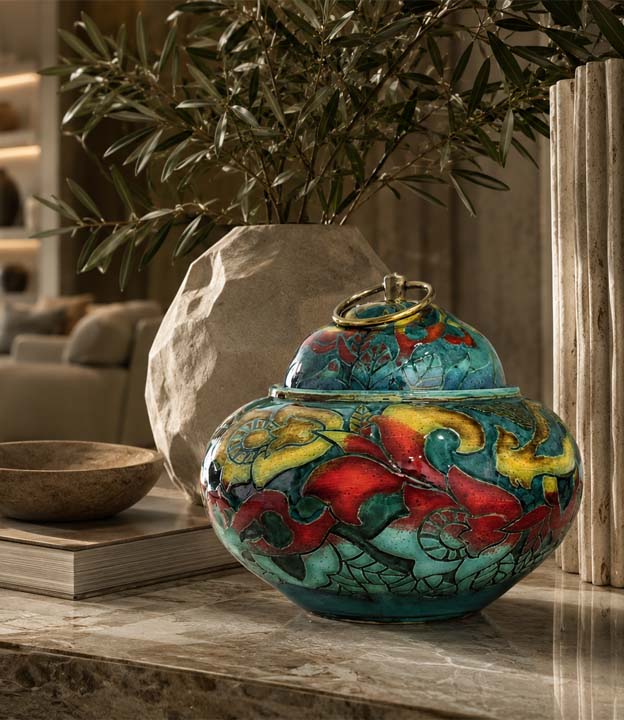
7. Use Ceramic Lidded Jars for Height and Structure
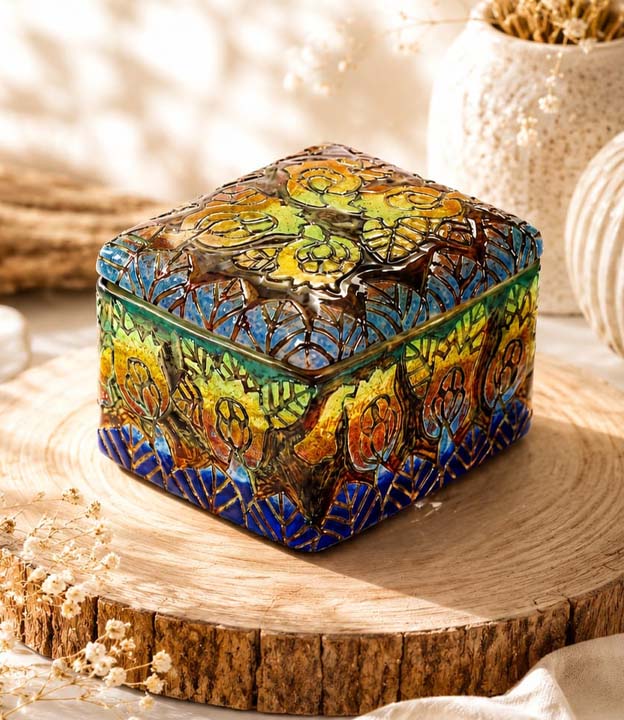
Ceramic lidded jars bring vertical movement and composure. Their closed form adds order to shelves, consoles and sideboards, especially in living rooms with many soft textiles and low furniture lines.
Choose a jar with balanced proportions, a lid that sits correctly and a silhouette that remains attractive from more than one angle. Position it where the full form can be seen from base to lid.
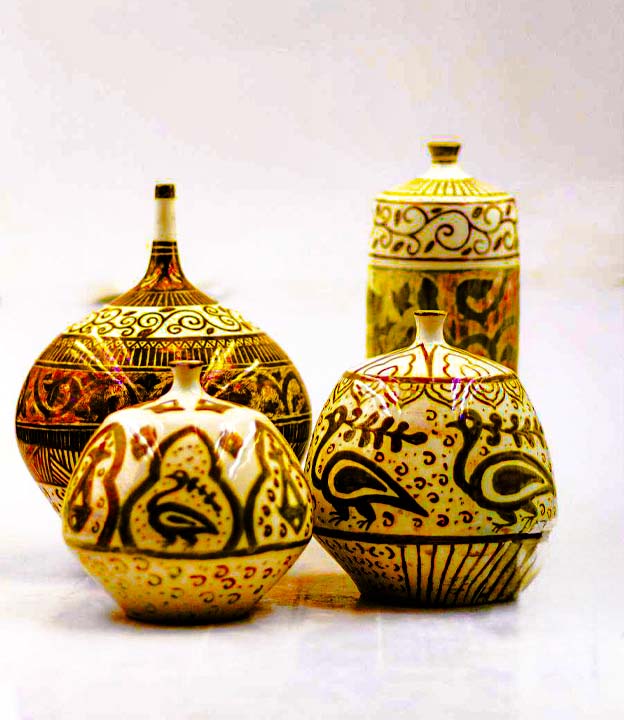
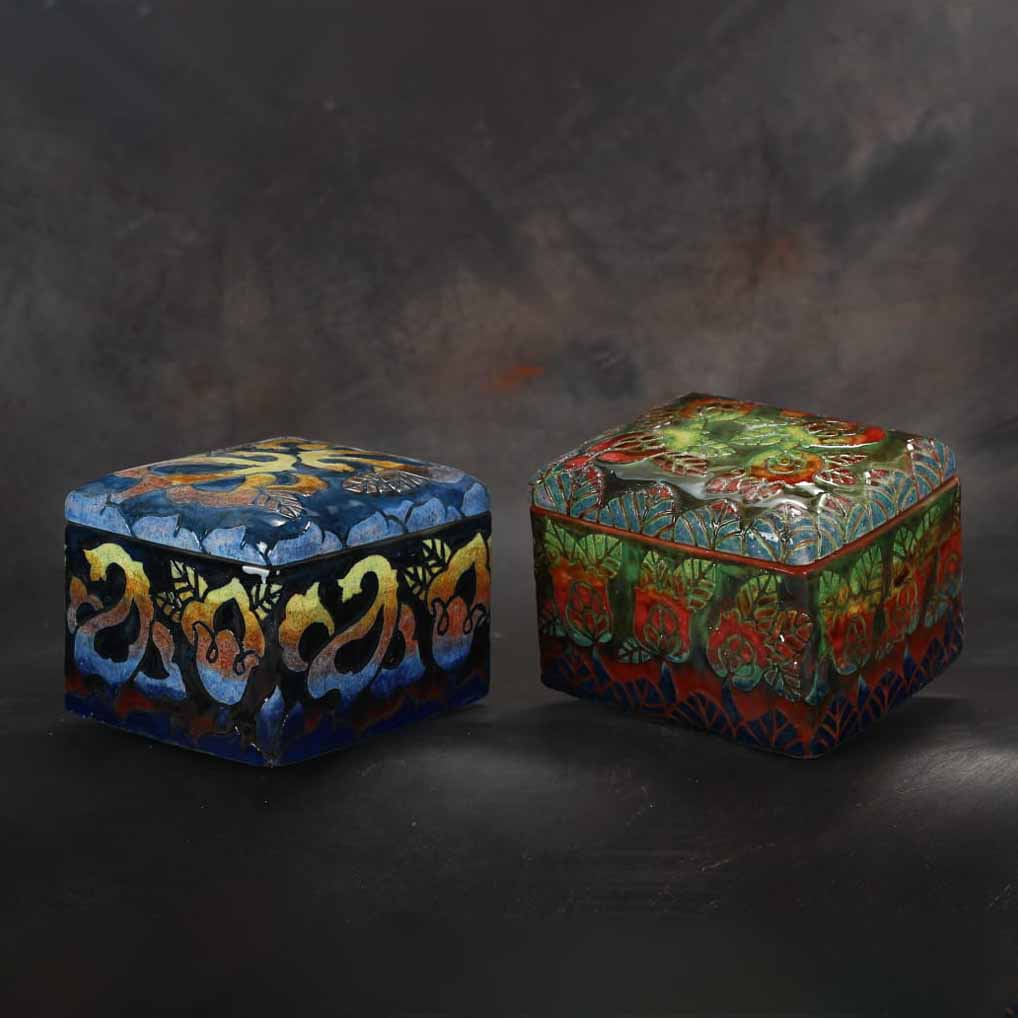
A tall jar can act as the main anchor. A smaller jar can sit on books to create layered height. Avoid placing several jars of identical height together unless a formal symmetrical arrangement is intentional.
8. Match Ceramic with Wood, Stone, Metal and Textiles
Ceramic becomes more convincing when it participates in the room’s material language.
With wood it feels warmer. With stone it becomes grounded. With brass it gains refinement. With linen and wool it feels softer. Beside books it feels collected. Under warm lighting it becomes atmospheric.
The relationship between ceramic and wooden lighting is especially effective because both materials introduce natural warmth and visible texture. A glazed vessel near a wooden lamp can create a quiet contrast between grain and reflection.
Limit the number of supporting materials in one small arrangement. Ceramic should remain the primary visual subject rather than becoming one of many competing finishes.
9. Use Negative Space as Part of the Design
Negative space is not an empty area waiting to be filled. It is the visual breathing room that allows a ceramic object to be understood.
Leave space around a jar so its silhouette can be read. Avoid crowding a dish with unrelated accessories. Let wall compositions maintain clear margins from furniture and corners.
In a curated living room, open space creates hierarchy. It tells the eye which object matters and prevents valuable pieces from becoming background noise.
When the arrangement feels almost complete, remove one unnecessary object before adding another.
Ceramic Art for Modern Living Rooms
Modern living rooms often use neutral upholstery, smooth surfaces and clean architectural lines. Ceramic adds curve, texture and human presence without disturbing the calm structure.
Choose fewer pieces with strong silhouettes. Matte or satin surfaces work well where the room already contains glass and polished stone. One expressive glaze can provide colour without creating clutter.
A modern interior benefits from precision. Position each piece deliberately and avoid using ceramics as generic shelf filler.
Ceramic Art for Warm and Layered Living Rooms
Layered interiors may already include patterned rugs, books, artwork, timber, textiles and decorative lighting. Ceramic should deepen this richness rather than compete with it.
Choose pieces that connect to the existing colour story or material mood. If the room has strong pattern, select quieter ceramics. If it feels warm but unfocused, introduce one larger ceramic anchor.
Editing remains essential. A layered room can still have negative space and clear hierarchy.
Ceramic Art for Dubai Villas and Apartments
Dubai homes often combine abundant daylight with marble, stone, timber, metal and neutral fabrics. Ceramic can soften these polished materials and add an artisanal layer.
Large villas and double-height rooms need sufficient scale. A small object may disappear on a long console or broad wall. In apartments, one well-positioned dish, jar or sculptural piece may be more effective than a collection of small accessories.
Strong sunlight can reveal glaze beautifully but may also cause glare or heat-sensitive display conditions near windows. Test placement throughout the day and keep valuable ceramics away from busy circulation routes.
For living room ceramic decor in Dubai, choose according to architecture, viewing distance and light rather than colour alone.
Quality, Safety and Care Considerations
Inspect the object before styling it. Look for a stable base, balanced form, controlled finishing and a surface that appears intentional. Handmade variation can add character, but cracks, unstable construction or careless edges should not be treated as artistic features.
Use secure stands and wall fixings designed for the object’s weight. Avoid placing fragile ceramic near door swings, narrow walkways or the edge of a coffee table.
Clean display ceramics with a soft dry cloth or a lightly damp cloth followed by immediate drying. Avoid abrasives and harsh chemicals, especially on hand-painted, metallic, crackled or textured surfaces.
Decorative appearance does not confirm suitability for food, water, heat or outdoor use. Those functions require separate product information.

A Practical Ceramic Styling Formula
Use this structure: one anchor, one accent, one supporting material, one lighting relationship and negative space.
For a shelf, the anchor may be an upright dish, the accent a compact sculptural object, the supporting material a book group and the lighting a nearby lamp.
For a coffee table, use one low ceramic piece, one book or tray and one natural accent, leaving most of the table open.
For a console, combine one lidded jar, one lower ceramic accent and warm light, with a clear visual pause around the main object.
The formula is flexible, but the hierarchy should remain obvious.
Common Living Room Styling Mistakes
Using too many small objects creates visual clutter. Choosing only by colour ignores form, scale and surface. Poor lighting weakens glaze and texture. Crowded shelves remove the presence of individual pieces.
Mixing unrelated styles can make the room feel accidental. Treating ceramic as filler wastes its strongest qualities.
The solution is consistent: use fewer pieces, assign each a role and leave enough space for the form to remain legible.
Why Ceramic Art Makes Living Rooms More Personal
A living room should not feel like a catalogue. It should reveal the people who use it.
Ceramic objects contribute identity because they possess weight, texture, form and evidence of making. A symbolic piece can carry meaning. A glaze can interact with the room’s light. A wall element can make architecture feel crafted rather than generic.
These details do not need to dominate. Their value comes from the way they reward attention over time.
Ceramic art for living rooms works best when every piece feels deliberately chosen and genuinely connected to the space.
Explore Ceramic Art for Living Rooms at Checkmark Trading
Layered interiors may already include patterned rugs, books, artwork, timber, textiles and decorative lighting. Ceramic should deepen this richness rather than compete with it.
Choose pieces that connect to the existing colour story or material mood. If the room has strong pattern, select quieter ceramics. If it feels warm but unfocused, introduce one larger ceramic anchor.
Editing remains essential. A layered room can still have negative space and clear hierarchy.
Ceramic Art for Dubai Villas and Apartments
At Checkmark, our ceramic collection is selected for interiors where craftsmanship, material warmth and artistic presence matter.
The collection includes decorative ceramic dishes, ceramic lidded jars, ceramic wall tiles, ceramic pomegranate decor, glazed pieces and sculptural ceramic art objects for refined living rooms, shelves, coffee tables, consoles and carefully composed homes.
Whether used as one focal piece or as part of a controlled composition, ceramic art can bring warmth, rhythm, texture and quiet distinction into a living room.
A memorable room is not defined by how many objects it contains. It is defined by how carefully those objects are chosen.