
 Chandeliers
 Pendant Lights
 Ceiling Lights
 Wall Sconces
 Table Lamps
 Floor Lamps
 Ceramic Lidded Jar
 Decorative Dishes
 Pomegranates
 Qajar Collection
 Decorative Wall Tiles
 Border Tiles
 Hand-Painted Tiles
 Block Tiles
 Wall Clocks
 Side Tables
 Candle Holders
Hand-Painted Ceramic Decor: 9 Essential Ways Brushwork Adds Value

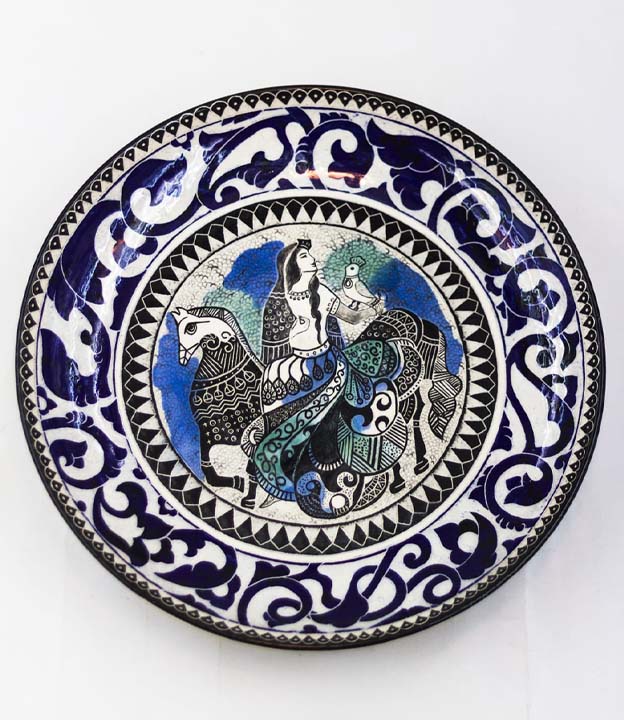
Table of Contents
ToggleIntroduction: Why Hand-Painted Ceramic Decor Feels Different
Hand-painted ceramic decor carries something that mechanically repeated decoration cannot reproduce exactly: the movement and judgement of the artist’s hand.
A painted ceramic object records pressure, rhythm, pause, correction and intention. A brushstroke may soften at the edge of a dish, follow the shoulder of a jar, move across the face of a tile or repeat in a border that feels ordered but still alive.
This visible authorship matters in interiors. Rooms filled only with flawless manufactured surfaces can feel impersonal, even when the materials are expensive. Hand-painted ceramics introduce disciplined variation, tactile detail and a human presence that makes the space feel collected rather than simply furnished.
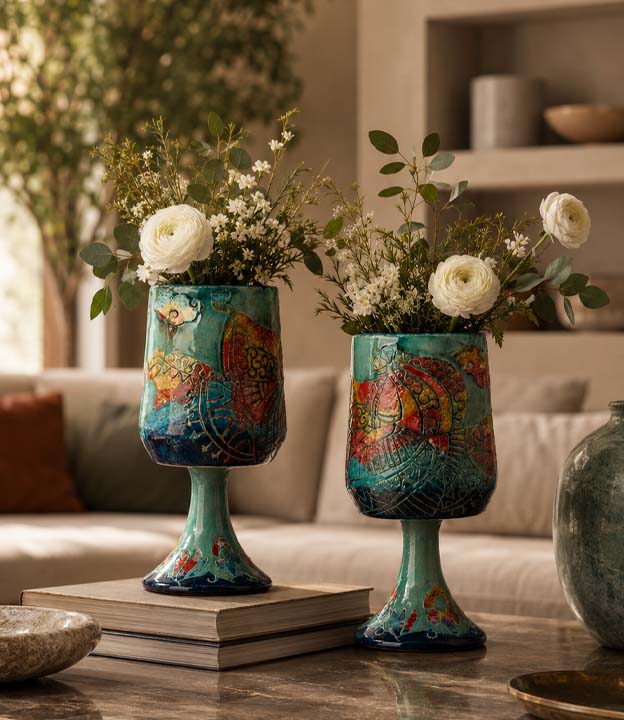
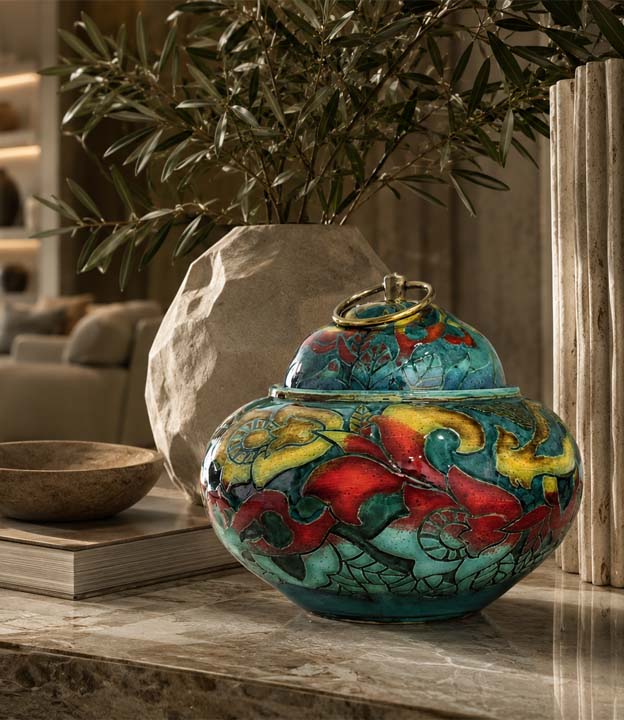
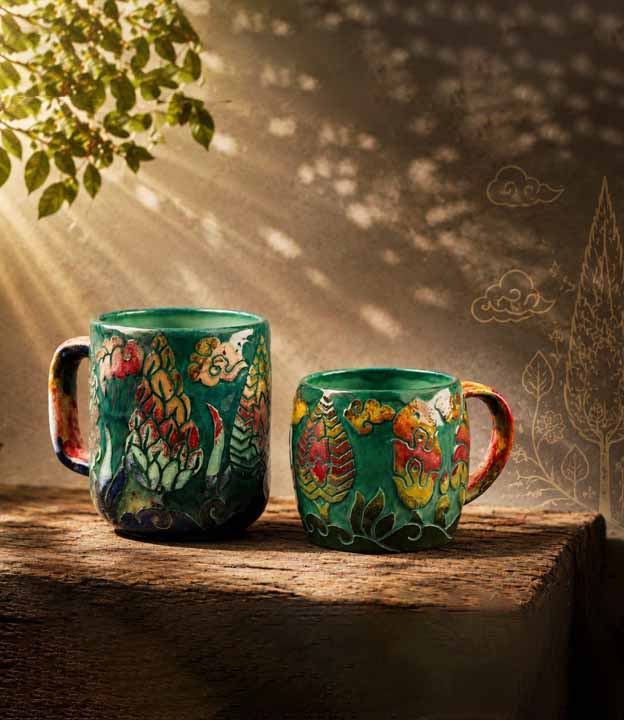
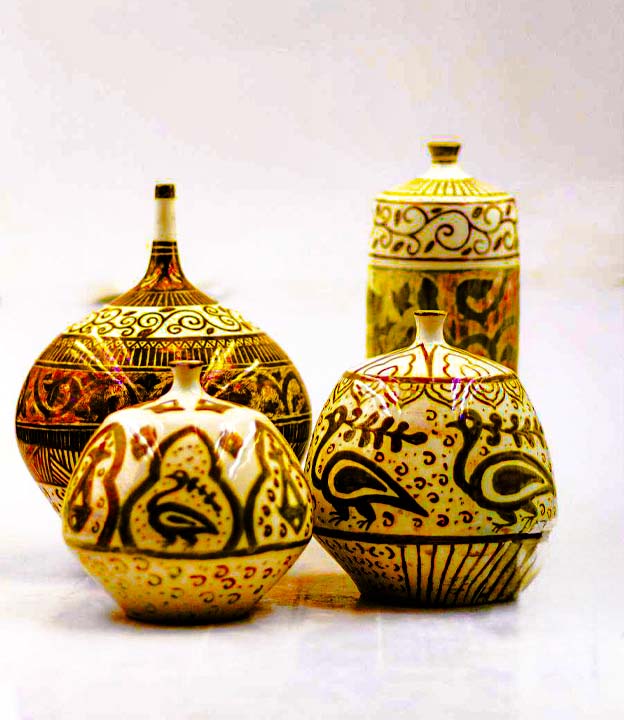
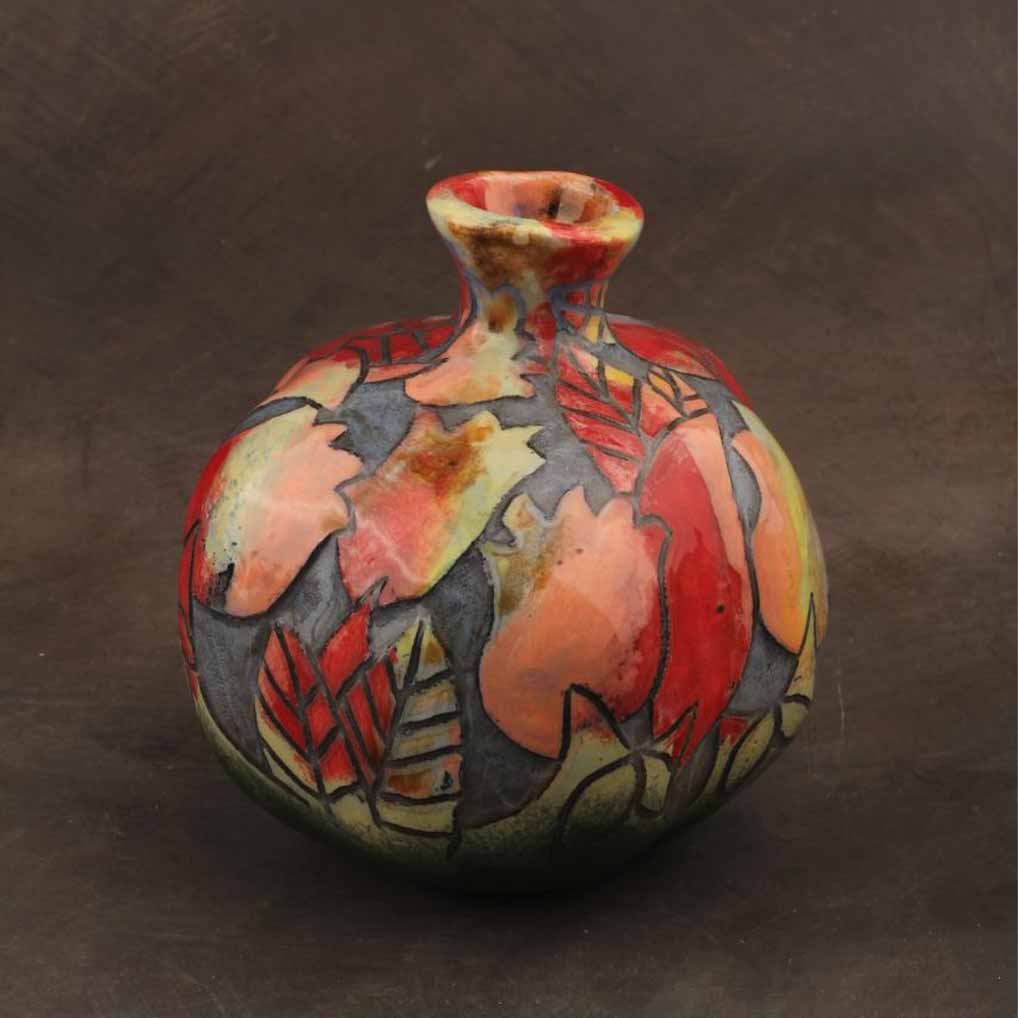
A painted dish can become dimensional wall art. A ceramic tile can turn a niche into a crafted architectural moment. A lidded jar can bring pattern and height to a console. A smaller art object can give a shelf a memorable point of focus.
The value is not merely that the object was painted by hand. The value lies in how successfully brushwork, form, colour, glaze and placement work together.
1. Brushwork Creates Visible Authorship
For broader historical context, The Metropolitan Museum of Art's essay on decorated ceramics shows how painted ceramic surfaces have long carried artistic, symbolic and narrative value.
Brushwork is movement held on the ceramic surface. Fine lines can suggest precision; broader strokes can feel energetic; softened marks can create calm; repeated curves can establish rhythm.
Good brushwork responds to the ceramic body. On a dish, it may guide the eye around the circular form. On a jar, it can follow the volume and strengthen the shoulder or lid. On a tile, it can establish direction and architectural order.
The strongest painted ceramics do not look as though decoration was added after the form was completed. The painting feels inseparable from the object.
2. Pattern Gives the Object Rhythm
Pattern can be geometric, floral, symbolic, abstract, border-based, centred or freely composed. Its purpose is not simply to fill space; it should organise the surface and guide the eye.
Hand-painted pattern carries controlled variation. Repeated motifs may differ slightly in pressure, spacing or colour density, giving the surface movement without making it appear careless.
In interiors, pattern should be used with restraint. A strong painted dish may be enough for a quiet wall. A tiled composition may provide the main pattern in an entrance or dining room. When the room already contains patterned rugs or textiles, the ceramic should use a calmer palette or simpler design.
The Most Useful Comparison: Purpose Before Prestige
The correct choice begins with purpose. A buyer furnishing several rental units has different priorities from someone choosing one piece for a villa entrance or a dining-room focal point.
Choose mass-produced decor when consistency, speed, budget and easy replacement are the main requirements. Choose handmade ceramics when the object is expected to carry artistic presence, become a focal point or contribute a more personal sense of material and craft.
In many successful interiors, the two can coexist. Background accessories may be simple and repeatable, while a few important surfaces are reserved for stronger handmade pieces. This hierarchy is often more convincing than insisting that every object must be rare or expensive.
3. Detail Rewards Close Viewing
Well-resolved detail gives a ceramic object two levels of presence. From a distance, the form and overall pattern should read clearly. Up close, the brushwork, borders, colour transitions and finishing should reward attention.
More detail does not automatically mean more quality. Busy ornament can weaken an object if the composition lacks hierarchy. Refined detail supports the form, maintains visual balance and avoids unnecessary complexity.
This is especially important in luxury and boutique interiors, where an object may be seen repeatedly and from several angles.
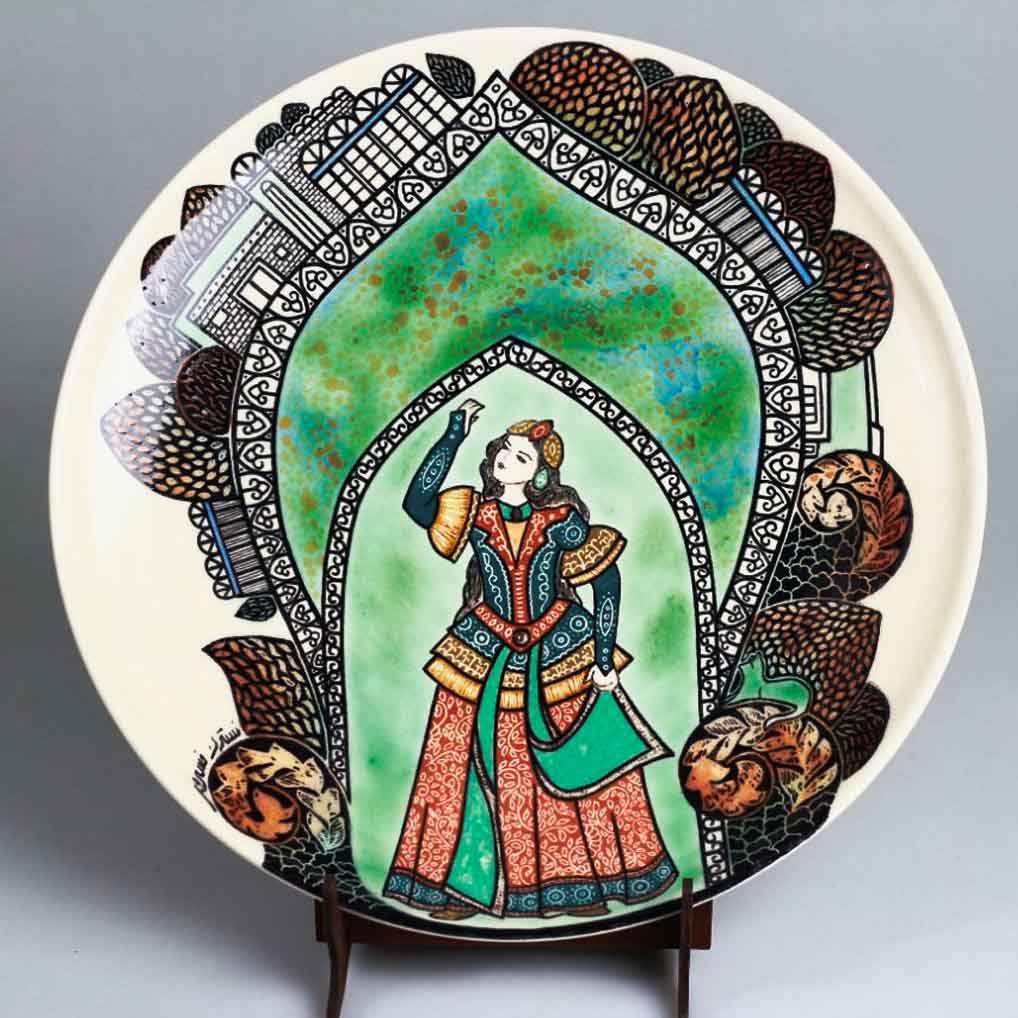
4. Form Must Remain Strong Beneath the Painting
A beautiful painted surface cannot rescue weak proportion. Before judging colour or pattern, examine the silhouette.
Check whether the body feels balanced, the base is stable and the edges are well resolved. On a lidded jar, confirm that the lid belongs visually and physically to the body. On a dish, assess the relationship between the centre, rim and overall curve.
Painting should strengthen the object’s form rather than disguise it. The best pieces would remain convincing even if their colour were temporarily removed.
5. Glaze Changes Colour, Depth and Light
Hand-painted decoration may sit beneath a transparent glaze, combine with coloured glaze or interact with a matte, satin or glossy surface. These choices change how the painting appears.
Gloss can deepen colour and reflect light. Matte finishes can make brushwork feel calmer and more architectural. Satin surfaces provide a quieter sheen. Layered or reactive glazes can add depth around painted motifs.
Observe the piece in daylight and under warm evening light. A design that appears delicate near a window may become richer beside a lamp. Highly reflective surfaces may also produce glare, so placement should be tested rather than assumed.
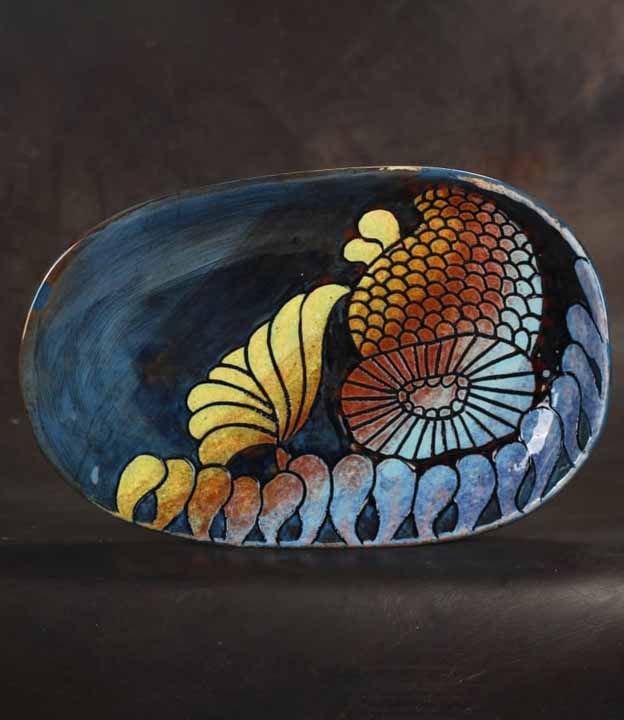
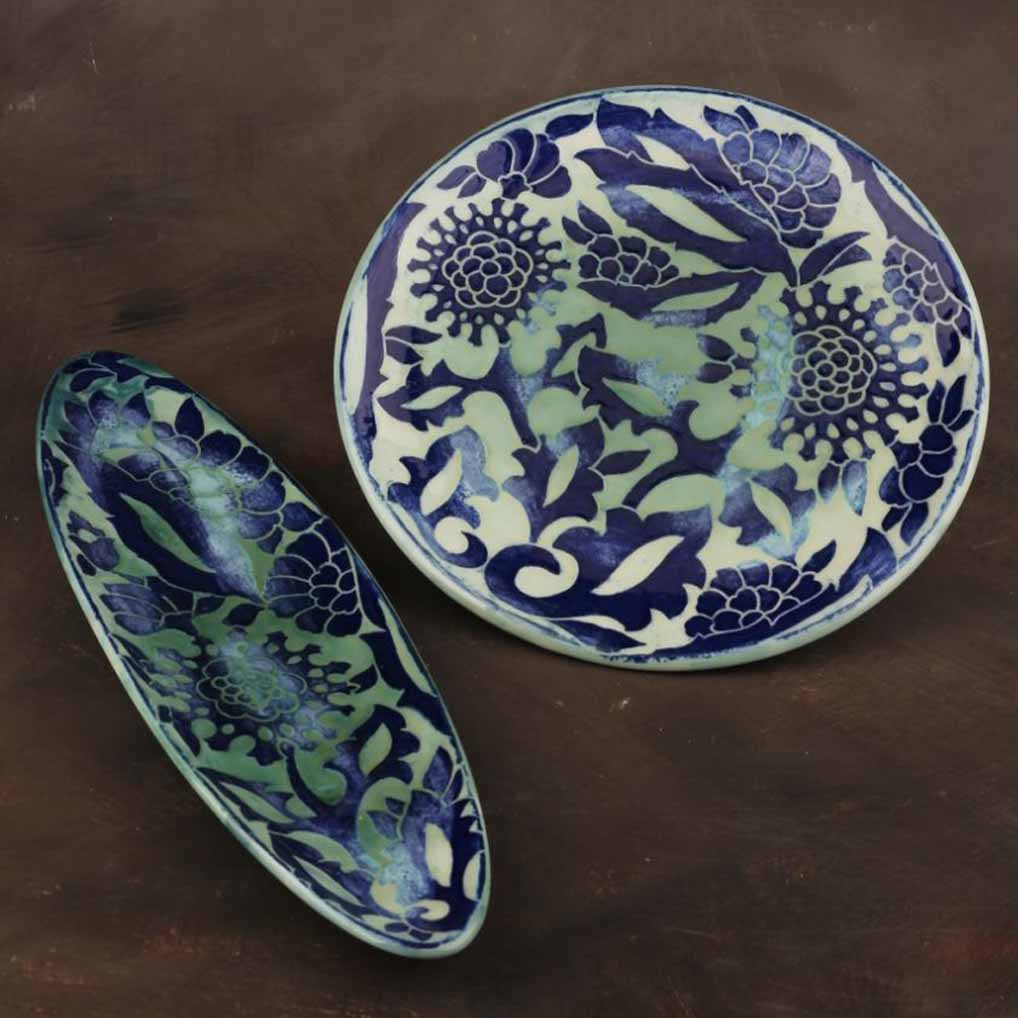
6. Hand-Painted Dishes Work as Dimensional Art
Decorative ceramic dishes are among the strongest expressions of hand-painted ceramic decor because their open surfaces give brushwork room to breathe.
Displayed upright, a dish can function like a small painting with depth. The curved body creates shadow, while the rim frames the composition. On a console, shelf or dining sideboard, it can introduce colour without requiring a large wall installation.
The dish should not automatically be treated as a tray. If the painted surface is the main artistic feature, leave it visible.
7. Hand-Painted Tiles Bring Art into Architecture
Painted ceramic tiles have a different role because they become part of the wall. They can transform an entrance, niche, corridor, dining wall, reception area or hospitality interior.
Their physical depth distinguishes them from wallpaper or printed panels. Edges catch light, relief creates shadow and hand-painted motifs introduce evidence of craft.
Successful tile compositions depend on spacing, alignment, scale and installation quality. A beautiful tile loses authority when mounting or finishing is careless.
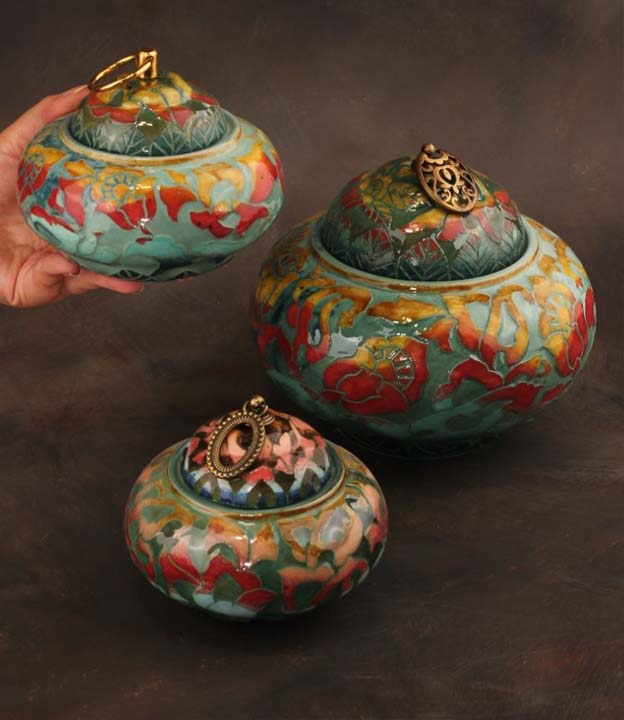
8. Painted Jars and Sculptural Objects Add Volume
On a jar or sculptural piece, brushwork must respond to changing volume. Lines travel around curves, borders define transitions and motifs must remain balanced from more than one viewpoint.
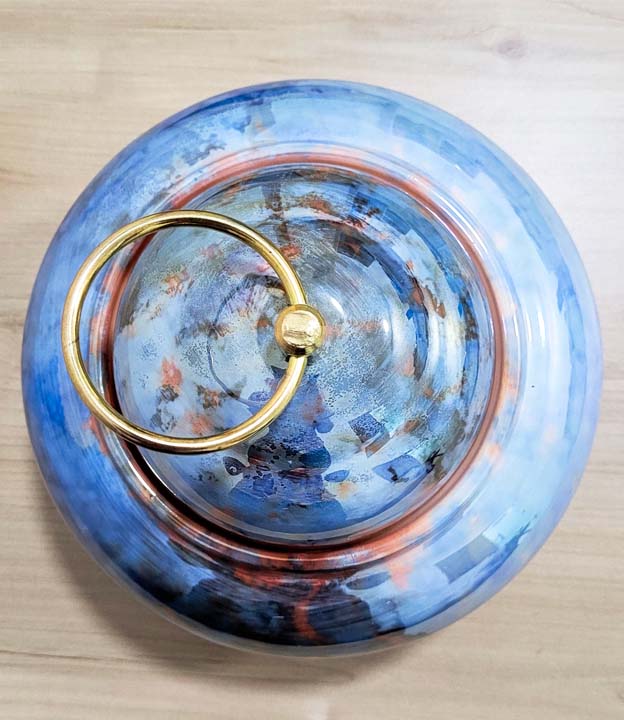
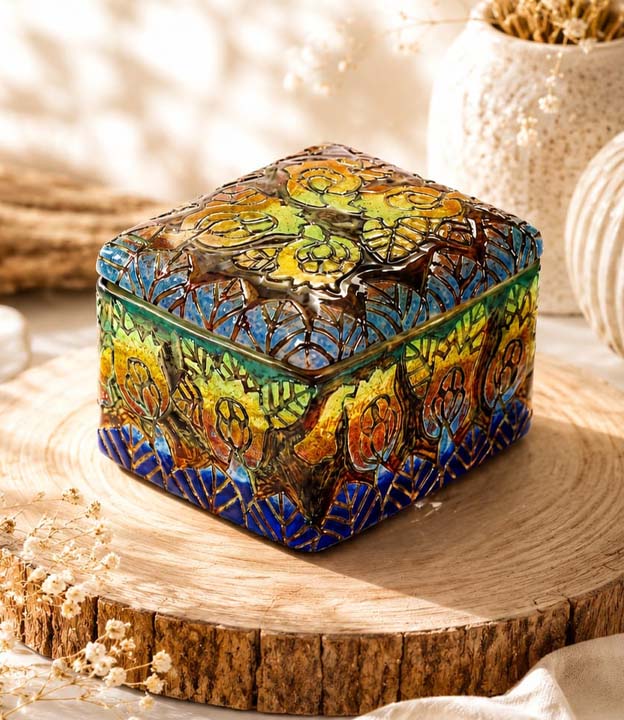
A hand-painted lidded jar can bring height and ceremony to a console or sideboard. A smaller object can add character to shelving. The painting should enhance the structure rather than overwhelm it.
Turn the piece and inspect it from several angles before buying. Strong ceramic art should remain resolved beyond the front-facing view.
9. Placement Determines Whether the Detail Can Be Seen
Hand-painted ceramic decor needs light and breathing room. Crowding a detailed object among unrelated accessories prevents the brushwork from being understood.
Use one important piece as an anchor, then support it with quieter materials such as books, wood, stone, linen or a restrained tray. Warm lighting usually strengthens colour and helps painted detail feel more intimate.
Negative space is not wasted space. It allows the eye to recognise the object’s form and surface.
How to Recognize Quality Hand-Painted Ceramic Decor
Start with the overall form. The ceramic body should be balanced, stable and visually resolved.
Then inspect the painting. Look for confident brushwork, controlled borders, consistent artistic intention and a pattern that responds to the object’s shape. Minor variation can show the hand; careless marks, incomplete edges and weak composition indicate poor finishing.
Check the relationship between paint and glaze. Colours should appear stable and intentional. Examine rims, undersides, lids and fitted parts rather than judging only the front surface.
Finally, consider presence. Does the piece remain clear from the expected viewing distance? Does it add rhythm, colour, meaning or material interest to the room?
Hand-Painted Versus Printed Ceramic Decoration
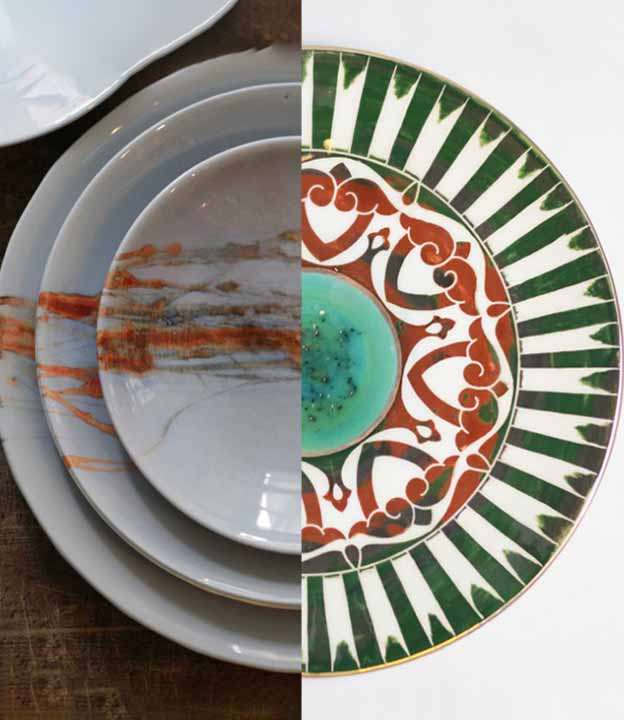
Printed ceramic decoration can be clean, consistent and appropriate when exact repetition or affordability is required. It is not automatically poor quality.
Hand-painted work offers a different value: visible authorship and controlled variation. The line may shift slightly, the colour density may change and repeated motifs may retain individual character.
The correct comparison is not simply handmade good, printed bad. Buyers should judge design quality, form, surface, finish, intended use and the role the object will play in the interior.
Styling Hand-Painted Ceramics in Modern Interiors
Modern interiors often benefit from one or two carefully selected painted pieces. Clean lines, pale walls and restrained furniture provide a quiet background for brushwork and colour.
Use a single painted dish on a wall, a tile composition in a niche or one painted jar on a console. Keep nearby accessories calm so the ceramic remains the focal point.
Strong contrast can work, but the object should still relate to the room through colour, form or material.
Styling Hand-Painted Ceramics in Warm and Layered Interiors
Layered interiors already contain textiles, books, wood, rugs, mirrors and decorative details. Painted ceramics can enrich this atmosphere, but they require editing.
If the room contains several patterns, choose ceramic with a limited palette or simpler brushwork. If the room feels warm but unfocused, select one stronger painted object to anchor the composition.
The ceramic should connect materials and colours rather than compete with every other element.
Hand-Painted Ceramic Decor for Dubai Homes and Villas
Dubai interiors often combine strong daylight with marble, stone, timber, metal and neutral upholstery. Hand-painted ceramics can soften this palette and introduce colour without requiring large-scale renovation.
In large villa entrances or double-height rooms, choose pieces with enough scale to remain visible from a distance. In apartments, one well-positioned dish, jar or tile composition may be more effective than several small objects.
Test glossy surfaces near windows because strong daylight can create glare. Keep valuable pieces away from circulation paths, unstable edges and areas exposed to frequent handling.
Hand-Painted Ceramics in Commercial Interiors
Boutiques, restaurants, hotels, reception areas and design showrooms need details that visitors remember. Hand-painted ceramics can provide identity without overwhelming the space.
A dish may enrich a boutique display, a tile composition can define a restaurant wall and a painted jar can add refinement to a reception console.
For commercial projects, confirm dimensions, weight, mounting method, quantity, replacement availability and expected variation between pieces.
Care, Display and Functional Suitability
Clean decorative ceramics gently with a soft dry cloth or a slightly damp cloth followed by immediate drying. Avoid abrasive pads, harsh chemicals and unnecessary soaking, particularly on metallic, textured or delicate painted finishes.
Use stable stands for displayed dishes and appropriate fixings for wall tiles or wall-mounted objects. Lift lidded jars by supporting the body rather than the lid or rim.
Do not assume that a decorative hand-painted piece is food-safe, dishwasher-safe, water-holding or suitable for outdoor use. These functions depend on the clay body, glaze, firing and product specification.
Common Mistakes to Avoid
Choosing pattern without considering the room can create visual conflict. The palette, scale and mood must belong to the interior.
Using several highly patterned pieces together often creates noise. One strong object can have more impact than a crowded collection.
Ignoring form is another mistake. Painting should support the object, not distract from weak proportion.
Poor lighting flattens brushwork and colour. Crowded placement prevents the detail from being appreciated.
Finally, do not accept poor finishing merely because the piece is described as handmade or hand-painted.
Why Hand-Painted Ceramic Decor Remains Timeless
Hand-painted ceramic decor remains relevant because it records gesture, judgement and attention.
A brushstroke records movement. Pattern records rhythm. Detail records patience. The finished surface carries evidence that someone made artistic decisions rather than simply repeating a template.
This human presence can soften modern rooms, enrich shelves, bring depth to walls and give commercial interiors a more distinctive identity.
The best painted ceramics do not merely add pattern. They add authorship.
Explore Hand-Painted Ceramic Decor at Checkmark Trading
At Checkmark, our ceramic collection is selected for interiors where craftsmanship, artistic presence and material warmth matter.
The collection includes decorative ceramic dishes, ceramic wall tiles, ceramic lidded jars, ceramic pomegranate decor, glazed ceramic objects and sculptural ceramic art for refined homes, living rooms, dining rooms, entrances, boutique displays and hospitality interiors.
Whether displayed on a wall, styled on a console or placed within a curated collection, hand-painted ceramic decor can bring brushwork, pattern and human character into an interior.