
 Chandeliers
 Pendant Lights
 Ceiling Lights
 Wall Sconces
 Table Lamps
 Floor Lamps
 Ceramic Lidded Jar
 Decorative Dishes
 Pomegranates
 Qajar Collection
 Decorative Wall Tiles
 Border Tiles
 Hand-Painted Tiles
 Block Tiles
 Wall Clocks
 Side Tables
 Candle Holders
Glazed Ceramic Décor: How Color, Texture and Light Transform Interiors

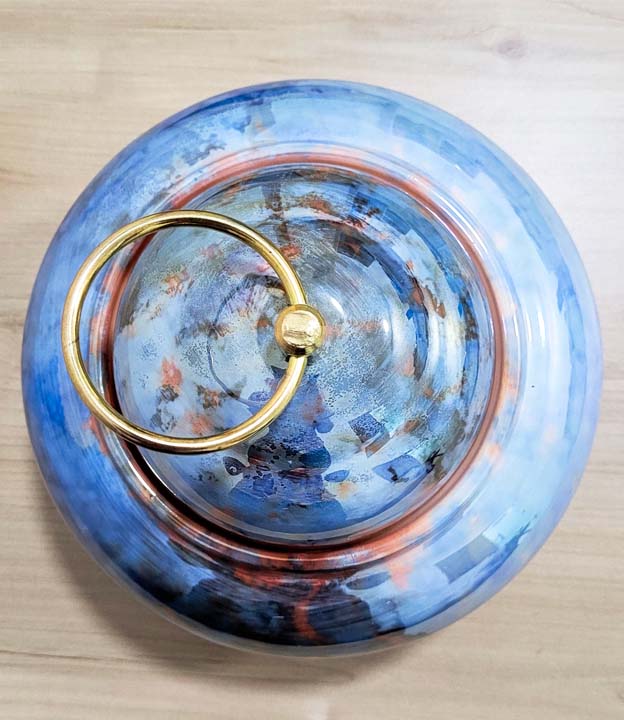
Table of Contents
ToggleIntroduction: When Clay Learns to Hold Light
Some objects introduce colour into a room. Others change the way the room receives light.
Glazed ceramic décor belongs to the second category. Its beauty is not limited to pattern or shade; it lives in the surface. Glaze can gather at an edge, deepen inside a curve, soften across a textured body or reflect warm light with quiet intensity.
A glazed piece rarely looks identical throughout the day. In clear daylight it may feel calm and mineral. Under evening lighting it can become deeper, warmer and almost luminous. Beside wood it feels more intimate. Against stone it becomes grounded. Near brass it gains refinement. With linen it feels softer.
This responsiveness is why glazed ceramics work so well in interiors. They do not simply occupy a shelf, wall or console. They participate in the room’s atmosphere.
A glazed dish can become a field of colour on a wall. A ceramic tile can introduce light and depth into architecture. A lidded jar can add volume to a console. A sculptural object can make a modern shelf feel less mechanical.
Glaze is not merely a decorative coating. It is the point where clay, chemistry, fire and light meet.
What Glaze Actually Does
Ceramic glazes are transformed by kiln firing rather than simply drying like ordinary paint. Ceramic Arts Network's glaze chemistry overview explains how firing changes glaze colour, texture and surface characteristics.
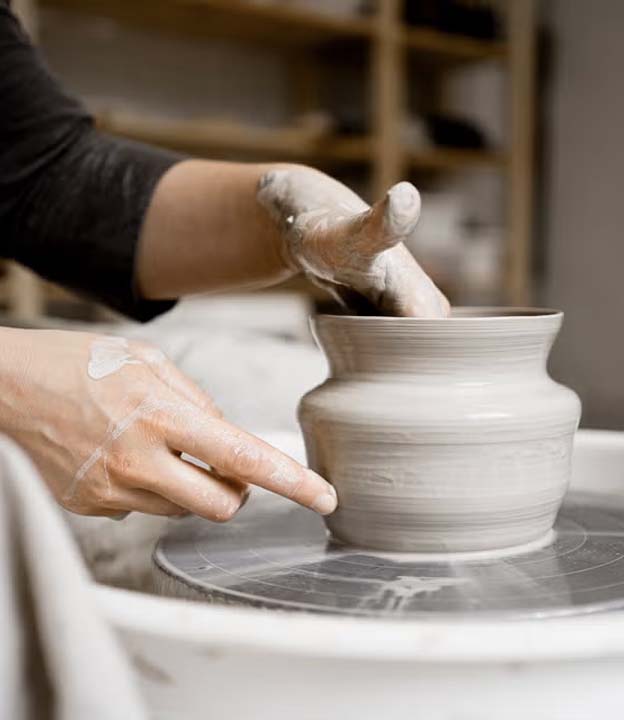
Ceramic glaze is a glass-forming surface that is applied to ceramic and transformed during kiln firing. Before firing it may appear powdery or dull. Heat changes its colour, texture and character, bonding it to the ceramic body.
This distinguishes glaze from ordinary paint. Paint generally sits on top of a finished surface. Glaze is altered by firing and becomes part of the ceramic skin.
Depending on its composition and firing conditions, glaze may become glossy, matte, satin, translucent, opaque, crackled, layered or reactive. It can intensify colour, protect part of the ceramic surface and create effects that would be difficult to achieve through paint alone.
For buyers, the important point is simple: glaze is not only colour. It determines how the object responds to touch, shadow, reflection and surrounding materials.
Glaze, Underglaze and Hand-Painted Decoration
Not every coloured ceramic surface is created in the same way. Some pieces are decorated with underglaze, some with glaze, and some with both.
Underglaze is commonly used for painted lines, motifs and detailed imagery. A clear or translucent glaze may then be applied over it. Other pieces use coloured glaze as the principal visual surface. Decorative techniques may also include relief, slips, metallic lustres or layered firing processes.
This matters when evaluating a piece. A hand-painted design beneath a clear glaze behaves differently from a pattern printed onto a uniform commercial surface. One may reveal brush movement and subtle variation; the other may prioritise repetition.
Neither method should be judged by label alone. The quality of the design, firing, finish and overall artistic control remains more important than the technique name.
Colour Depth: The Difference Between Colour and Presence
Flat colour announces itself immediately. Glazed colour often reveals itself gradually.
A blue glaze may appear pale along a rim and darker where it pools. A green glaze may shift between reflection and shadow. Warm earth tones may feel restrained in daylight and more intimate beneath evening light. Layered glazes can hold several tones at once without appearing busy.
This is why glazed ceramic décor brings more than a matching accent colour. It introduces depth.
Against a neutral wall, one rich glaze can become a focal point. Near a window, it may feel fresh and open. Beside timber, it becomes warmer. The best glazed pieces do not shout colour into the room; they release it slowly.
Texture: Giving Shadow Somewhere to Rest
Texture gives glazed ceramic its tactile intelligence. A surface may be smooth and reflective, softly matte, carved, ridged, crackled, layered or subtly uneven.
Each texture behaves differently. Gloss creates reflection. Matte surfaces soften light. Relief gives shadow a place to form. Layered glaze creates visual depth. Controlled irregularity makes the piece feel alive.
This is especially useful in modern interiors dominated by smooth floors, flat walls, clean furniture and restrained palettes. Those elements create calm, but without tactile contrast the room may feel emotionally cold.
A textured tile can bring movement to a wall. A glazed jar can enrich a console. A relief dish can interrupt the straight geometry of shelving. Texture does not need to be dramatic; it needs to be visible enough to reward attention.
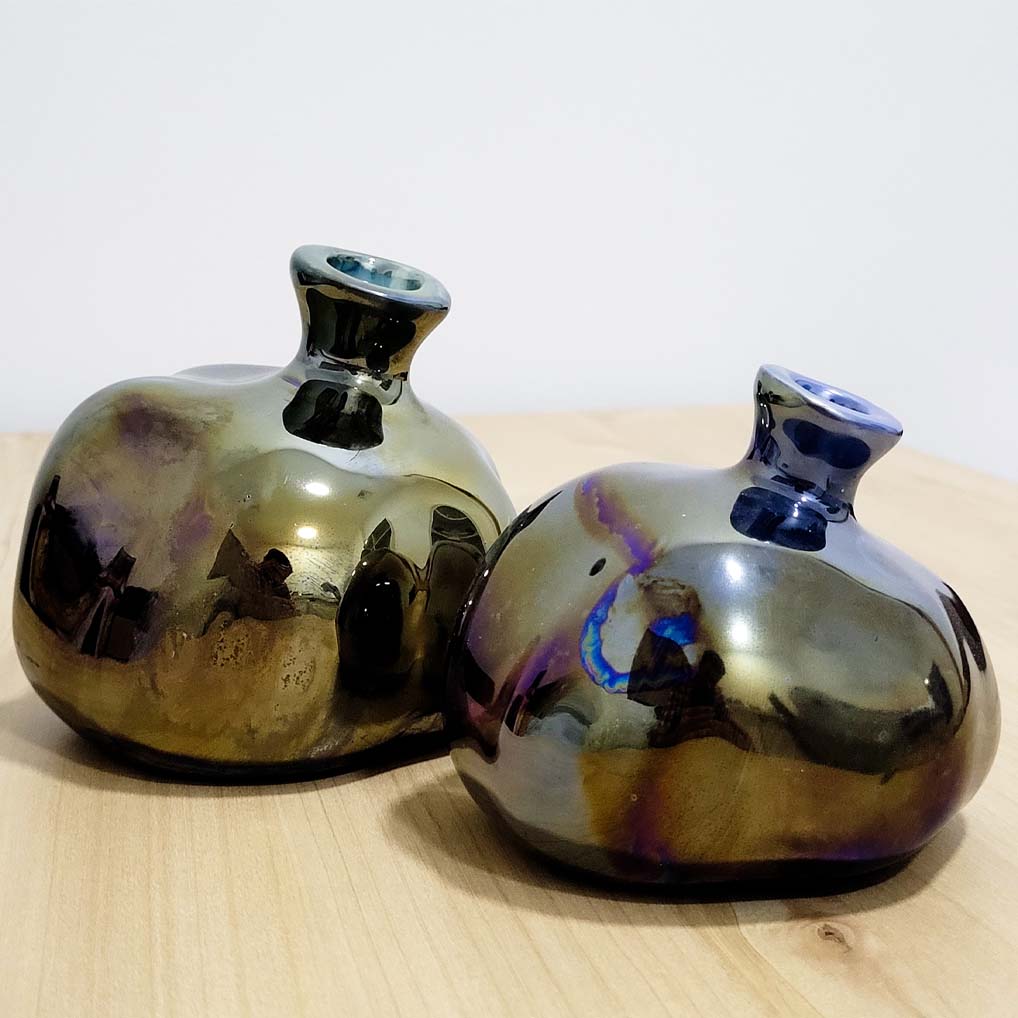
Light: The Final Material
A glazed ceramic piece is not fully understood until light touches it.
Warm light can deepen colour. Side light reveals relief. Daylight exposes variation. Reflected evening light can give a glossy surface a quiet glow.
Placement therefore matters. A dish should not be hidden where its glaze remains unreadable. A wall tile benefits from light that reaches the edge or relief. A lidded jar should be positioned so light can move across its shoulder and lid.
Before deciding on a final location, observe the piece during the day and again after sunset. Some glazes become dramatically richer under warm artificial light, while highly reflective finishes may create glare near strong windows.
Glossy Glaze: Reflection and Controlled Drama
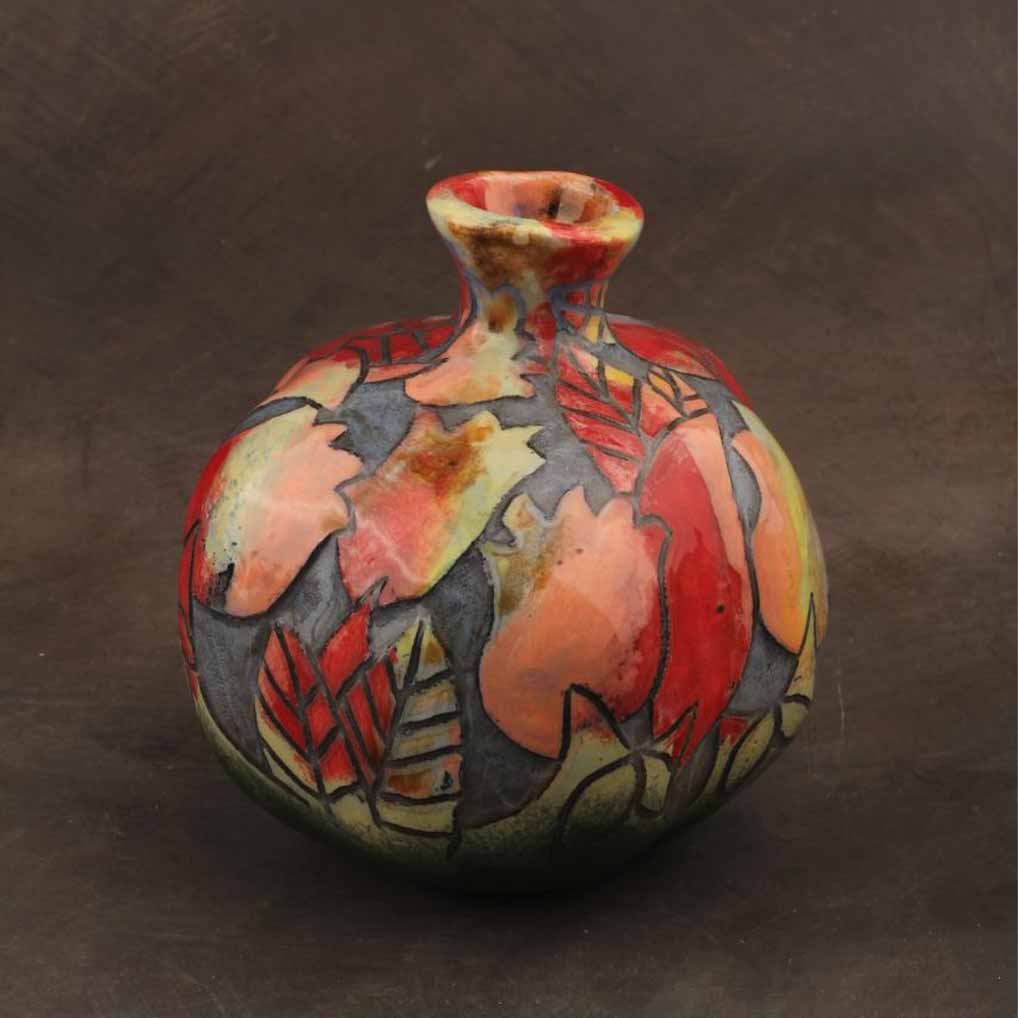
Glossy glaze intensifies colour and reflects its surroundings. It can make a dish behave almost like a jewel on a wall or give a ceramic jar a polished, formal presence.
It works best when a room needs reflected light, colour depth or a clear focal point. The surrounding materials should usually be quieter: natural wood, linen, matte plaster, stone or restrained upholstery.
Too many glossy elements can make a room feel restless. The strongest effect often comes from one reflective ceramic piece placed within a calm composition.
Gloss becomes luxurious through contrast, not excess.
Matte and Satin Glazes: Architectural Calm
Matte glazed ceramic has a quieter beauty. It absorbs and softens light rather than reflecting it strongly. Satin finishes sit between matte and gloss, offering a soft sheen without sharp reflections.
These surfaces are especially useful in rooms that already contain marble, glass or polished metal. Matte ceramic introduces visual rest and makes the composition feel more grounded.
A matte tile can feel architectural. A satin-finished jar can add depth without appearing decorative. A muted dish can soften a minimal shelf.
Use matte or satin glaze when the room needs stillness, texture and material presence rather than shine.
Crackle, Layered and Reactive Glazes
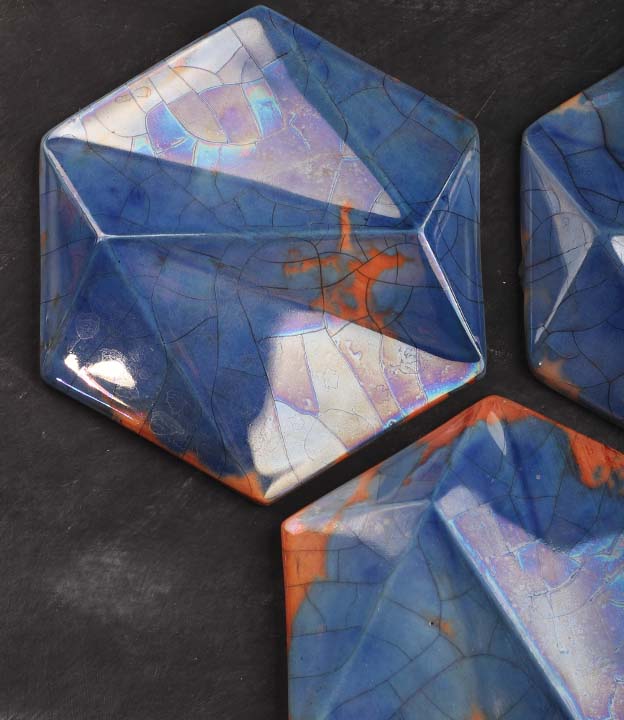
Some glazes are valued because they reveal transformation. Fine crackle lines, pooled colour, layered tones or reactive effects can make each piece visually distinct.
These finishes carry evidence of firing. Their beauty comes partly from variation that cannot be repeated with absolute precision.
Crackle should be understood carefully. On decorative objects it may be an intentional visual feature. For functional tableware, however, suitability depends on the clay body, glaze system, firing and intended use. A decorative crackled surface should not automatically be assumed suitable for food or prolonged contact with moisture.
In interiors, complex glaze can provide richness without requiring elaborate pattern. One well-chosen piece may create more depth than several ordinary accessories.
Glazed Ceramic Dishes: Colour Held in an Open Form
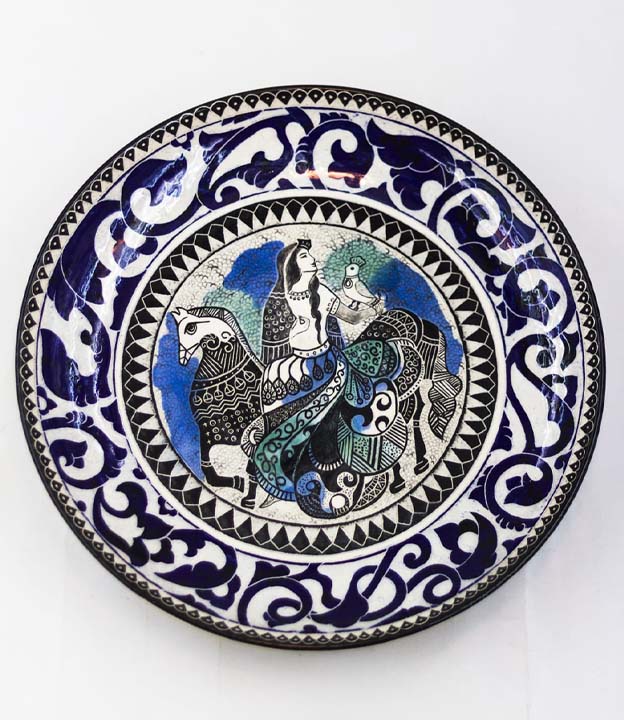
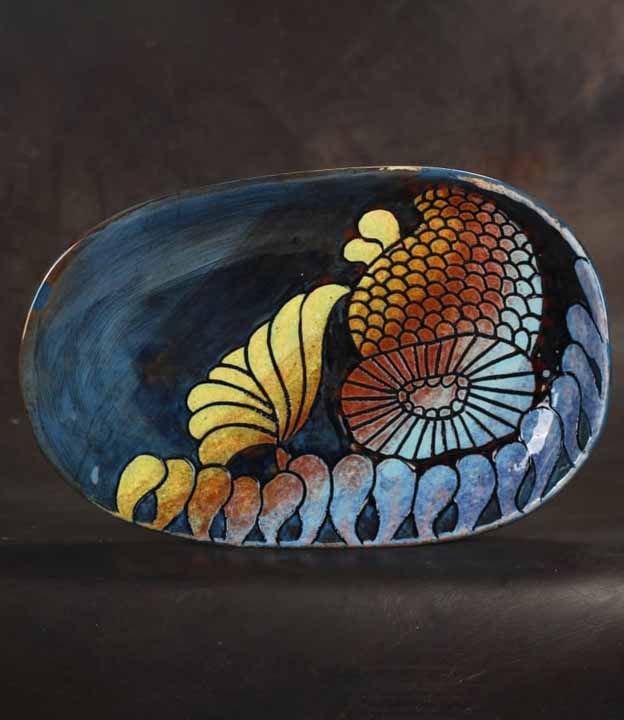
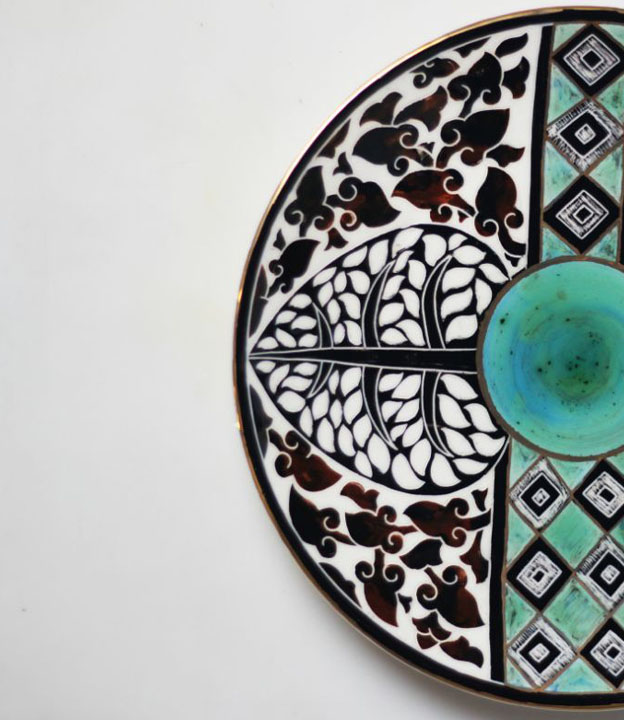
A glazed ceramic dish is one of the clearest ways to experience colour and surface depth because its open form allows the glaze to be seen fully.
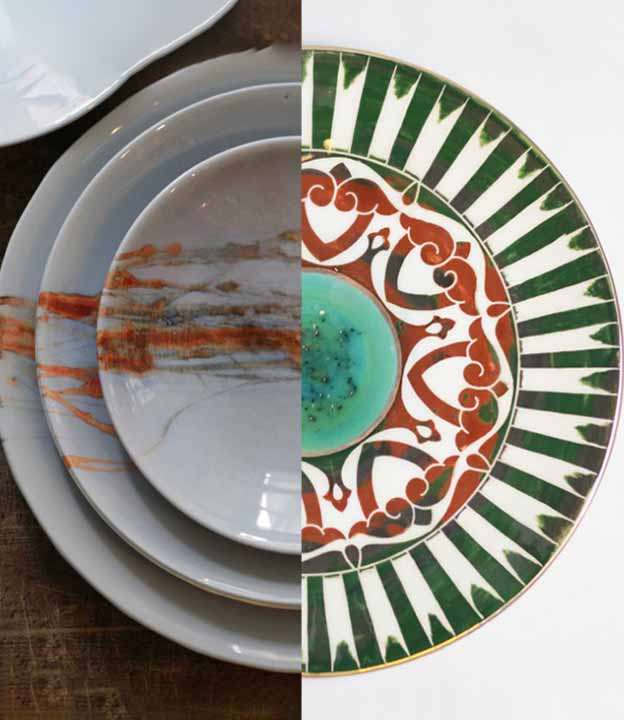
Light enters the dish, moves across the curve and reveals differences between the centre, rim and edge. This makes glazed dishes effective as wall art, table centrepieces and shelf features.
On a wall they behave like dimensional paintings. On a table they create a quiet centre of gravity. On a shelf they soften the geometry of books and straight lines.
A decorative dish should not need to be filled to justify its presence. If the glaze and form are strong, the surface itself is enough.
Glazed Ceramic Wall Tiles: Light Made Architectural
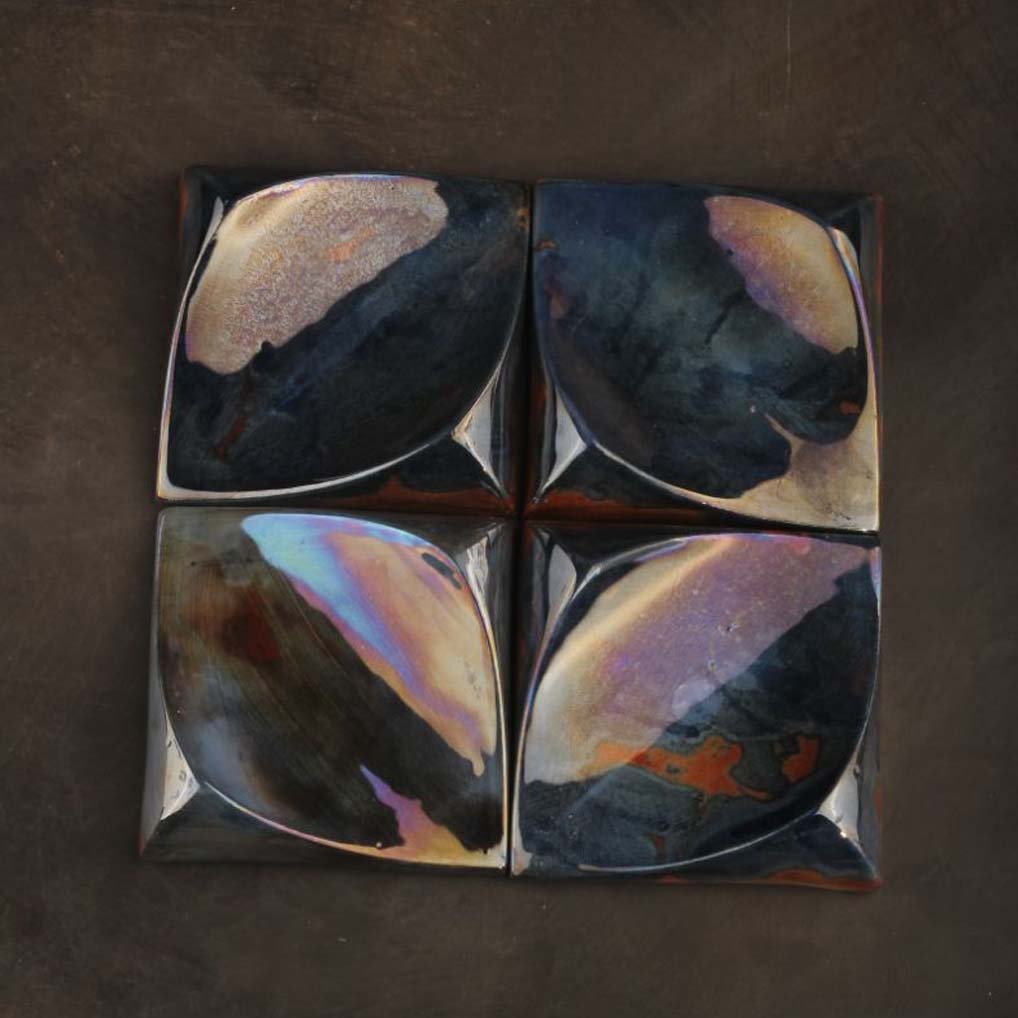
Glazed ceramic wall tiles can transform a surface because they bring reflection, depth and edge shadow into the architecture of the room.
Unlike paint or wallpaper, a tile has physical body. Even a small projection changes the way the wall responds to light.
A single tile can become a niche feature. A controlled group can create rhythm above a console or in a dining room. A larger composition can give identity to an entrance, corridor or hospitality interior.
The success of glazed tile depends on proportion, spacing and installation quality. Beautiful surfaces lose authority when alignment, support or finishing is careless.
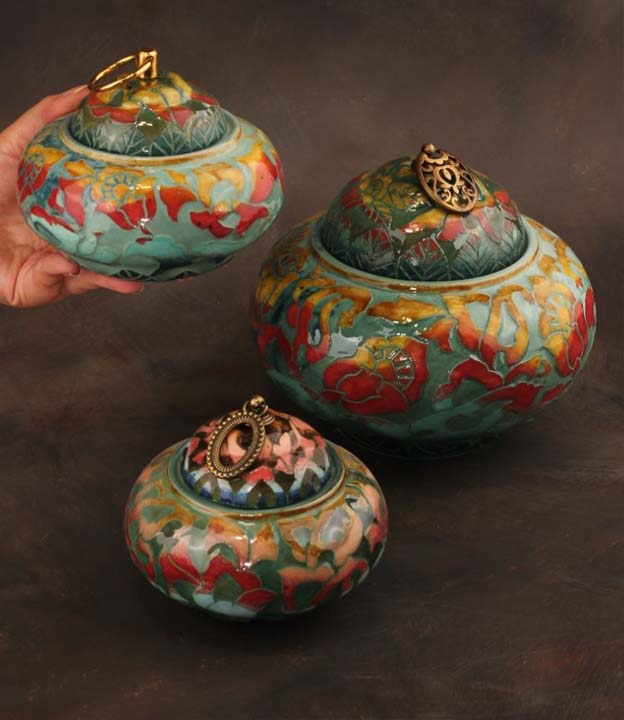
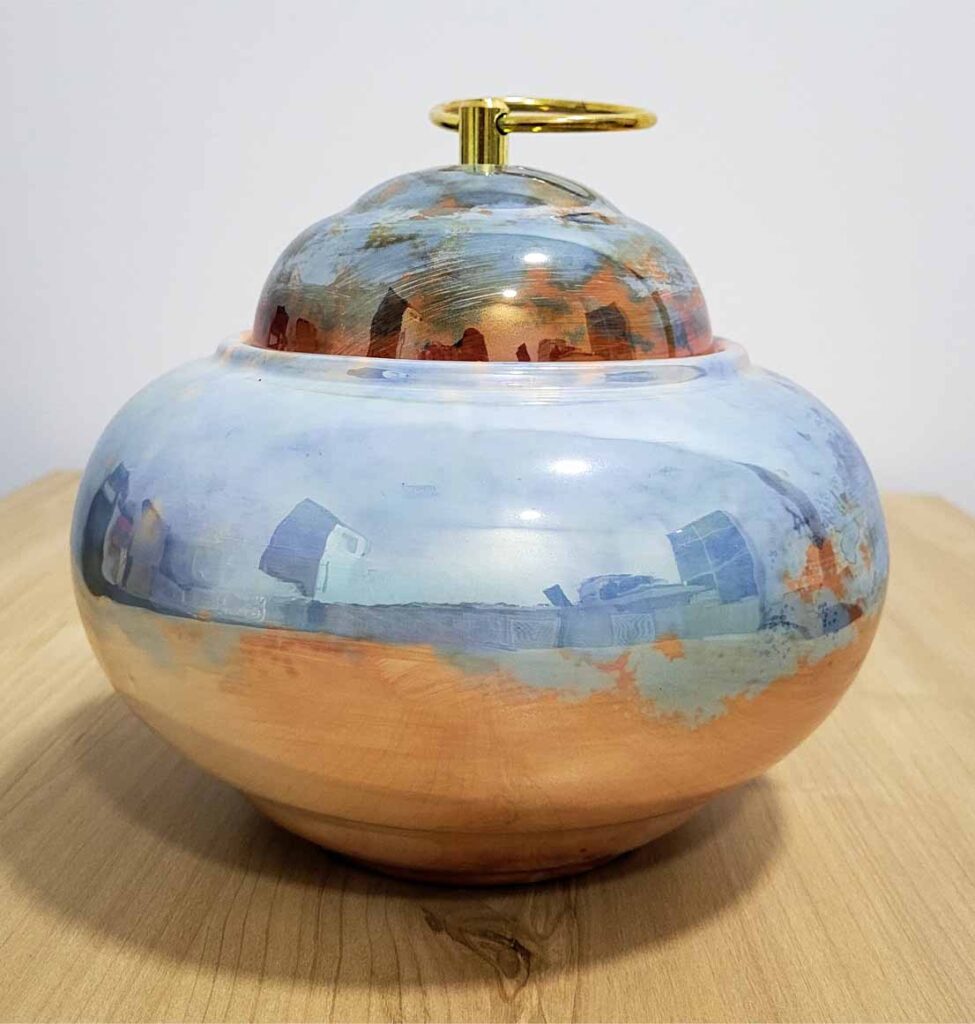
Glazed Ceramic Lidded Jars: Richness in Contained Form
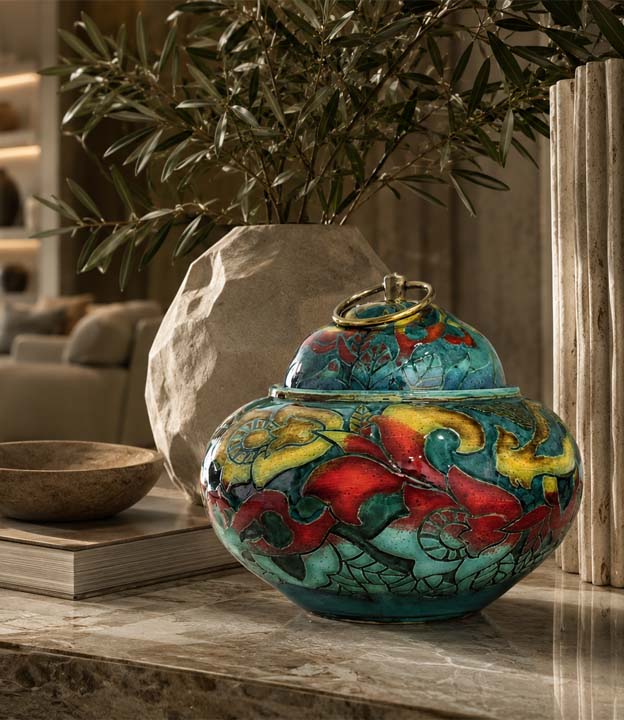
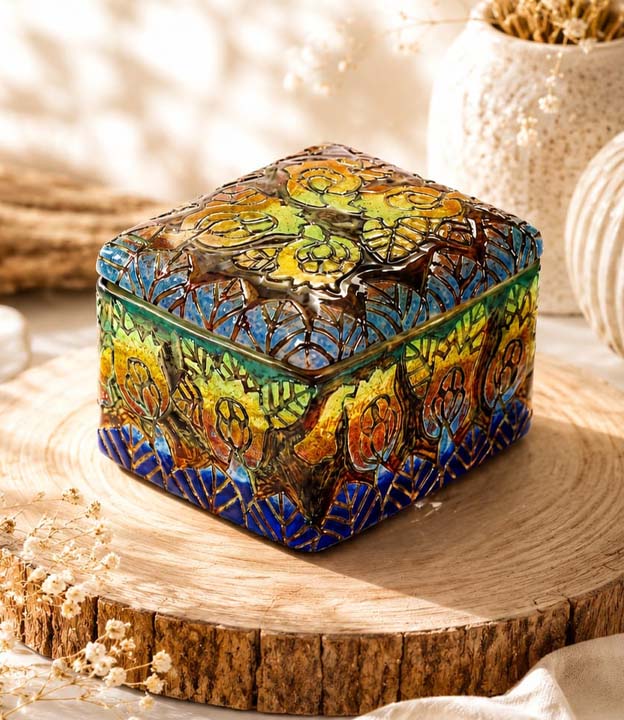
A lidded jar already carries a sense of containment and dignity. Glaze strengthens that effect by following the body, deepening around the shoulder and reflecting across the lid.
These pieces work well on console tables, sideboards, shelves and display cabinets. A tall jar brings vertical elegance. A compact jar adds intimacy. A deep glaze can become a focal point against a neutral background.
Proportion remains essential. The base, body, shoulder, lid and top detail should feel balanced. Glaze can enhance good form, but it cannot rescue weak proportion.
Choosing Glazed Ceramic Décor for a Room
Choosing glazed ceramic décor requires more than selecting a favourite colour. Begin with the room.
Does the space need warmth, reflection, calm, texture, contrast or a focal point? Does it need a handmade surface to soften polished materials?
A glossy glaze can add light and drama. Matte glaze can introduce quietness. Relief creates shadow. Layered glaze creates complexity. Crackle can suggest age or delicacy. A strong colour can focus the eye; a neutral glaze can support the broader interior.
The best choice is not necessarily the most elaborate piece. It is the one that gives the room what it lacks.
A Practical Quality Checklist
Study the form before the glaze. A strong ceramic piece should remain convincing in silhouette.
Look for a stable base, balanced proportions, clean edges and a finish that appears intentional. Variation can be desirable, but structural cracks, unstable forms or careless finishing are not signs of quality.
Observe the glaze under more than one type of light. Check whether the colour has depth and whether glossy areas show distracting flaws.
For lidded jars, test how the lid sits. For wall pieces, confirm that the mounting method is appropriate. For items intended for food, water or outdoor use, request specific suitability information rather than assuming the glaze alone provides it.
A good glazed object combines form, surface and function honestly.
Matching Glazed Ceramics with Interior Materials
Glazed ceramics become stronger when placed beside complementary materials.
With wood they feel warmer. With stone they feel grounded. With brass they become more refined. With linen they feel softer. With glass they become lighter. With plaster they feel more architectural.
The relationship between glazed ceramic décor and wooden lighting is especially effective. Timber introduces grain and warmth; glaze introduces depth and changing reflection. Together they create a balance between natural material and crafted surface.
The goal is not to make the room more decorative. It is to make it more layered.
Glazed Ceramic Décor in Modern Interiors
Modern interiors often benefit from glazed ceramic because clean lines and neutral finishes can become too controlled.
A single glazed dish can soften a plain wall. A tile in a niche can create architectural interest. A jar on a console can deepen a neutral palette. A sculptural object can make a shelf feel personal.
Restraint is essential. Use glazed ceramic as a selected point of depth rather than repeated decoration. Let one surface shine, one colour deepen and one object hold light.
Glazed Ceramic Décor in Warm and Layered Interiors
In warmer interiors, glazed ceramic can connect carved wood, woven textiles, patterned fabrics, metal, books and natural surfaces.
The challenge is not adding more beauty; it is controlling it. If the room already contains strong pattern, choose a quieter glaze. If the room feels rich but unfocused, select one piece with enough visual weight to anchor the arrangement.
Layered interiors need hierarchy. Ceramic should add depth, not clutter.
Glazed Ceramic Décor for Dubai Homes and Villas
Dubai interiors often combine abundant daylight with marble, stone, timber, metal and neutral upholstery. Glazed ceramic can introduce warmth and colour without requiring major changes to the room.
In large villa entrances or double-height living areas, select pieces with enough scale to remain visible from a distance. In apartments, one well-placed dish, jar or tile composition may be more effective than several smaller objects.
Strong daylight can reveal colour beautifully, but glossy glazes may also produce glare. Test the piece near windows at different hours and avoid placing valuable objects where circulation or cleaning activity creates risk.
Glazed Ceramic Décor in Commercial Interiors
Boutiques, restaurants, reception areas, galleries and hospitality spaces need details that people remember.
A glazed wall tile can give a reception surface identity. A dish can enrich a boutique display. A lidded jar can add dignity to a console. A sculptural glazed object can make a showroom feel curated rather than transactional.
For professional projects, confirm dimensions, weight, finish, quantity, installation requirements and replacement availability. The ceramic should support the design concept and brand atmosphere rather than appear as a late decorative addition.
Common Mistakes to Avoid
Choosing glaze only by colour is the first mistake. Surface behaviour, lighting and surrounding materials matter just as much.
Using several glossy pieces together can create visual noise. Balance reflective ceramics with matte and natural finishes.
Hiding glaze in poor light wastes much of its value. Ignoring scale can make a small piece disappear or a large one dominate.
Do not confuse shine with quality. Refinement depends on form, craftsmanship and placement.
Finally, do not treat glazed ceramic as filler. A strong piece should create a deliberate visual moment.
Care and Display Considerations
Glazed ceramic display pieces should be cleaned gently with a soft dry cloth or, when necessary, a slightly damp cloth followed by immediate drying.
Avoid abrasive pads, harsh chemicals and unnecessary soaking, especially on hand-painted, metallic, crackled or highly textured surfaces.
Use stable supports for dishes and wall tiles. Keep jars and sculptural pieces away from unstable edges. Lift lidded jars with both hands rather than by the lid or rim.
Outdoor, food-safe, dishwasher-safe or water-holding suitability should never be assumed from appearance. These uses depend on the complete ceramic body, glaze, firing and product specification.
Why Glazed Ceramic Décor Remains Timeless
The long history and breadth of ceramic production can also be explored through the V&A Ceramics Collection.
Glazed ceramic remains relevant because it joins material, colour, light and craft in a single surface.
It can be glossy or quiet, modern or richly layered, sculptural or architectural. It can belong to a restrained apartment, a generous villa, a dining room, a boutique or a hospitality interior.
Its appeal is not based only on trend. It comes from transformation: clay becomes form, glaze becomes surface, fire creates depth and light completes the object.
Glazed ceramic does not merely add colour. It makes colour feel alive.
Explore Glazed Ceramic Décor at Checkmark Trading
At Checkmark, our ceramic collection is selected for interiors where craftsmanship, surface depth and artistic presence matter.
Our collection includes glazed ceramic art objects, decorative ceramic dishes, ceramic wall tiles, ceramic lidded jars and symbolic ceramic pieces for refined homes, villa interiors, hospitality spaces, dining rooms, entrances and carefully composed design projects.
Whether selected for colour, texture, light or sculptural presence, glazed ceramic décor can bring warmth and quiet distinction into an interior.
A room becomes more memorable when its surfaces know how to hold light.