
 Chandeliers
 Pendant Lights
 Ceiling Lights
 Wall Sconces
 Table Lamps
 Floor Lamps
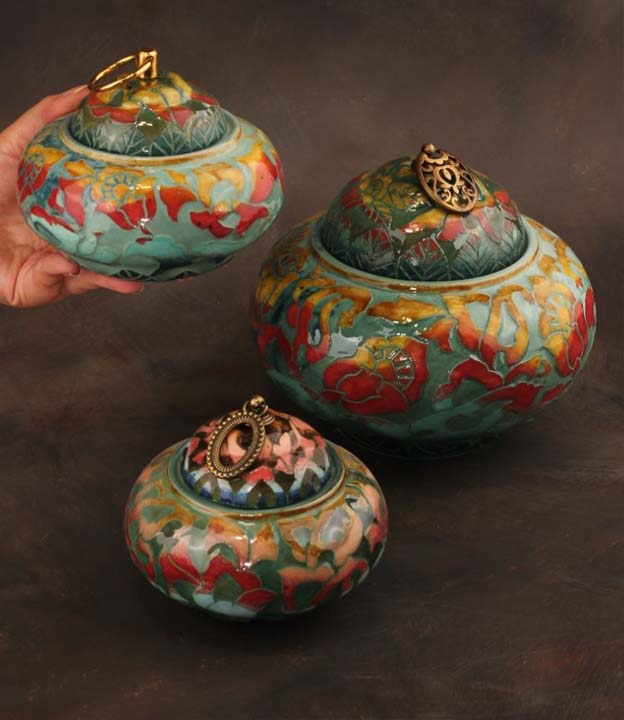
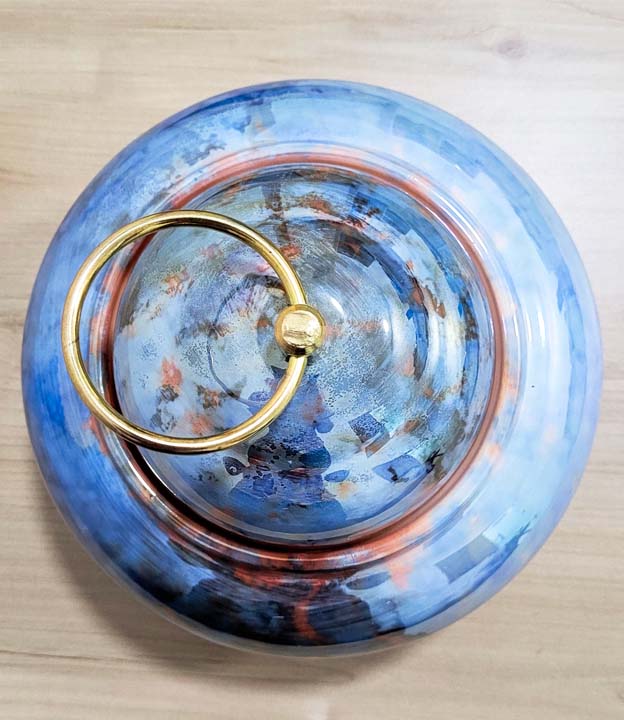
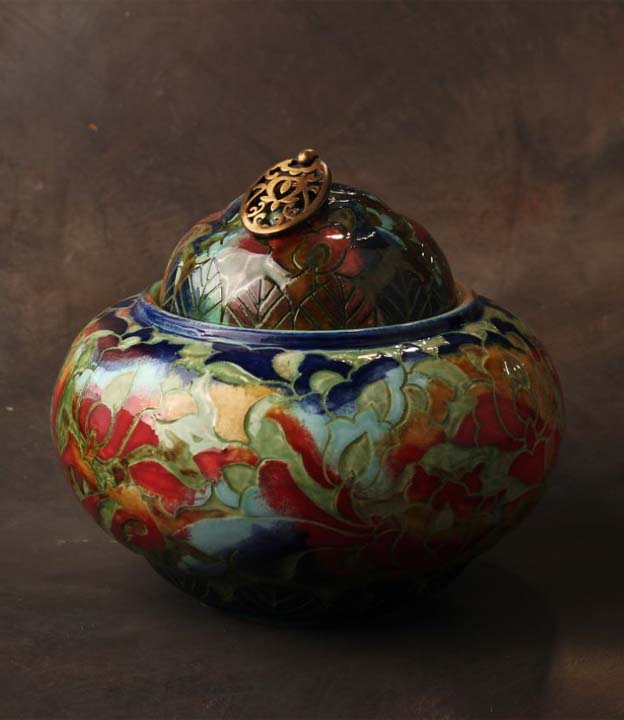
 Ceramic Lidded Jar
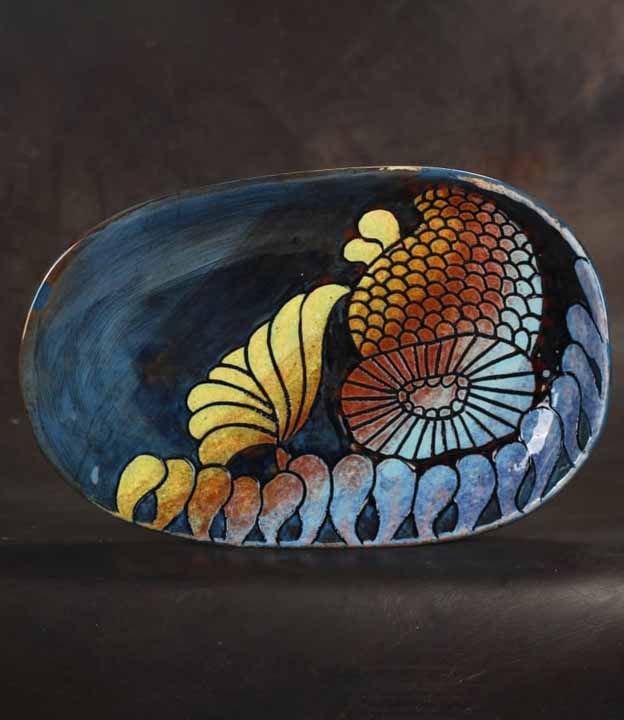
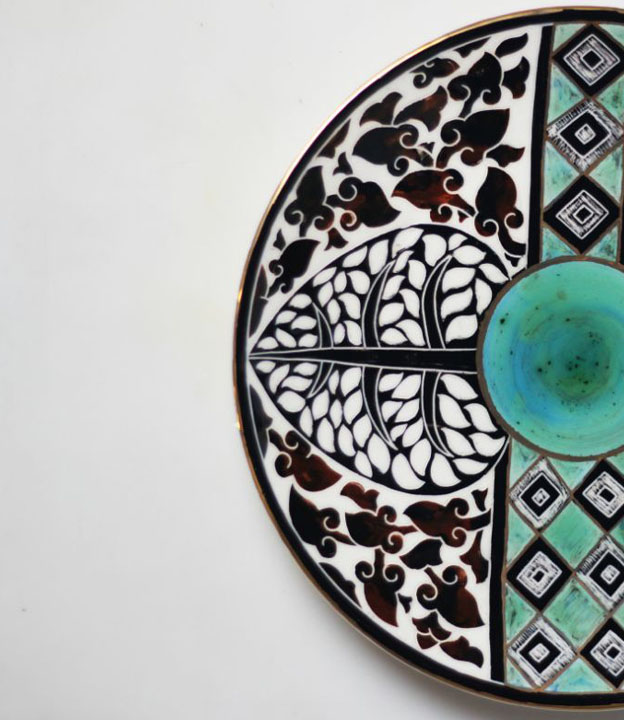
 Decorative Dishes
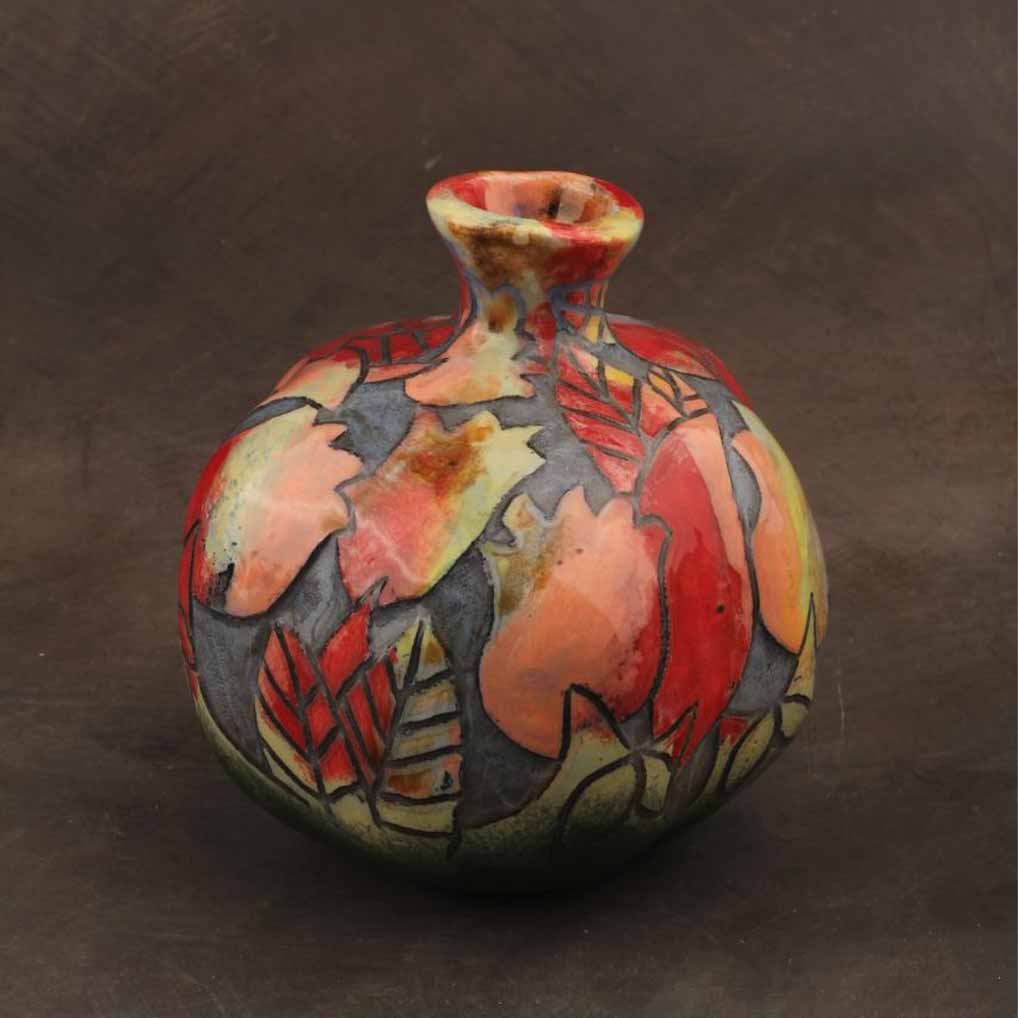
 Pomegranates
 Qajar Collection
 Decorative Wall Tiles
 Border Tiles
 Hand-Painted Tiles
 Block Tiles
 Wall Clocks
 Side Tables
 Candle Holders
How to Choose Handcrafted Ceramic Art for Luxury Interiors

Table of Contents
ToggleIntroduction: Luxury Begins with Discernment
Luxury is not the accumulation of beautiful things. It is the discipline of choosing what deserves to remain.
A room may contain marble, tailored upholstery, polished metal, warm lighting and carefully made furniture, yet still feel incomplete if its smaller objects have no character. True refinement often reveals itself in quieter decisions: the curve of a vessel, the depth of a glaze, the way an object holds light, or the warmth of something that still carries the evidence of a maker’s hand.
This is where handcrafted ceramic art becomes valuable. A ceramic piece should not be selected simply because it matches a colour palette or fills an empty shelf. It should contribute something the room genuinely needs: softness, contrast, scale, pattern, symbolic meaning or a sense of material honesty.
The right piece can anchor an entrance console, give a dining room greater intimacy, soften a minimal living area or turn a quiet niche into a point of focus. Choosing ceramic art for a luxury interior is therefore less about decoration and more about curation.
Why Handcrafted Ceramic Art Belongs in Luxury Interiors
Ceramic objects have long belonged to both daily life and artistic expression. The V&A Ceramics Collection documents the breadth of ceramics as functional, decorative and artistic objects across centuries.
The meaning of luxury has changed. Visible expense alone is no longer enough. The most convincing interiors are shaped by proportion, craftsmanship, atmosphere and restraint.
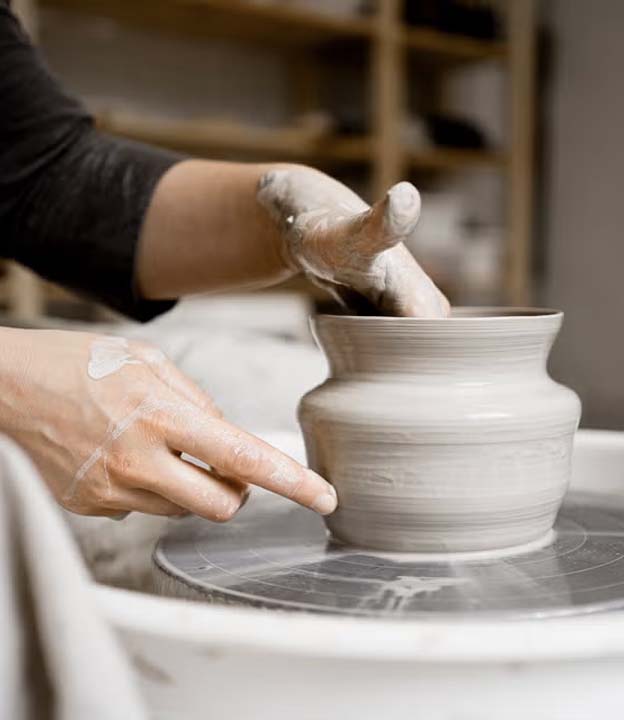
Handcrafted ceramic décor fits naturally into this language because it introduces the human hand without disturbing the room’s sophistication. Clay begins as a modest material, but through forming, drying, glazing and firing it gains permanence and presence. The maker guides the process, yet fire and glaze retain an element of unpredictability.
That subtle tension gives handmade ceramic pieces their character. They do not feel anonymous or mechanically perfect. They introduce evidence of time, touch and judgement into interiors that may otherwise become too controlled.
Begin with the Room, Not the Object
It is easy to fall in love with a ceramic piece first and think about placement later. For serious interior styling, the stronger approach begins with the room.
Ask what the space is missing. Does it need warmth against stone or metal? A focal point on a large wall? Height on a console? Pattern in a quiet room? A symbolic object in an entrance? A softer form to balance straight architectural lines?
This question changes the buying decision. A ceramic piece should not merely be attractive; it should perform a visual or emotional role. Luxury design is rarely about adding more. It is about adding correctly.
Scale: The First Test of Serious Styling
Scale determines whether a ceramic object feels intentional or accidental. A small piece can disappear in a large room, while an oversized object can overwhelm a narrow shelf or table.
Scale is not only physical size. It is visual authority. Pattern, colour contrast, height and silhouette all affect how strongly a piece reads from across the room.
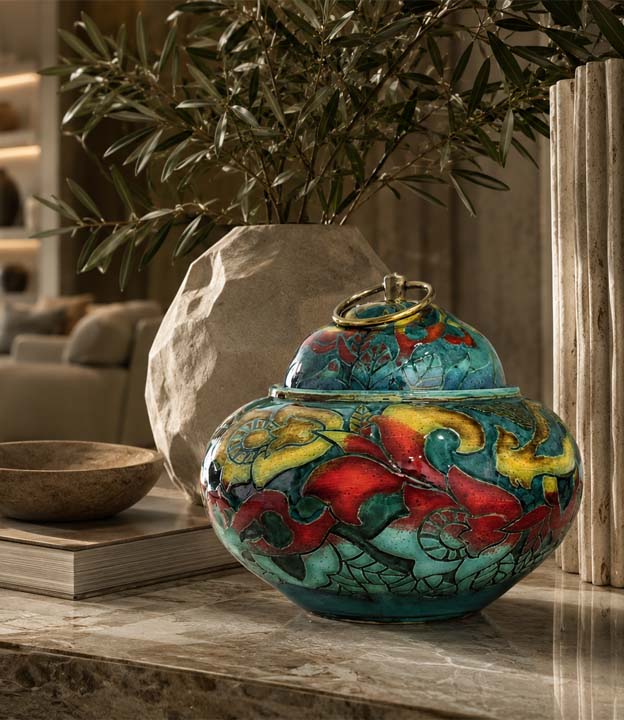
For a generous entrance, consider a tall ceramic lidded jar, a sculptural form, a large decorative dish or a controlled wall-tile composition. On shelves, choose pieces that interrupt repetition without crowding it. For a dining room, judge the object against the table, sideboard, wall width and lighting.
Large Dubai villas and double-height interiors often require stronger scale than compact apartments. Measure the intended surface, view it from the normal approach to the room and avoid relying only on close-up product photographs.
Form: The Silhouette Must Be Strong
Form is the first quality the eye understands. Before colour, brushwork or glaze, the silhouette establishes presence.
A rounded piece softens geometry. A tall form creates vertical elegance. A shallow dish feels open and generous. A lidded jar suggests containment and dignity. A tile creates architectural order. A sculptural object brings identity.
A useful test is to imagine the piece without its surface decoration. If the silhouette still feels balanced and purposeful, the form is strong. Pattern can attract attention, but form gives the object authority.
Surface: Glaze, Texture and Light
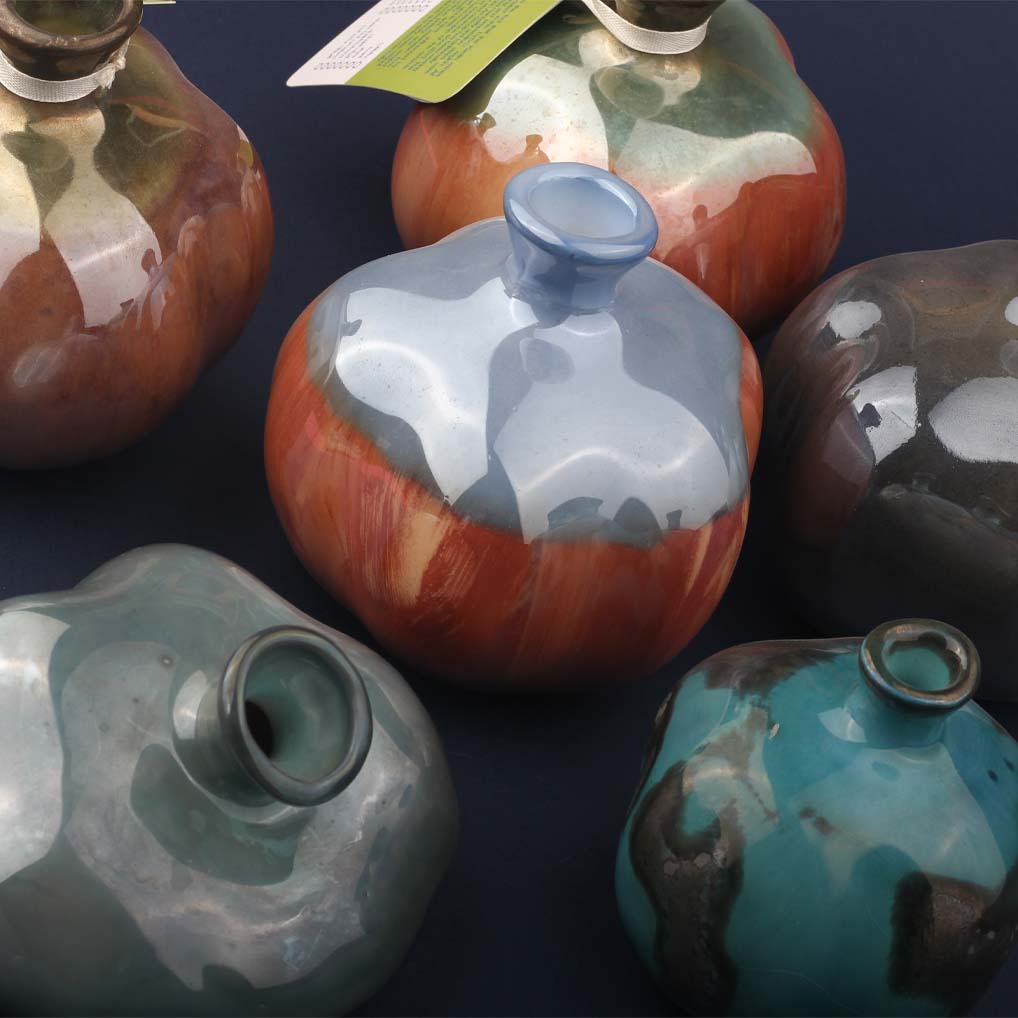
Ceramic is a material of surface. Glossy glaze can create depth and reflection. Matte finishes feel quieter and more architectural. Relief texture holds shadow. Hand-painted detail introduces rhythm and evidence of the brush.
Lighting should therefore be considered before final placement. A glazed object may appear calm in daylight and richer under warm evening light. A textured tile lit from the side may reveal details that disappear under flat illumination.
Look at the piece at different times of day. Highly reflective glazes can produce glare near strong windows, while deeply coloured surfaces may need warm, focused light to reveal their depth.
Colour: Harmony Before Drama
In a refined room, ceramic colour should either belong clearly to the palette or create one deliberate point of contrast. Anything between these positions can feel accidental.
Neutral pieces create calm. Earth tones add warmth. Deep blue or green glazes bring depth. Monochrome ceramics feel architectural. Multi-coloured hand-painted work can become a focal point when the surroundings are quiet enough.
Do not judge colour in isolation. Consider nearby timber, stone, metal, upholstery, wall paint and lighting temperature. A bold piece can be elegant if the room gives it space. A quiet piece can be powerful if the form and glaze are strong.
Craftsmanship: Handmade Must Still Mean Refined
Handmade does not automatically mean high-end. A luxury interior requires ceramic with human character and artistic discipline.
Look for balanced proportions, a stable base, controlled glazing, clean edges and intentional finishing. Slight variation can make a piece feel alive, but structural cracks, awkward proportions, careless painting or unstable form are not signs of craftsmanship.
Inspect the underside as well as the visible surface. On lidded pieces, check how the lid sits. For wall-mounted art, ask how the object can be supported safely. If the piece is intended for food use, confirm food-contact suitability separately; decorative quality and functional safety are different questions.
Placement: Give the Object Enough Silence
Placement can elevate or diminish even a strong piece. Ceramic art needs enough space for the form, colour and surface to be read clearly.
On a console, avoid surrounding the piece with several unrelated objects. On shelves, do not bury it among books and accessories. On a wall, allow breathing room around dishes or tiles. In a niche, let the architecture frame the piece.
Negative space is not unused space. It is part of the composition. Luxury interiors feel calm because important objects are allowed to hold attention without competing.
Choosing Ceramic Art for Entrance Areas
The entrance is the first emotional signal of a home. It should establish taste without revealing everything at once.
A sculptural ceramic object on a console can create quiet authority. A ceramic lidded jar can add height beside a mirror. A decorative dish displayed upright introduces curve and pattern. A symbolic ceramic piece can make the welcome feel more personal.
One strong object is often more effective than several minor ones. In narrow entrances, wall-mounted dishes or tiles can provide presence without taking valuable floor space.
Choosing Ceramic Art for Living Rooms
The living room must balance comfort and visual character. Ceramic art helps connect these two needs.
A low sculptural piece may anchor a coffee table. A decorative dish can soften a wall or shelf. A lidded jar can add height to a console. A ceramic tile can give a quiet corner greater purpose.
The piece should connect with the room’s broader material language. Books, upholstery, wood, stone and lighting should feel like part of the same composition rather than unrelated surroundings.
Choosing Ceramic Art for Dining Rooms
Dining rooms have a natural relationship with ceramic because the material already belongs to the rituals of gathering, offering and hospitality.
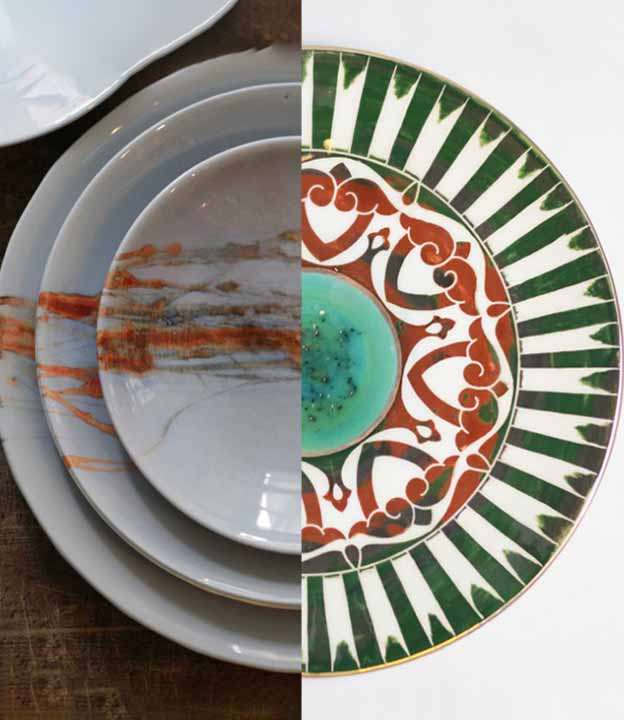
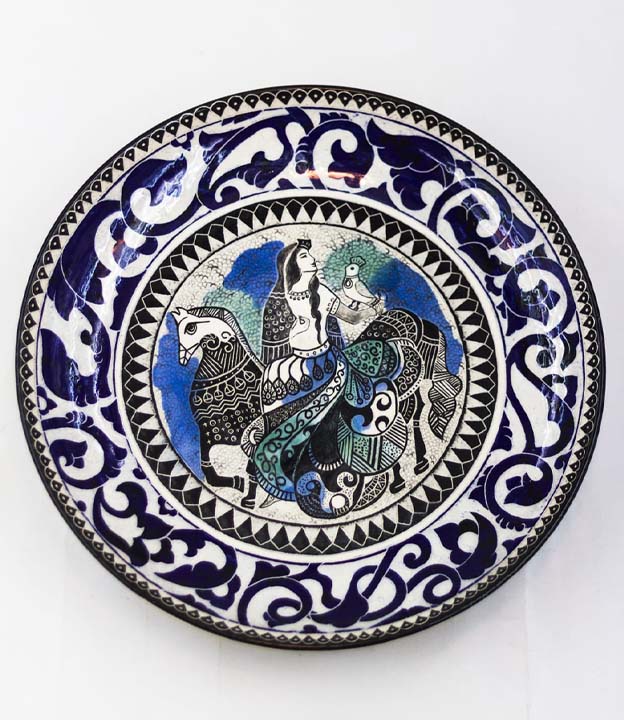
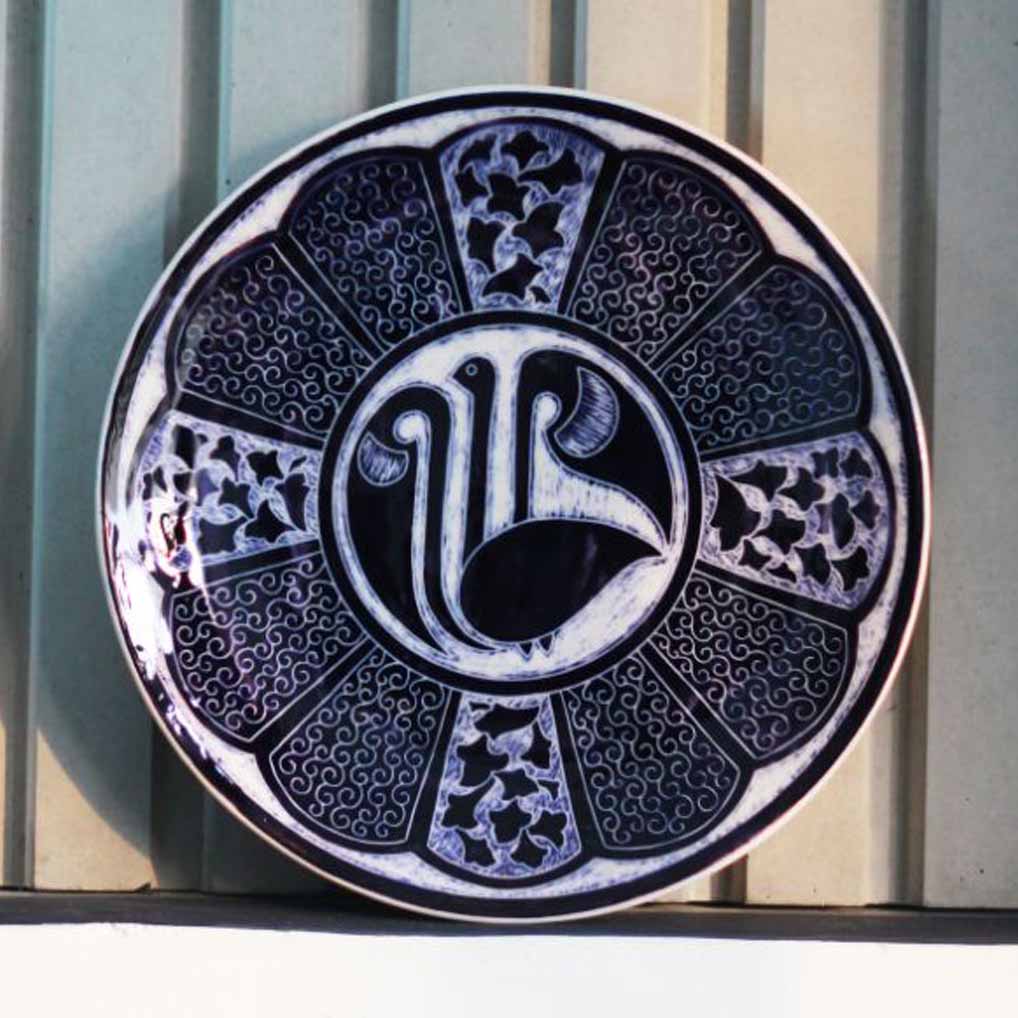
Decorative ceramic dishes can become wall art above a sideboard. Ceramic wall tiles can create a tactile feature surface. A large dish can serve as a low centrepiece, while a lidded jar can add sculptural height to a buffet or console.
Keep the room welcoming. Ceramic should elevate the atmosphere without making the table or surrounding surfaces feel untouchable.
Choosing Ceramic Art for Shelves and Display Areas
Shelves are easy to fill and difficult to compose. Ceramic brings curve, texture and visual pause, but it should be used selectively.
An upright decorative dish can interrupt the repetition of books. A compact sculptural object can create focus. A lidded jar introduces height. A tile can act as a quiet backdrop.
Do not place ceramic on every shelf unless the entire installation is intentionally designed as a collection. Some areas should remain quiet so the stronger pieces can be appreciated.
Choosing Ceramic Art for Dubai Villas and Refined Apartments
Dubai interiors often combine generous natural light with stone, marble, timber, metal and neutral upholstery. Ceramic can soften this material palette and add a sense of craft.
In a large villa entrance or double-height living room, choose pieces with sufficient scale and visual weight. In apartments, one carefully placed object may be more effective than a large group. Strong daylight can reveal glaze beautifully, but it can also create glare, so test placement at different hours.
For clients searching for ceramic décor in Dubai, the best choice is not simply the most elaborate piece. It is the piece that suits the architecture, circulation, viewing distance and light of the specific room.
Choosing Ceramic Art for Commercial Luxury Spaces
Hotels, restaurants, boutiques, reception areas and design showrooms need details that visitors remember. Generic accessories rarely provide that identity.
A ceramic composition can make a reception area feel more refined. Decorative dishes can strengthen the language of hospitality in a restaurant. Sculptural pieces can make a boutique or showroom feel curated rather than transactional.
For professional projects, confirm dimensions, weight, finish, mounting method, quantity and replacement availability. The ceramic should support the brand atmosphere and design concept, not appear as a late decorative addition.
Material Pairing: Ceramic with Wood, Stone, Metal and Light
Ceramic becomes stronger when it is placed in conversation with other materials. With wood it feels warmer. With stone it feels grounded. With brass it gains refinement. With linen it becomes softer. With glass it feels lighter.
The relationship between ceramic and wooden lighting is especially effective because both materials carry natural variation and the evidence of making. Warm light can deepen glaze and reveal texture without making the arrangement feel theatrical.
The objective is not to gather many beautiful materials in one place. It is to create one coherent interior moment.
Single Statement Piece or Curated Collection?
A single statement piece is best when the room needs focus. A collection is better when the room needs rhythm.
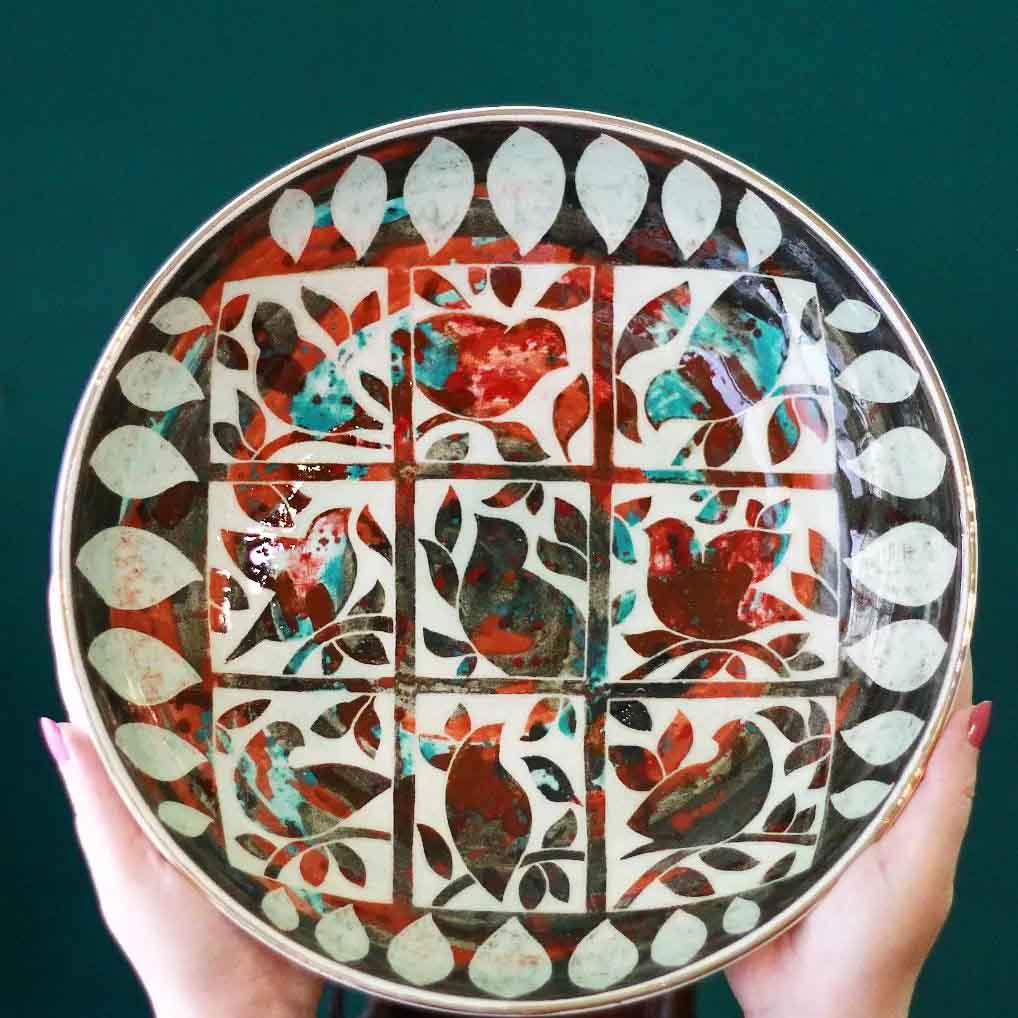
A large dish, sculptural object, lidded jar or tile composition can anchor a wall or surface. A collection works when the pieces share a relationship through colour, glaze, form, symbolism or mood.
A collection should never feel like inventory. Each object needs its own presence, but all pieces should appear to belong to the same visual world.
A Practical Quality and Buying Checklist
Before purchasing, ask whether the piece has a clear role in the room and whether its scale suits the intended surface or wall.
Study the silhouette before the decoration. Check that the base is stable, the proportions feel balanced and the visible irregularities appear intentional.
Observe the glaze under both natural and warm artificial light. Confirm that colour works with nearby materials rather than only with a small sample or product photograph.
Ask about mounting, cleaning and functional suitability where relevant. For project orders, confirm dimensions, lead times, quantity and consistency expectations.
Finally, decide whether the piece adds warmth, identity or meaning. If it contributes none of these, it may be decorative filler rather than art worth keeping.
Common Mistakes to Avoid
A beautiful piece can still be wrong for the room. Choosing without considering scale, light and surrounding materials is the most common mistake.
Several small objects often weaken a luxury interior. A few stronger pieces usually create more authority.
Do not confuse visible irregularity with quality. Handmade work should still demonstrate control, balance and careful finishing.
Avoid placing ceramic where it is likely to be knocked, hidden or visually crowded. Important pieces need safe placement and enough open space.
Why the Right Ceramic Piece Changes a Room
A luxury interior is not complete when every surface is filled. It is complete when every important surface has been understood.
Handcrafted ceramic art can make a wall feel intentional, a shelf feel composed, a dining room feel warmer or an entrance feel memorable. It brings touch into polished architecture and individuality into spaces that might otherwise feel generic.
The right piece does not need to dominate. It needs to belong. When it does, the room becomes more personal, tactile and alive.
Explore Handcrafted Ceramic Art at Checkmark Trading
At Checkmark, our ceramic collection is selected for interiors where craftsmanship, material warmth and artistic presence matter.
Our collection includes ceramic art objects, decorative ceramic dishes, ceramic wall tiles, ceramic lidded jars and symbolic ceramic pieces for refined homes, villa interiors, hospitality spaces, reception areas, dining rooms, entrances and carefully composed design projects.
Whether selected as a single statement piece, a wall composition, a console accent or part of a curated collection, handcrafted ceramic art can bring depth, texture and quiet distinction into an interior.
True luxury is not only what a room contains. It is what the room has chosen carefully enough to keep.