
 Chandeliers
 Pendant Lights
 Ceiling Lights
 Wall Sconces
 Table Lamps
 Floor Lamps
 Ceramic Lidded Jar
 Decorative Dishes
 Pomegranates
 Qajar Collection
 Decorative Wall Tiles
 Border Tiles
 Hand-Painted Tiles
 Block Tiles
 Wall Clocks
 Side Tables
 Candle Holders
Ceramic Pomegranate Décor: Symbolism and Styling for Refined Interiors

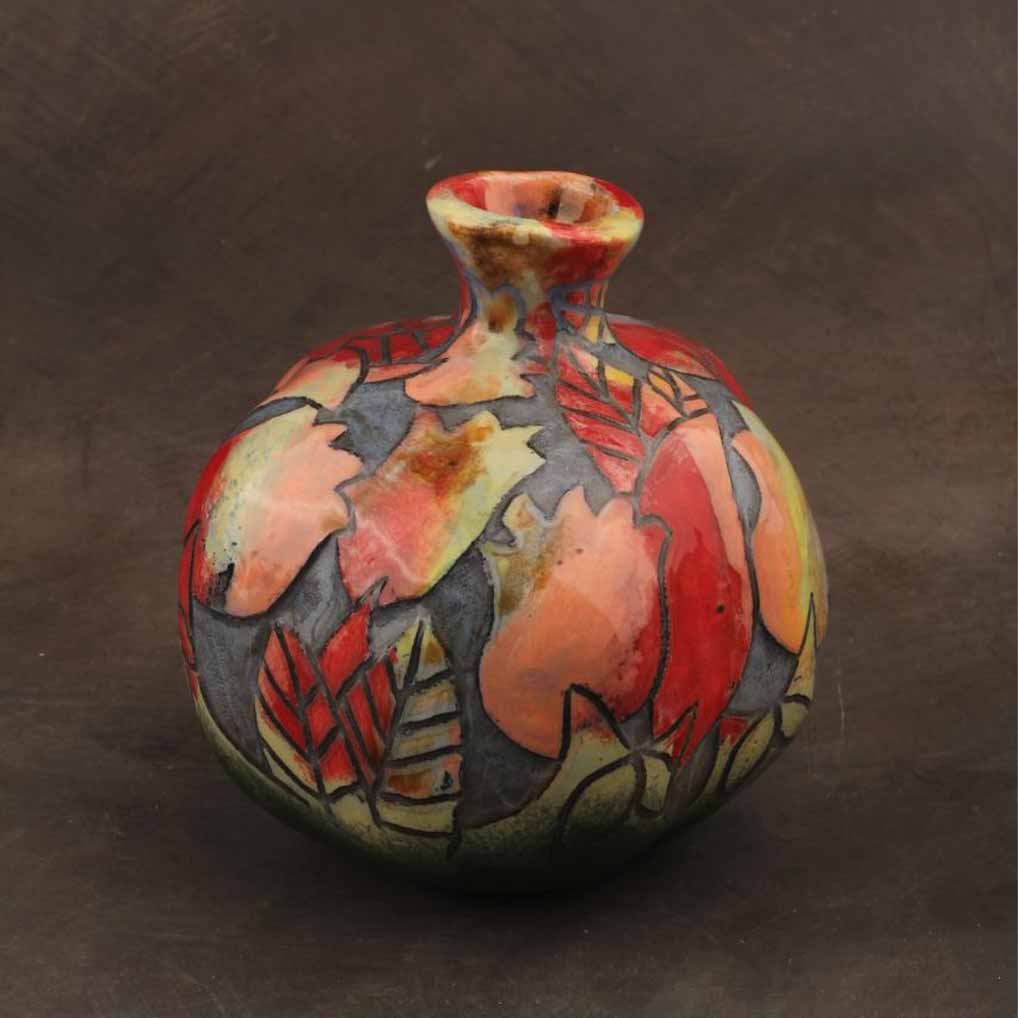
Table of Contents
ToggleIntroduction: Abundance Shaped into Clay
Ceramic pomegranate décor combines a familiar natural form with the permanence of fired clay. It can be small enough to sit quietly on a shelf, yet distinctive enough to give a console, dining table or entrance a memorable point of focus.
The pomegranate is visually suited to decorative art. Its rounded body suggests fullness, while the crown-like calyx gives the silhouette character. When interpreted in ceramic, glaze, brushwork and texture can emphasise those qualities without turning the object into a literal imitation of fruit.
Across different artistic traditions, pomegranates have carried varied associations, including fertility, abundance, continuity, prosperity and renewal. These meanings are not identical in every culture, but the many-seeded fruit has repeatedly been used to suggest richness held within.
In an interior, the object works best when symbolism and design support each other. A ceramic pomegranate should not be treated as a novelty or temporary seasonal ornament. The strongest pieces are sculptural, well proportioned and refined enough to belong naturally among art objects, books, lighting and carefully chosen materials.
Why the Pomegranate Works as an Interior Object
The pomegranate brings together form, symbolism and intimacy. Its compact scale makes it practical for shelves, tables, niches and display cabinets. Its curves soften rooms dominated by straight furniture lines, mirrors, books and architectural edges.
Unlike an abstract ornament, it can also carry a recognisable layer of meaning. That meaning should remain quiet. The object does not need a label explaining abundance or hospitality; it simply adds a sense that the room has been composed with more than colour and proportion in mind.
This balance makes ceramic pomegranate décor useful in both contemporary and layered interiors. It can be decorative without feeling empty, symbolic without becoming theatrical and familiar without losing artistic value.
The Symbolism of Pomegranates in Art and Decorative Culture
The pomegranate has been used with different meanings across artistic traditions. The Metropolitan Museum of Art overview of food symbolism in European painting discusses the fruit as a symbol of desire and fertility in particular contexts.
Pomegranate symbolism varies across time and place. In some contexts, the fruit has been associated with fertility and regeneration because of its many seeds. In others, it has represented abundance, prosperity, desire, continuity or spiritual themes.
That variety is important. It is more accurate to describe the pomegranate as a multivalent symbol than to assign it one universal meaning. Its appeal comes partly from the way different cultures have connected the fruit with life, richness and renewal.
For interior styling, the most useful associations are usually welcome, abundance and continuity. These ideas suit entrances, dining spaces and family rooms, where the object can support the emotional character of gathering without making the design feel themed.
Ceramic Gives a Temporary Fruit Lasting Form
A real pomegranate is seasonal and perishable. Ceramic turns its silhouette into something lasting.
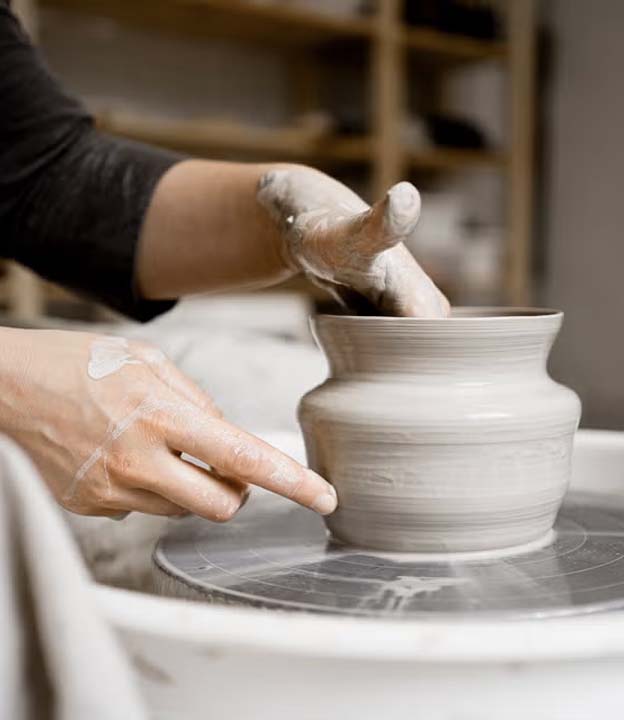
The object begins as clay, then passes through forming, drying, decorating, glazing and firing. The final piece retains the fruit’s recognisable body while gaining the weight, surface and durability of ceramic.
This transformation is part of the object’s appeal. It changes a natural symbol into an art object that can move from a dining table to an entrance console, from a shelf to a display cabinet, and remain relevant beyond a particular season.
When the form is well designed, a ceramic pomegranate does not look like artificial fruit. It feels like an interpretation of the fruit through material, colour and craft.
Choosing by Form and Proportion
Form should be judged before colour or decoration. A strong ceramic pomegranate has a balanced body, a stable base and a crown that feels expressive without becoming exaggerated.
Look at the piece from several angles. The silhouette should remain convincing from the front, side and three-quarter view. The object should sit securely and should not appear visually heavy at the base or weak at the crown.
Scale should respond to placement. A small piece can work beside books or inside a cabinet. A medium piece suits coffee tables and shelves. A larger, more sculptural pomegranate can anchor a console or become a focal point in a niche.
For luxury interiors, avoid pieces that feel cartoonish, overly literal or souvenir-like. The object should read first as ceramic art and second as a pomegranate.
Choosing by Colour, Glaze and Surface
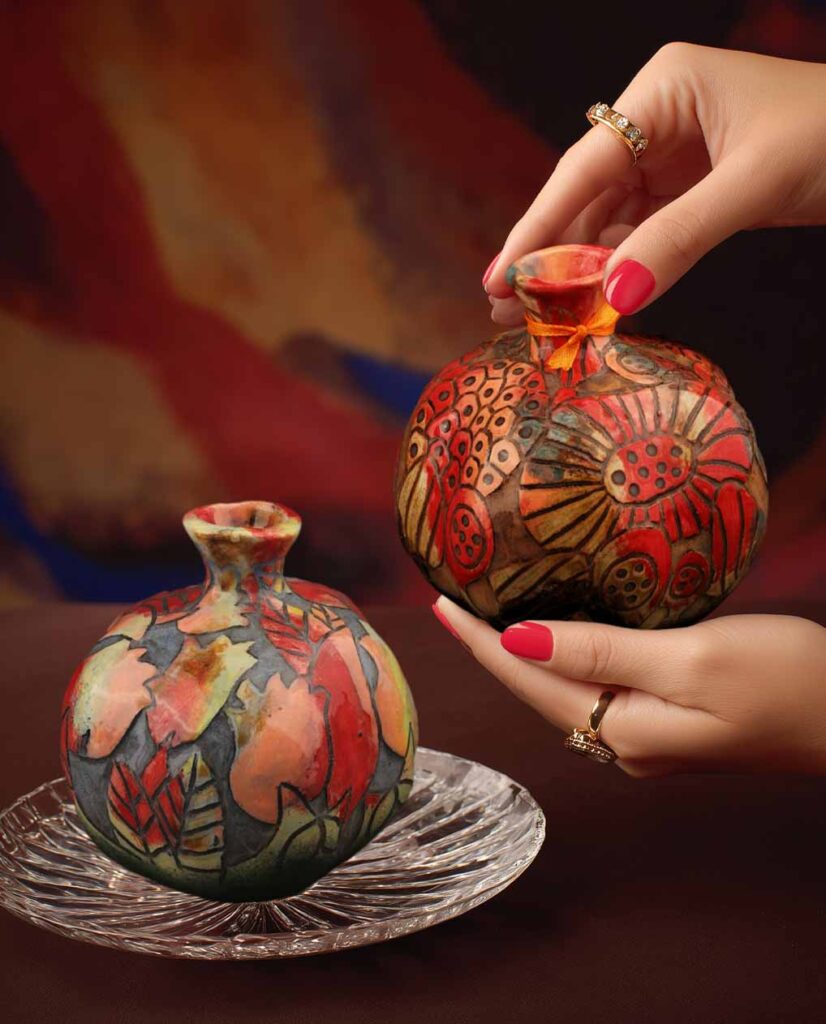
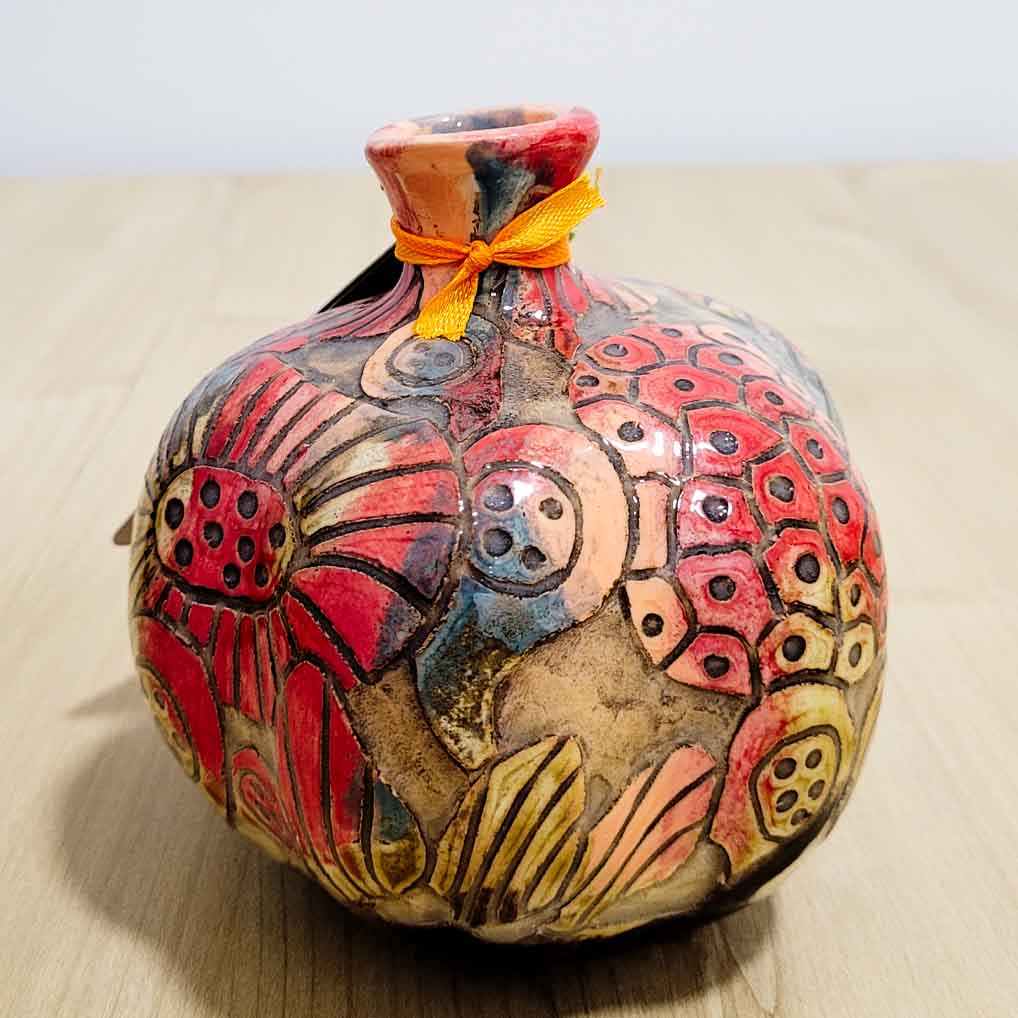
Colour changes the emotional effect of ceramic pomegranate décor. Deep red and burgundy can feel warm and celebratory. Neutral tones make the form more sculptural. Turquoise, blue or green glazes create a more artistic interpretation. Metallic accents can feel formal when used with restraint.
Glossy glaze reflects light and gives colour greater depth. Matte surfaces feel quieter and more architectural. Relief texture adds shadow. Hand-painted detail introduces rhythm and individuality. Layered glaze can make the surface appear different throughout the day.
Choose the finish according to the room rather than the object alone. In a neutral interior, a rich glaze can provide focus. In a room with strong textiles or artwork, a calmer finish may be more refined. Near warm wood and soft lighting, glazed ceramic often gains additional depth.
Do not assume that shine automatically means luxury. Proportion, craftsmanship and placement matter more than gloss.
How to Recognise a Well-Made Ceramic Pomegranate
A quality piece should feel resolved rather than merely decorated. Begin with stability: the base should sit securely, and the object should not rock or lean unintentionally.
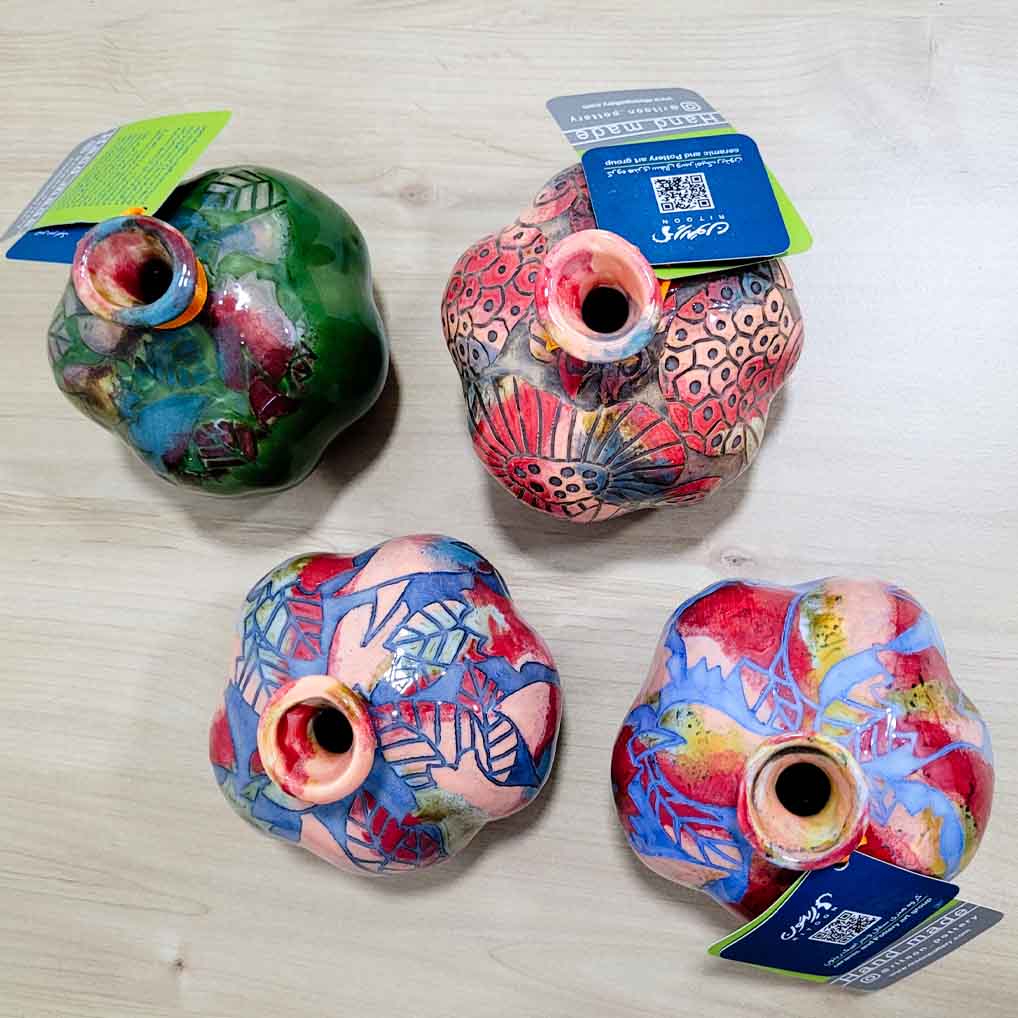
Inspect the crown, edges and underside. Painted details should appear controlled. Glaze variation may be desirable, but structural cracks, sharp unfinished areas, accidental marks or poor adhesion are not signs of craftsmanship.
Consider the weight and balance. A decorative object does not need to be heavy, but it should feel appropriate to its scale. If several pieces are being purchased as a group, expect some handmade variation while confirming that colour and quality remain compatible.
Finally, ask whether the object has presence. A well-made ceramic pomegranate should improve the surrounding composition rather than rely on symbolism alone.
Styling Ceramic Pomegranate Décor in Entrance Areas
Entrances are among the strongest locations for ceramic pomegranate décor because the symbolic ideas of welcome and abundance suit the first space a visitor encounters.
Place one piece on a console beside a lamp, mirror or small stack of books. A larger pomegranate can stand alone; a smaller one may need the visual support of a tray, dish or taller object.
Keep the arrangement edited. One strong object usually creates more authority than several unrelated accessories. In narrow entrances, use the pomegranate as a compact accent rather than filling the entire console.
For Dubai villas with generous entrance halls, choose a scale that remains visible from the approach to the room. A piece that looks substantial in a product photograph may appear too small against a wide console or tall mirror.
Styling on Console Tables and Sideboards
A console gives the ceramic pomegranate a composed, almost ceremonial role. It can soften the height of a lamp, echo the curve of a jar or add symbolic detail beside a decorative dish.
Build the arrangement around differences in height. A tall lamp or lidded jar can provide the vertical anchor, while the pomegranate becomes the lower sculptural form. Books or a tray may create a base, but avoid surrounding the object with many small accessories.
If the pomegranate has a richly painted or reflective surface, keep nearby objects quieter. If the piece is matte or monochrome, it can sit beside stronger textures such as veined stone, timber or brass.
The finished scene should feel collected rather than arranged for display alone.
Styling on Shelves and in Display Cabinets
The rounded pomegranate form is useful on shelves because it breaks the repetition of books, frames and rectangular compartments.
It can sit beside books, in front of an upright decorative dish, near a ceramic lidded jar or within a small group of ceramic art objects. Leave enough open space for the crown and silhouette to remain visible.
Avoid repeating pomegranates on every shelf. One or two carefully placed pieces create rhythm; constant repetition makes the symbol feel like inventory.
Inside a glass cabinet, consider reflections and lighting. A glazed surface may appear richer under warm integrated light, while strong spotlights can create distracting glare.
Styling on Dining Tables
The dining table is a natural setting because the pomegranate is closely associated with food, offering and gathering.
A single ceramic pomegranate can work on a compact table. Three pieces of varied scale can create rhythm on a larger surface. They may be placed inside a decorative dish, arranged with candles or used beside linen and wood.
Keep the arrangement low enough for conversation and easy to move when the table is in use. The dining room should still feel welcoming rather than staged.
Do not use decorative ceramic pomegranates as functional serving objects unless the product has been specifically designed and declared suitable for that purpose.
Styling in Living Rooms
In a living room, ceramic pomegranate décor works as a small point of warmth on a coffee table, side table, console, shelf or display cabinet.
It pairs naturally with books, neutral fabrics, stone, timber, brass and soft lighting. The object should connect to the room’s material language rather than appear as an isolated symbol.
On a coffee table, keep the composition low and practical. On a shelf, use the pomegranate to introduce curve. On a side table, allow it to remain visible rather than surrounding it with everyday items.
One carefully positioned piece can add character without making the room feel overdecorated.
Ceramic Pomegranate Décor for Dubai Homes and Villas
Dubai interiors often combine strong daylight, marble or stone, timber, metallic details and neutral upholstery. Ceramic pomegranate décor can introduce colour and handcrafted warmth into this polished material palette.
In large villa spaces, scale matters. A small object may disappear on a deep console or beneath a tall artwork. Use a larger piece or a controlled group where the architecture requires stronger visual weight.
Glossy glazes can look beautiful in daylight but may create glare near large windows. Test the intended position at different times. Keep valuable pieces away from unstable ledges, children’s circulation paths and frequently used surfaces.
For interior designers and homeowners, the most successful choice is the piece that suits the room’s scale, light and material character rather than simply matching one colour.
Using Ceramic Pomegranates in Hospitality and Commercial Interiors
Restaurants, boutiques, reception areas and hospitality spaces benefit from decorative details that people remember. A ceramic pomegranate can support ideas of welcome, generosity and cultural richness without requiring a large installation.
In restaurants, it may reinforce the atmosphere of hospitality. In boutiques, a controlled group can make a display feel curated. In reception areas, one sculptural piece can soften a formal counter or console.
For commercial projects, confirm dimensions, quantities, lead times and replacement availability. Repetition should be intentional: a few pieces used consistently can strengthen the design concept, while excessive use may reduce the symbol to a motif.
The object should support the brand atmosphere rather than appear as an unrelated accessory.
Pairing with Wood, Stone, Metal and Light
Ceramic pomegranates become more convincing when they are placed in conversation with nearby materials.
Wood brings warmth. Stone adds grounding. Brass gives refinement. Linen softens the composition. Glass introduces lightness. Warm lighting deepens glaze and makes relief more visible.
The pairing with wooden lighting can be especially effective because timber and ceramic both carry natural variation and craft. A pomegranate near a wooden lamp or decorative fixture can create an intimate, material-rich scene.
Use contrast selectively. One glazed red piece against pale stone may be enough. A neutral pomegranate may need stronger texture or lighting to remain visible.
Pairing with Other Ceramic Art Objects
Ceramic pomegranates can form part of a wider composition with decorative dishes, wall tiles, lidded jars and sculptural ceramic pieces.
The arrangement should have a clear relationship. This may come from shared glaze colours, compatible surface treatments, repeated curves or a common emotional mood.
A pomegranate beside a decorative dish can echo hospitality. Near ceramic wall tiles, it can connect a shelf or console to the wall. Beside a lidded jar, it creates a dialogue between rounded forms at different heights.
Avoid grouping every available ceramic object together. The collection should feel like a conversation, not stock display.
One Piece or a Group?
A single ceramic pomegranate is usually strongest when the form, glaze and placement already have enough presence.
Groups work on larger dining tables, long consoles, cabinets and retail displays. Three pieces in different sizes often create a natural rhythm. Keep spacing deliberate and avoid mixing too many unrelated finishes.
Quantity should never weaken meaning. When the same symbol is repeated without hierarchy, it becomes ordinary. Use enough pieces to create intention, not so many that the eye reads inventory.
Common Styling Mistakes
Treating the object as seasonal décor is the first mistake. A well-made ceramic pomegranate should be styled as lasting art rather than a festive accessory.
Using too many pieces can create clutter. Choosing colour without considering the room can make even a beautiful glaze feel disconnected. Hiding a small piece inside a crowded shelf weakens both its form and symbolism.
Another mistake is accepting weak craftsmanship because the subject is meaningful. Symbolism cannot compensate for poor proportion, unstable construction or careless finishing.
Finally, avoid mixing several unrelated symbolic objects in one small area. Meaning is strongest when it is given space.
Care and Display Considerations
Dust ceramic pomegranates with a soft dry cloth. If needed, use a slightly damp cloth and dry the piece immediately. Avoid abrasive pads, harsh chemicals and unnecessary soaking, particularly on hand-painted, metallic or textured surfaces.
Lift the piece from the body rather than the crown. Keep it away from table edges and unstable stands. In display cabinets, make sure shelves are level and able to support the object safely.
Outdoor suitability should not be assumed. A decorative ceramic piece may be affected by moisture, heat, thermal change or unsuitable mounting unless it has been made and specified for exterior use.
Why Ceramic Pomegranate Décor Remains Timeless
Ceramic pomegranate décor remains relevant because it combines a recognisable natural form, layered symbolism and a material capable of lasting for years.
It can belong to a modern apartment, a generous villa entrance, a dining room, boutique display or hospitality interior. It may be glossy or matte, richly coloured or neutral, singular or grouped.
Its appeal does not depend only on trend. It comes from the meeting of form and meaning: a fruit associated in many traditions with life and abundance, interpreted through clay, glaze and fire.
The object is small, but when chosen carefully it can give a room warmth, identity and something worth remembering.
Explore Ceramic Pomegranate Décor at Checkmark Trading
At Checkmark, our ceramic pomegranate décor is selected for interiors where craftsmanship, symbolism and artistic presence matter.
The collection includes glazed, hand-finished and decorative ceramic pomegranate pieces for entrance consoles, dining rooms, shelves, living spaces, boutique displays, hospitality interiors and carefully composed design projects.
Whether used as one symbolic accent, a controlled group or part of a wider handcrafted ceramic collection, a ceramic pomegranate can bring warmth and quiet distinction into an interior.
A memorable room is shaped not only by what it contains, but by what its objects mean.