
 Chandeliers
 Pendant Lights
 Ceiling Lights
 Wall Sconces
 Table Lamps
 Floor Lamps
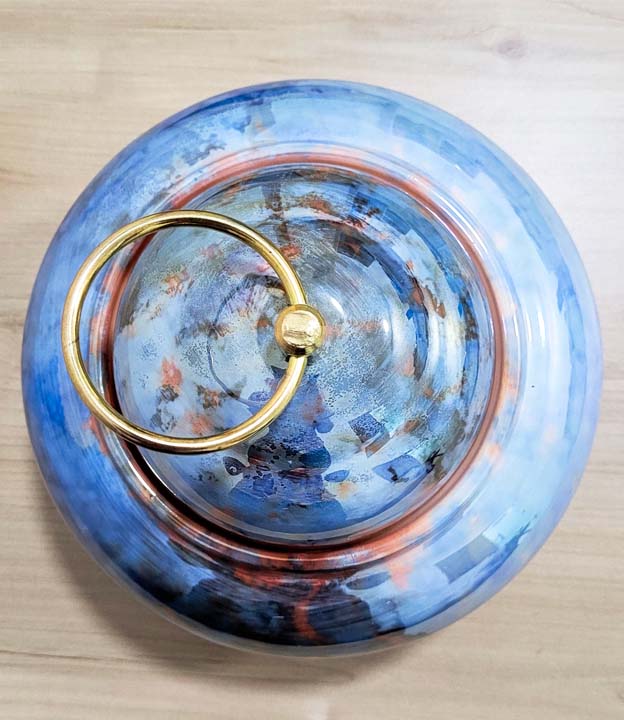
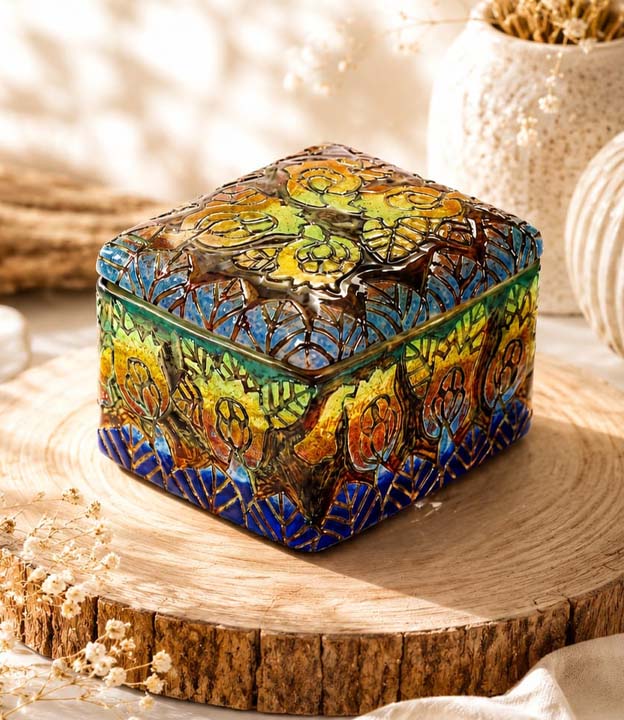
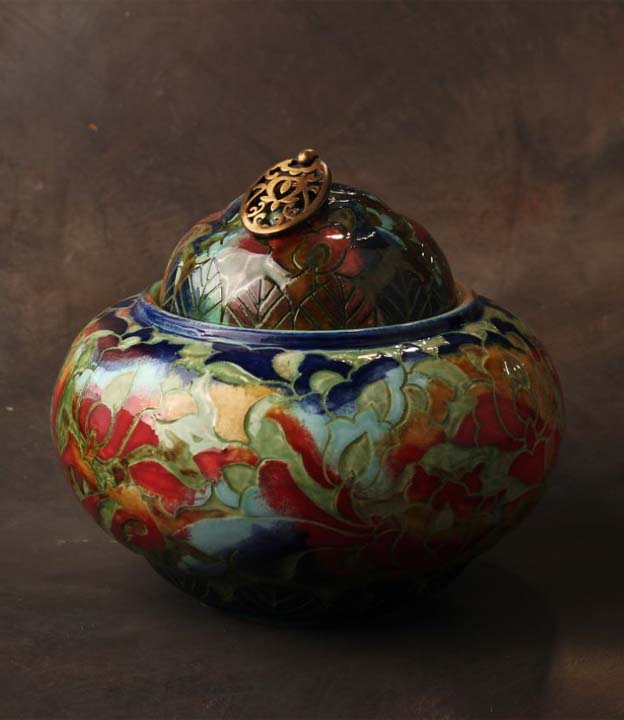
 Ceramic Lidded Jar
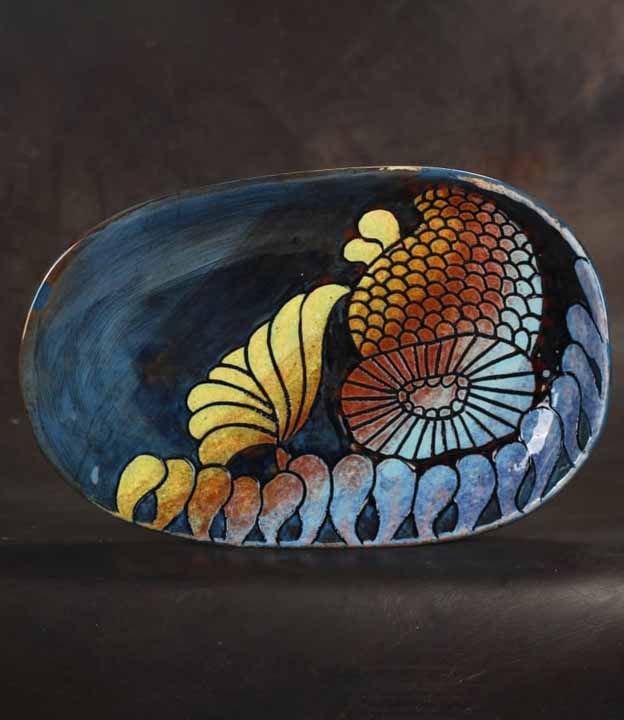
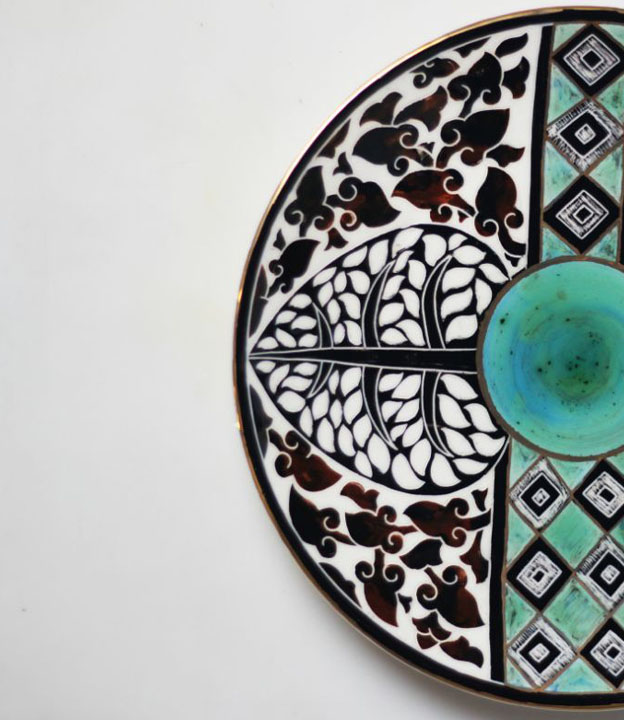
 Decorative Dishes
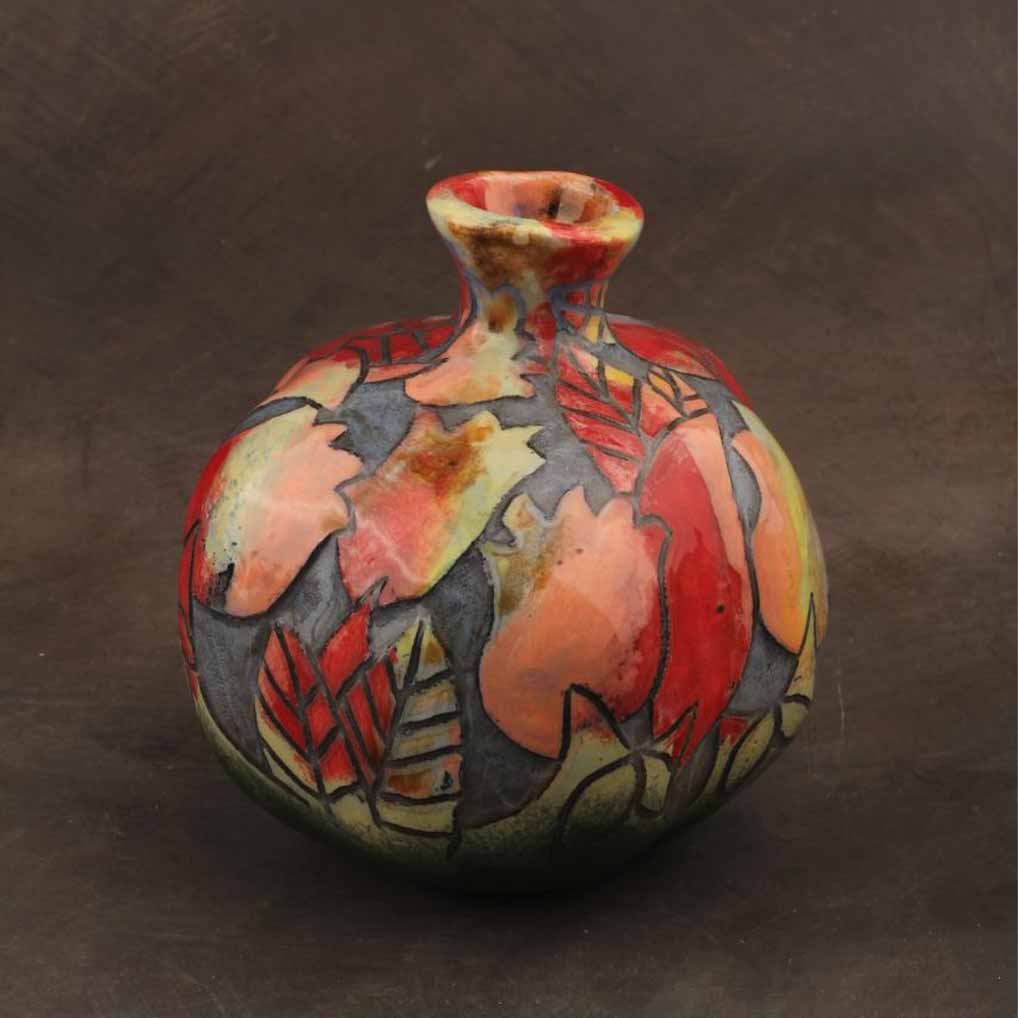
 Pomegranates
 Qajar Collection
 Decorative Wall Tiles
 Border Tiles
 Hand-Painted Tiles
 Block Tiles
 Wall Clocks
 Side Tables
 Candle Holders
Ceramic Lidded Jars: 9 Essential Styling Ideas

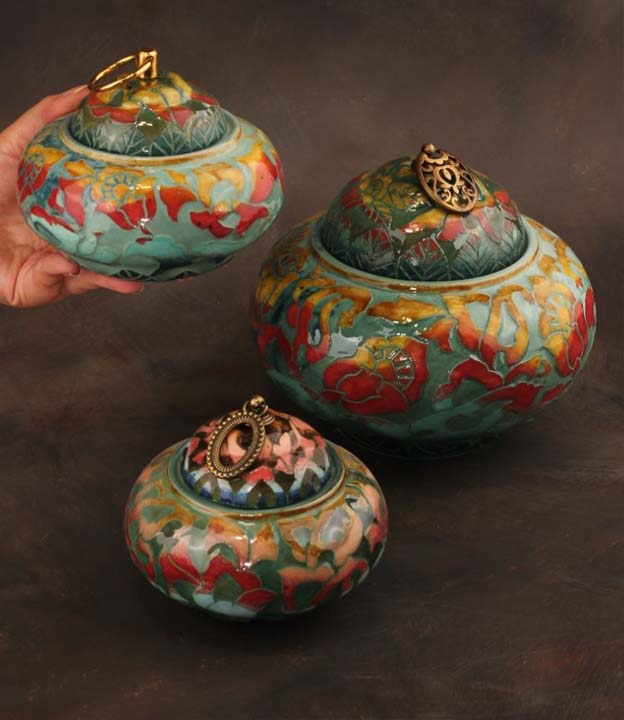
Table of Contents
ToggleCeramic Lidded Jars: Where Function Becomes Sculpture
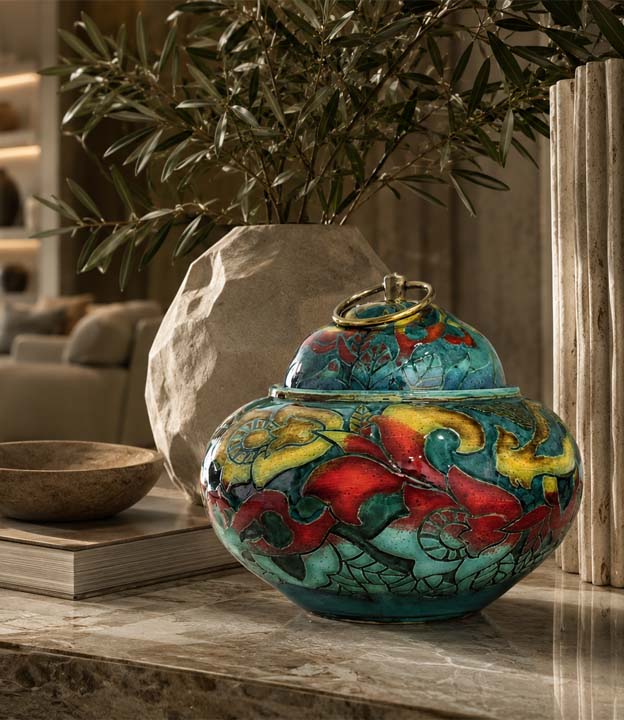
Ceramic lidded jars bring together two qualities that interiors often need at the same time: visual presence and a sense of purpose. Their beauty comes not only from glaze, colour or pattern, but from the complete relationship between body and lid. The base gives stability, the shoulder gives movement, and the lid closes the form with a deliberate final gesture.
This makes ceramic lidded jars more architectural than many small decorative objects. They add height to a console, rhythm to shelving, formality to a dining sideboard and a quiet point of focus to a bedroom or reception area. Even when they are used only as decorative art objects, the idea of containment gives them meaning.
A good lidded jar should never feel like an ordinary container placed in a room by accident. It should feel resolved from every angle, properly scaled for its setting and strong enough to justify the space around it.
This guide explains how to evaluate form, glaze, craftsmanship, size and practical suitability, followed by nine professional styling ideas for refined homes, Dubai villas, hospitality interiors and curated commercial spaces.
Why Ceramic Lidded Jars Work So Well in Interiors
Lidded jars create order through form. Their vertical structure leads the eye upward from the base to the lid, which can make a flat surface feel more composed. This is useful on consoles, shelves and sideboards where too many low objects can make an arrangement feel visually weak.
The closed form also provides contrast. Decorative dishes are open and outward-facing; wall tiles merge with architecture; sculptural objects may be purely expressive. A lidded jar suggests protection, storage and care. That suggestion gives the object a calm emotional weight without requiring literal explanation.
Ceramic lidded jars also adapt easily to different design languages. A simple matte jar can suit a modern apartment. A hand-painted jar can enrich a layered interior. A deeply glazed piece can introduce colour into a neutral villa. A pair can create symmetry, while one exceptional jar can act as a focal point.
Their versatility does not mean every jar belongs everywhere. Success depends on proportion, surface quality, surrounding materials and the amount of visual space the object receives.
A Brief Design History of the Lidded Jar
Historic covered jars demonstrate how ceramic vessels can combine balanced proportions, purposeful lids and cultural value. See the Metropolitan Museum of Art covered jar for an example of refined porcelain form and lid design.
Lidded vessels have appeared across cultures for storage, ritual, pharmacy, trade and domestic use. Their forms vary widely, but the basic design problem remains consistent: create a body that holds and a lid that completes, protects or identifies what is inside.
Museum collections show that covered jars have long carried both practical and decorative value. Some are modest and functional; others demonstrate refined proportions, complex glazing and symbolic decoration. This history explains why the form still feels familiar even when it is used purely as interior art.
For contemporary interiors, the lesson is not to imitate a particular historical style. It is to recognise that the best lidded jars combine usefulness, proportion and visual authority. The lid should not appear secondary; it is an essential part of the object’s identity.
How to Judge Form and Proportion
Form should be evaluated before colour or pattern. Begin with the silhouette. Does the body feel stable? Does the shoulder transition naturally? Is the neck too narrow or too heavy? Does the lid belong to the body, or does it appear borrowed from another object?
A tall jar creates vertical emphasis and can balance a mirror, lamp or artwork. A rounded jar brings softness to angular furniture. A compact jar works well on shelves and bedside tables. A wider jar can anchor a large sideboard if it has enough visual weight.
The finial or top detail should complete the design without making it top-heavy. Decorative crowns, handles or sculptural knobs need to feel proportional to the lid and body. When these parts compete, the jar loses elegance.
View the piece from several angles. A jar displayed on a console may be seen from the side as people move through the room. A strong object should not rely on one perfect front-facing view.
How Glaze, Colour and Texture Change the Mood
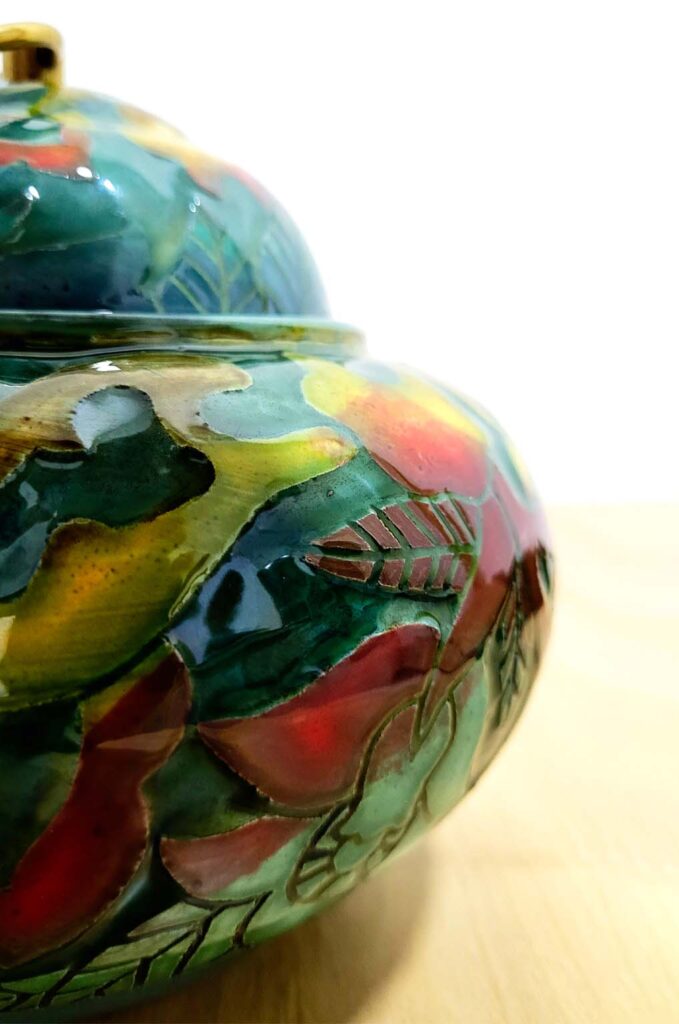
The same jar form can feel completely different depending on its surface. Glossy glaze reflects light and intensifies colour. Matte glaze feels quieter and more architectural. Satin finishes offer a restrained sheen. Relief, carving and layered glaze create shadow and tactile depth.
Deep blue, green or burgundy jars can become focal points in neutral rooms. White, cream and earth tones are easier to integrate and allow the form to lead. Hand-painted decoration can bring rhythm and cultural character, but it should remain controlled enough to support the shape.
Observe glazed ceramic jars in both daylight and warm evening light. Strong daylight can reveal colour variation, while artificial lighting may deepen the glaze. Highly reflective surfaces can produce glare near windows, so placement should be tested rather than assumed.
Colour should not be selected in isolation. Compare the jar with nearby wood, marble, stone, metal, textiles and wall colour. The correct surface gives the room something it lacks instead of repeating what is already present.
Craftsmanship: What Quality Looks Like
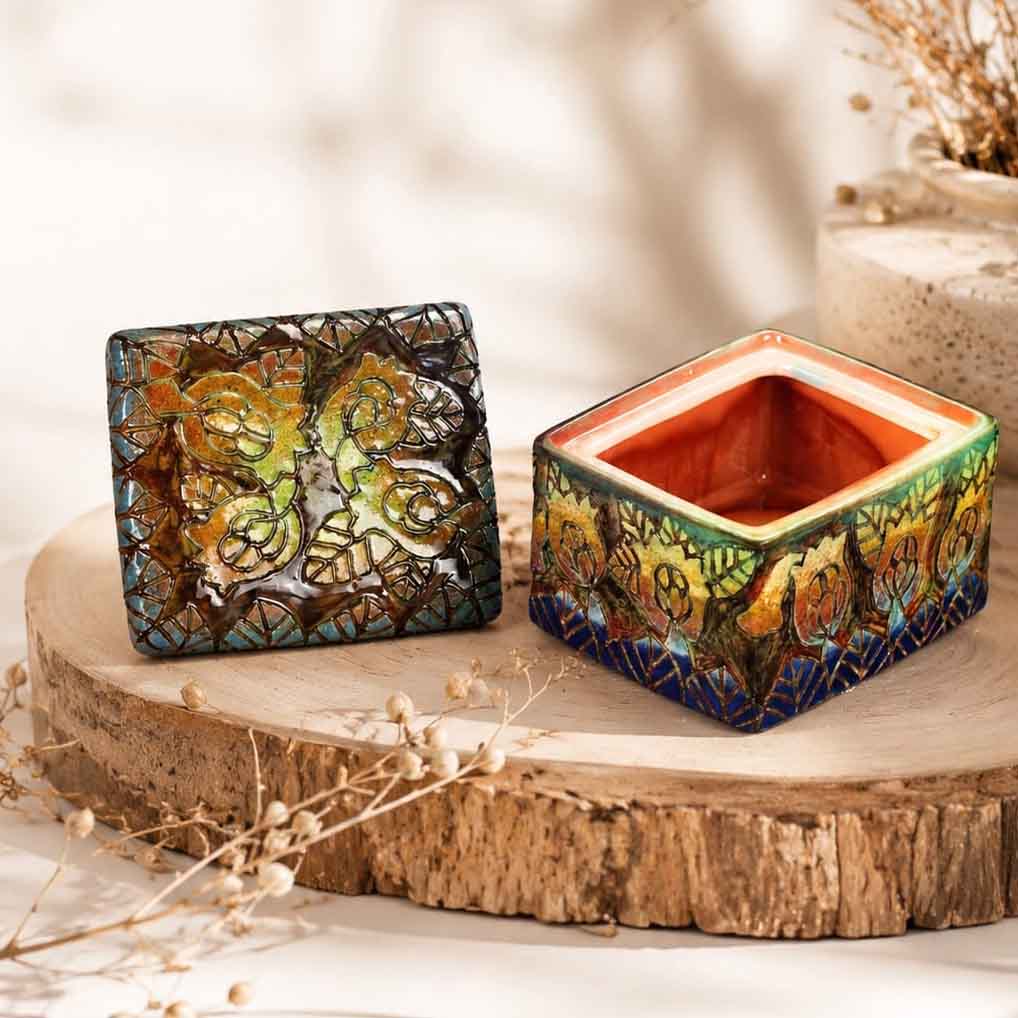
Handmade or handcrafted descriptions do not automatically guarantee quality. A well-made ceramic lidded jar should show both character and control.
Check that the base sits securely without rocking. Examine the rim and the inside of the lid. The lid should sit naturally, without feeling unstable or excessively loose unless the design intentionally allows movement. Painted lines and glaze edges should appear deliberate.
Minor variation can be desirable, particularly in hand-finished pieces, but structural cracks, sharp unfinished edges, careless glaze application or a poorly fitting lid should not be excused as artistic irregularity.
Ask about intended use. A decorative jar should not automatically be treated as food-safe, water-tight, dishwasher-safe or suitable for outdoor exposure. Those claims depend on the clay body, glaze, firing and testing, not on appearance alone.
Ceramic Lidded Jars: 9 Essential Styling Ideas
The following ideas are designed to keep ceramic lidded jars visually important without making the room feel crowded or staged.
1. Anchor an Entrance Console
Use one medium or tall jar as the visual anchor on an entrance console. Position it beside a mirror, lamp or restrained stack of books, leaving enough negative space for the silhouette to remain clear.
If the jar is richly painted or deeply glazed, keep nearby objects quieter. In a narrow entrance, avoid placing the jar at the edge where bags, keys or passing traffic may knock it.
For Dubai villas with generous foyers, a larger jar or a balanced pair may be necessary to match the scale of the architecture.
2. Create Height on Shelves
Shelves often contain books, boxes and frames with similar rectangular proportions. A lidded jar introduces curve and vertical variation.
Place one jar beside books or allow it to occupy a shelf section on its own. Repeating ceramic material on another shelf can create continuity, but repeating identical jars too often can make the display feel commercial.
Keep the lid visible. Do not place the jar so high or deep that its most important design feature disappears.
3. Style a Dining Sideboard
A dining sideboard is a natural setting because ceramic already belongs to the language of hospitality and table culture.
One expressive jar can create an artistic focal point. A pair can establish symmetry, especially when positioned on either side of artwork or a mirror. Combine the jar with a decorative dish, a low tray or warm lighting, but retain usable surface space.
Unless the jar is specifically approved for food storage, use it as decorative art rather than as a functional serving vessel.
4. Add Quiet Structure to a Living Room
In a living room, use a ceramic lidded jar to bring structure to soft furnishings and low furniture. It can sit on a console, side table, media unit or carefully styled coffee table.
A rounded jar works well against straight furniture lines. A matte surface can calm a room with polished marble or metal. A glazed jar can introduce colour to neutral upholstery.
The jar should connect with at least one nearby material or colour so that it feels integrated rather than isolated.
5. Use Smaller Jars in Bedrooms
Bedrooms benefit from quieter scale and softer surfaces. A compact jar can be placed on a dresser, vanity, bedside table or reading shelf.
Choose calm colours, matte or satin glazes and controlled decoration. The object should support rest rather than compete with the room.
If used to hold jewellery or personal items, line the interior where necessary and confirm that repeated opening will not damage delicate lid edges or painted surfaces.
6. Pair One Jar with an Open Dish
A lidded jar and an open decorative dish create an effective contrast between containment and display. The jar contributes height; the dish contributes width and openness.
Use related colours, glaze character or motifs rather than forcing exact matching. The composition should look collected, not purchased as a rigid set.
This pairing works on consoles, dining sideboards and wide shelves where both objects have room to breathe.
7. Combine Ceramic with Wood and Warm Light
Wood softens ceramic and makes glaze feel warmer. Warm lighting reveals surface depth and gives the jar greater evening presence.
Position a jar near wooden lighting, a timber console or shelving with visible grain. Stone or brass can be added in small quantities for grounding and refinement.
The strongest arrangement normally uses a limited material palette. Too many finishes can make the jar lose its authority.
8. Use a Pair for Symmetry
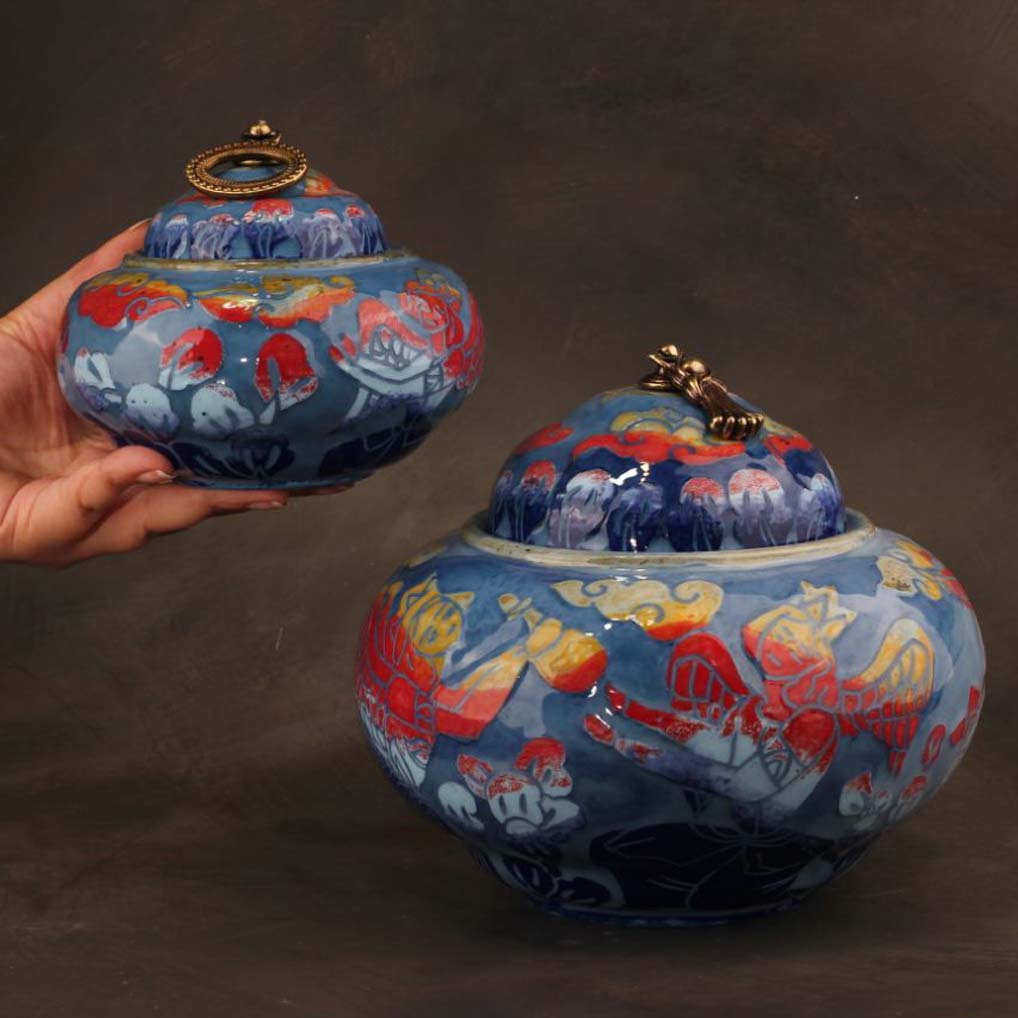
A pair of ceramic lidded jars can create balance on a large sideboard, mantel, console or built-in shelf. The pair may be identical for formality or closely related for a more collected result.
Keep sufficient distance between the pieces. Placing them too close can make them appear like stock. Use artwork, a mirror or a central object to give the symmetry a clear purpose.
Pairs are especially effective in formal dining rooms, hotel-style entrances and larger villa interiors.
9. Build a Curated Group
A group of three or more jars can work in a display cabinet, niche, boutique or hospitality environment when the arrangement is carefully controlled.
Vary height and width while keeping a relationship through glaze, colour family or style. Avoid lining every piece at the same depth. A slightly staggered arrangement creates dimension.
Leave gaps between objects and avoid combining too many unrelated patterns. A curated group should feel like a collection, not inventory.
Scale and Placement for Dubai Homes and Villas
Dubai interiors often combine strong daylight, generous room dimensions, marble, stone, timber and polished metal. Ceramic lidded jars can soften this palette, but their scale must suit the architecture.
In double-height foyers or large villas, small jars may disappear unless grouped or placed on elevated surfaces. On compact apartment shelves, oversized jars can dominate and reduce usable space.
Measure the intended surface, including available height beneath shelves or mirrors. Consider the jar’s lid and finial when checking clearance. View the arrangement from the normal entrance to the room, not only from close range.
Strong sunlight can create glare and may affect some decorative finishes over time. Follow supplier guidance and avoid assuming that an indoor decorative piece is suitable for balconies or outdoor entrances.
Ceramic Lidded Jars in Commercial Interiors
Boutiques, restaurants, reception areas, showrooms and hospitality spaces need memorable details without unnecessary clutter. A lidded jar can create a crafted focal point on a reception console, display shelf or dining cabinet.
For commercial projects, confirm dimensions, weight, stability, cleaning requirements and replacement availability. Pieces placed near public circulation should be protected from accidental contact.
Use ceramic lidded jars to support the design concept and brand atmosphere. A luxury boutique may benefit from one sculptural jar; a restaurant may use a related group to reinforce hospitality; a hotel reception may use a pair to create formal balance.
Common Styling Mistakes
The first mistake is choosing only by colour. A beautiful colour cannot correct weak proportion or an unstable lid.
The second is crowding. Small accessories placed around a jar can reduce its impact and create visual noise.
The third is poor scale. A small jar disappears on a long console, while a large jar can overwhelm a narrow shelf.
The fourth is ignoring the lid. A jar should be displayed with enough clearance and from an angle where the lid remains part of the composition.
The fifth is assuming decorative ceramics are suitable for storage, food, water or outdoor exposure without specific confirmation.
Care, Handling and Safety
Dust ceramic lidded jars with a soft dry cloth. When necessary, use a slightly damp cloth and dry the surface immediately. Avoid abrasive pads, harsh chemicals and unnecessary soaking, especially on hand-painted, metallic, crackled or textured finishes.
Lift a jar with two hands around the body. Do not carry it by the finial, lid or rim. Remove the lid before moving the piece when there is a risk of it slipping.
Place felt protection beneath heavy jars on delicate timber or stone surfaces. Use museum putty or another appropriate stabilising method where permitted, particularly in display areas exposed to vibration or accidental contact.
For wall shelves and commercial displays, verify load capacity. A beautiful arrangement is not successful if it is unstable.
A Professional Buying Checklist
Before purchasing, confirm the jar’s dimensions, weight and intended location. Check the full height with the lid in place.
Examine the silhouette, base stability, lid fit, glaze, painted detail and finish from several angles.
Decide whether the jar will act as a focal point, a supporting object, a symmetrical pair or part of a collection.
Compare the colour and surface with the room’s actual materials and lighting rather than relying only on online photographs.
Ask about functional suitability, cleaning and outdoor use where relevant. Never infer technical performance from decorative appearance.
Finally, consider whether the piece improves the room. A strong jar should add height, rhythm, material depth or emotional character. If it provides none of these, it may be unnecessary decoration.
Why Ceramic Lidded Jars Remain Timeless
Another historical example is the Metropolitan Museum of Art lidded jar, a glazed faience vessel dated to the 16th–12th century BCE.
Ceramic lidded jars remain relevant because they combine function, form and curiosity. They suggest use without needing to be used, and they carry visual completeness through the relationship between vessel and lid.
Museum examples range from ancient covered vessels to refined porcelain and modern studio ceramics, demonstrating how adaptable the form has been across periods and cultures.
In contemporary interiors, their value is equally clear. They can be minimal or ornate, neutral or colourful, singular or grouped. Their success depends less on trend than on proportion, craftsmanship and thoughtful placement.
A well-chosen lidded jar does not merely occupy a surface. It gives that surface structure and a reason to be noticed.
Explore Ceramic Lidded Jars at Checkmark Trading
At Checkmark, our ceramic lidded jars are selected for interiors where craftsmanship, sculptural form and material warmth matter.
The collection includes decorative ceramic jars for entrance consoles, dining rooms, shelves, bedrooms, villa interiors, boutique displays, reception areas and carefully composed design projects.
Explore ceramic lidded jars alongside ceramic art objects, decorative dishes, ceramic wall tiles, ceramic pomegranate décor and other handcrafted ceramic pieces.
Whether styled as one focal object, a balanced pair or part of a curated collection, ceramic lidded jars can bring height, dignity and quiet refinement into an interior.